


Brunswick County is full of history that doesn’t always show up on a plat map. Family burial plots, church graveyards, and long-forgotten graves sit tucked in the woods and farm fields across the county, and as new neighborhoods keep going in, county leaders have moved to protect them. On Oct. 28, 2026, WECT reported that Brunswick County commissioners have approved a cemetery protection ordinance and authorized a cemetery committee. If you own land, are shopping for acreage, or are building a new home in Brunswick County, here’s what the rules say and why they matter.
What the New Cemetery Rules Require
According to the StarNews (Oct. 19, 2026), the push started in August, when Commissioner Pat Sykes said the county needed an ordinance and offered a draft. After staff review, commissioners approved it unanimously at their Sept. 21 meeting. Based on reporting from WECT, the StarNews, and WWAY, the main points are:
- Stop work when graves are found. If human remains or grave markers turn up during clearing, grading, or construction, work has to stop.
- A 50-foot buffer. Known and suspected burial sites get a 50-foot buffer. As the proposal was described, that buffer stays undisturbed and vegetated, and heavy machinery isn’t allowed inside it.
- Marked buffers on development sites. New developments are expected to clearly mark cemetery buffer areas.
- Faster reporting. The deadline for reporting funerary objects drops from 30 days to 10.
State law adds another layer. As WECT noted, anyone who finds disturbed human remains in North Carolina must notify the medical examiner right away.
What’s Still Being Worked Out
The new cemetery committee’s structure and role haven’t been finalized. Commissioners are weighing whether it should be a county committee or a partnership with a group like the Brunswick County Historical Society. Commissioner Frank Williams told WECT the county would rather take its time and get it right, and he asked residents to report cemeteries that may not be on any list, since many are “hidden in the woods.” Neighboring Pender County has been discussing its own cemetery protections too, so this is a regional conversation worth watching.
Why This Matters for Landowners and Buyers
For most people buying a home in an established neighborhood in Leland, Southport, or Ocean Isle Beach, these rules won’t change much day to day. Where they really come into play is with raw land, larger rural parcels, infill lots, and properties near older communities and family homeplaces.
If You’re Buying Land
A burial site on or next to a parcel can affect how much of the land you can actually use. A 50-foot buffer around a small family plot takes up a real piece of a typical lot, and it can shape where a house, driveway, septic system, or outbuilding can go. Before you close on acreage in places like Bolivia, Supply, Ash, Winnabow, or the rural areas around Shallotte, it’s smart to:
- Ask the seller directly whether they know of any graves, markers, or family plots on or near the property.
- Order a survey and ask the surveyor to note any cemeteries or suspected burial sites they find.
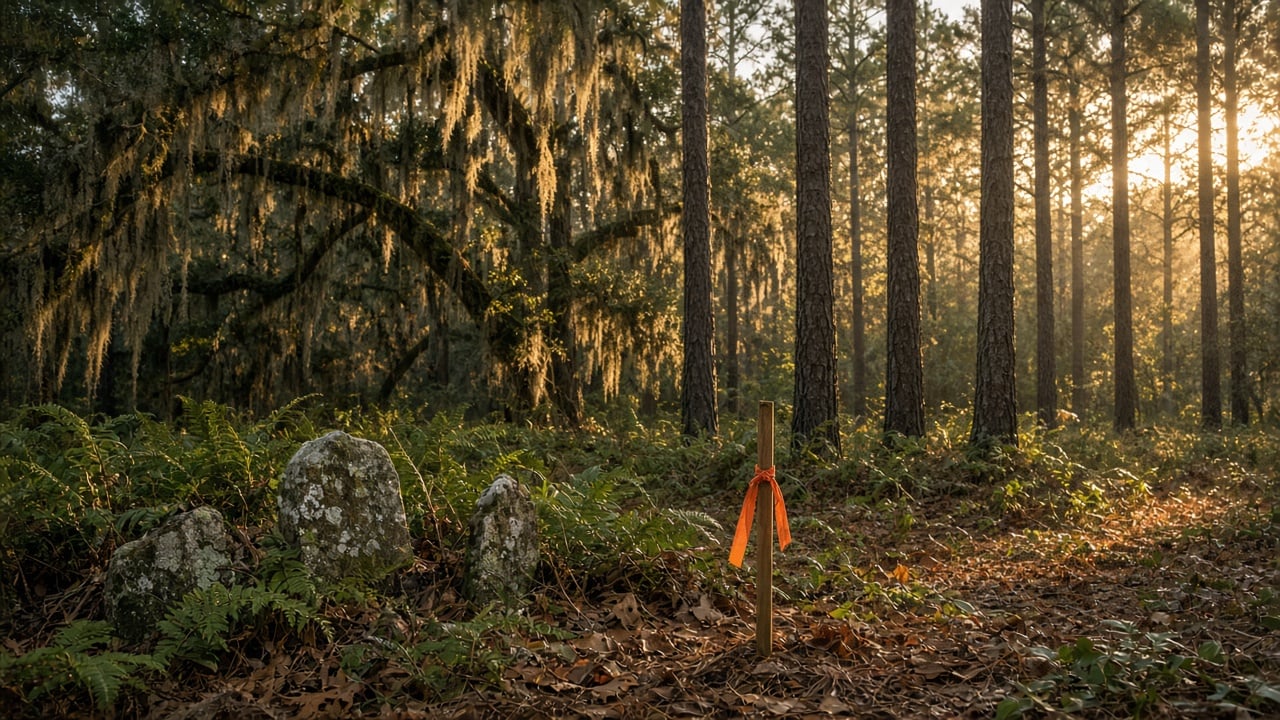
- Walk the land yourself, especially wooded corners and old fence lines, and look for depressions, fieldstones, or plantings like cedars and periwinkle that often mark old graves.
- Check with Brunswick County Planning about how the buffer would apply before you finalize a site plan.
If You’re Building New
If you’re working with a builder on a custom home, or buying into a new subdivision, ask whether any cemeteries were identified on the site and how they’re being protected. A builder who finds remains mid-project has to stop work, which can mean delays. Knowing up front keeps your timeline realistic.
If You’re Selling
If you know about a grave or family plot on your land, be upfront about it with your agent. It’s the kind of detail buyers and their surveyors are likely to find anyway, and disclosing it early builds trust and avoids surprises late in a deal. Many buyers see a well-kept family cemetery as part of a property’s story, not a dealbreaker.
The Bigger Picture in Brunswick County
This ordinance is part of a broader shift in how Brunswick County handles growth. The county has also been changing who signs off on large new developments and updating its development rules this fall. For buyers and investors, the takeaway is the same: the details of a specific parcel matter more than ever, and local rules are changing quickly. Doing your homework on a property’s history is part of buying well here.
Frequently Asked Questions
Does the cemetery ordinance affect my existing home?
For most homeowners in established neighborhoods, probably not. It mainly matters when land is being cleared, graded, or built on near a known or suspected burial site.
How big is the buffer around a cemetery?
Reporting on the ordinance describes a 50-foot buffer around known and suspected burial sites, kept undisturbed and off-limits to heavy machinery.
What should I do if I find a grave on my property?
Stop any work in that area. If remains are disturbed, state law requires notifying the medical examiner immediately. You can also contact Brunswick County to report a cemetery that may not be listed.
Can I still buy land that has a family cemetery on it?
Yes, people do it all the time. Just plan for the buffer, get a good survey, and confirm with the county how it affects where you can build.
Thinking About Land or a New Build in Brunswick County?
Buying land in a fast-growing county means looking closely at the details, from flood zones and septic to rules like these. We know Brunswick County’s towns and rural pockets well, and we’re happy to help you sort out what a property can really be used for. Reach out to Aspyre Collective and let’s talk about your plans.