


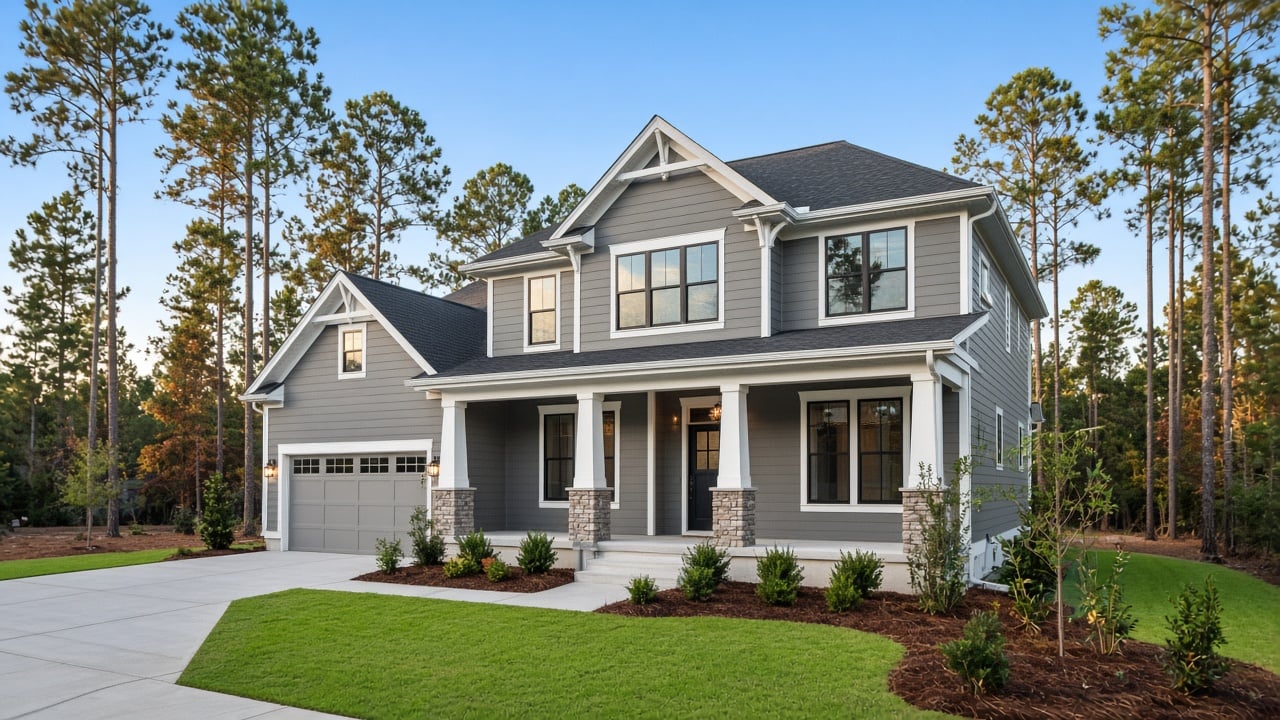
Drive Village Road, U.S. 17, or N.C. 133 through Leland and you’ll see it right away: framing, model homes, and “now selling” flags. Northern Brunswick County has been one of the busiest new construction markets in the Cape Fear region for years, and for a lot of buyers, a brand-new home in Leland is the first thing they look at. It can be a great move. It also works differently from buying a resale home, and the differences matter most before you sign anything. Here’s a practical guide from the Aspyre Collective team.
Why So Many Buyers Look at New Construction in Leland
Leland sits just across the Cape Fear River from downtown Wilmington, which makes it a natural fit for people who work in New Hanover County but want more space, newer homes, or a different price point. Many master-planned communities here bundle pools, clubhouses, and trails, and a new home means modern floor plans and years before the roof or HVAC needs attention.
Financing is also part of the conversation right now. Freddie Mac’s weekly survey released on Oct. 29, 2026 put the average 30-year fixed rate at 7.24%, down from 7.32% the week before and the lowest reading this month (Freddie Mac PMMS, Oct. 29, 2026). With rates at that level, builder incentives such as closing cost credits or rate buydowns can make a real difference in a monthly payment, which is one reason new construction gets so much attention from local buyers.
How Buying From a Builder Is Different
The builder’s contract, not the standard form
Most resale homes in North Carolina are bought with the standard Offer to Purchase and Contract, which includes a due diligence period that lets buyers inspect, get insurance quotes, and walk away for any reason during that window. Builders usually use their own purchase agreements instead. Those contracts are written to protect the builder, and terms like deposits, cancellation rights, construction timelines, and allowed changes can look very different. Read every page, ask questions, and consider having a real estate attorney review it before you sign.
The sales rep works for the builder
The friendly person in the model home is there to represent the builder. You’ll want your own agent, registered with the builder on your first visit. Many builders require that your agent come with you, or be named on the registration card, the first time you walk in. If you tour alone first, you may lose the ability to have representation on that purchase.
Incentives often depend on the builder’s lender
Closing cost help and rate buydowns are frequently tied to using the builder’s preferred lender or title company. Get a quote from at least one outside lender too, and compare the full picture: rate, points, fees, and the actual dollar value of the incentive.
Inspections Still Matter on a New Home
“It’s brand new, why inspect it?” is one of the most common questions we hear. New homes are built quickly by many different trades, and small misses happen: a disconnected duct, missing insulation in a corner of the attic, flashing that isn’t quite right, or grading that sends water toward the foundation. A licensed North Carolina home inspector can catch those while the builder is still on site and responsible for fixing them.
- Pre-drywall inspection: Done after framing, plumbing, electrical, and HVAC rough-ins, but before the walls are closed. This is the best chance to see what’s inside the walls.
- Final inspection: Done before your final walk-through, so any issues can go on the builder’s punch list.
- Warranty inspection: Scheduled a few weeks before your builder warranty period ends, so you can submit claims while you still have coverage.
Check your contract to see whether the builder allows third-party inspections and at what stages. Ask before you sign, not after.
Leland-Specific Things to Check
Flood zones and drainage
Much of Leland is higher ground, but parts of northern Brunswick County sit near creeks, wetlands, and the Brunswick and Cape Fear rivers. Look up any lot on the state’s NC Flood Risk Information System, ask the builder for the lot’s elevation information, and get an insurance quote early. Our flood zones guide for the Wilmington area walks through the basics.
Utilities
Water and sewer service in the Leland area can come from different providers depending on where the community sits, and some outlying areas rely on septic. Ask who provides service, what the typical bills look like, and whether any connection or capacity fees are already included in the price.
HOA rules and fees
Nearly every new community has a homeowners association. Ask for the covenants, the current budget, and any rules on fences, sheds, rentals, and parking. In a community that’s still being built, the developer often controls the HOA until a set number of homes are sold, and dues can change once owners take over.
Property taxes
A new home’s tax bill is based on the finished home’s assessed value, so early estimates can be low if they reflect only the lot. Brunswick County also has a revaluation coming in 2027. We covered what that means in our post on Leland property taxes and the 2027 revaluation.
Future growth nearby
Leland’s planning board and town council regularly review rezonings and new subdivisions. Ask the builder what’s planned for the land around the community, and check the Town of Leland’s planning pages and recent agendas.
Frequently Asked Questions
Do I need my own agent to buy new construction in Leland?
It isn’t required, but it’s smart. The builder’s sales team represents the builder. In many cases the builder pays the buyer’s agent fee, though that’s set out in the builder’s terms, so confirm it in writing.
Can I negotiate with a builder?
Often, yes, though usually on incentives, upgrades, or closing costs rather than the base price. How flexible a builder is depends on how many homes they have to sell and how long a home has been sitting.
Is a home inspection worth it if the home has a warranty?
Yes. A warranty covers problems you report, and an inspection helps you find them. Catching an issue before closing is almost always easier than filing a claim later.
Thinking About a New Home in Leland?
New construction can be a great way to get into northern Brunswick County, as long as you go in knowing what to look for. We can help you compare communities, register with builders, review incentives, and plan your inspections. Contact Aspyre Collective to start your search.