



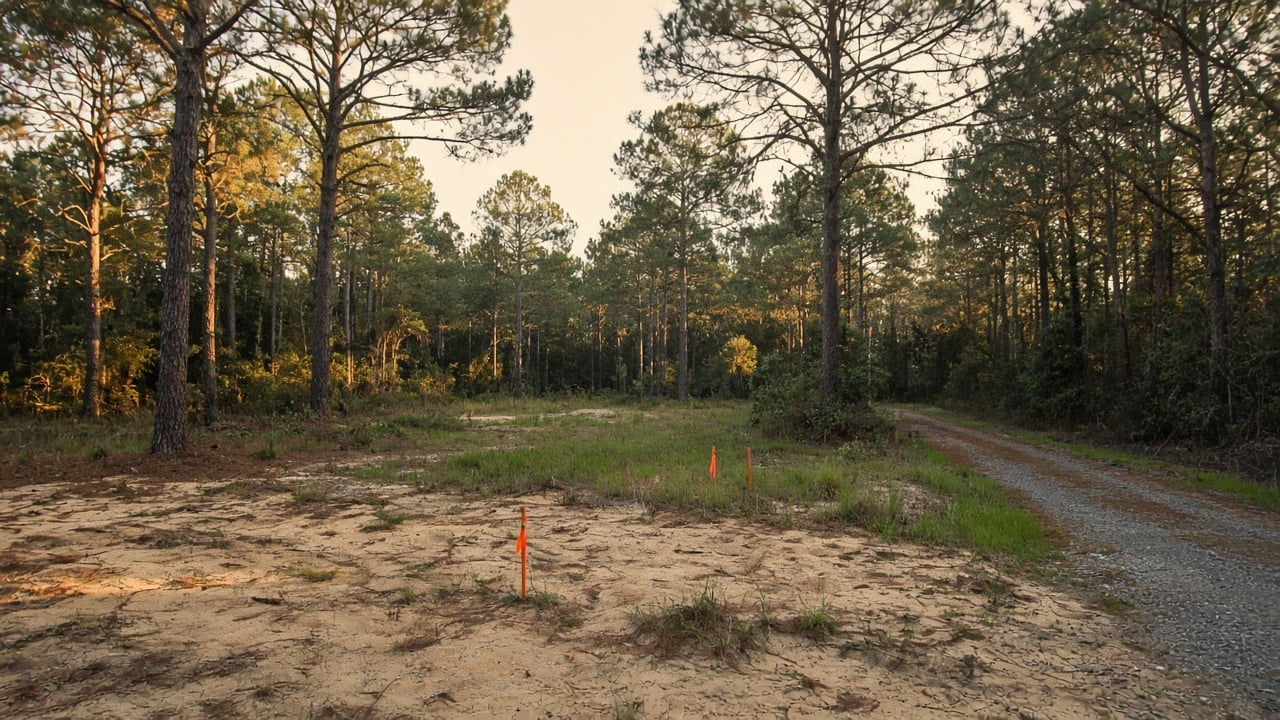
A lot of buyers come to Pender County for room to breathe. Acreage near Burgaw, a wooded lot outside Rocky Point, a quiet tract off N.C. 53, or a homesite in western Hampstead can offer space and privacy that’s hard to find closer to Wilmington. But much of rural Pender County isn’t served by public sewer, and plenty of it isn’t on county water either. That means the soil under a lot can matter as much as the view from it.
If you’re thinking about buying land to build on, here’s a plain-English look at how septic and well permitting works in Pender County, what to check before you commit, and the questions we encourage every land buyer to ask.
Why Septic and Water Come First
On a lot without public sewer, you can’t build a home until the county confirms the land can support a septic system. A beautiful two-acre parcel with poorly drained soil, a high water table, or wetlands in the wrong spot may only support a smaller home, may need a more expensive engineered system, or in some cases may not be buildable as planned at all. In a county shaped by creeks, swamps, and the Northeast Cape Fear River, this isn’t a box to check at the end.
How the Process Works in Pender County
Septic systems and private wells in the county are handled by Pender County Environmental Health’s On-Site Wastewater Program. According to the county, its Environmental Health Specialists perform soil evaluations to determine whether a property is suitable for a septic system and oversee the design, construction, and operation of septic systems and drinking water wells.
Step 1: The Improvement Permit
The first approval is an Improvement Permit, often shortened to IP. It’s based on a site and soil evaluation, which is what most people mean when they say “perc test.” The county’s environmental health application for new structures asks for a site plan or plat showing property lines, easements and rights-of-way, any CAMA lines, existing and proposed structures and driveways, wells and water lines, and your preferred septic and well locations. The size of the system is tied to the home you plan to build, so the number of bedrooms you want matters from day one.
Step 2: The Construction Authorization
Next comes a Construction Authorization. The county’s application states that a Construction Authorization is needed to obtain a building permit and install a septic system, and that all parcels, easements, and declarations must be recorded before it is issued. In other words, if you’re splitting off a lot or relying on an access easement, that paperwork needs to be final first.
Step 3: Well Permit, Installation, and Final Inspection
If the lot needs a private well, that requires its own permit. The county’s application notes that you must hire well and septic contractors who hold valid North Carolina certification, and that a final inspection of both the well and the septic system must be approved by county staff before either is put into use or the new home is occupied.
Fees are listed on the current county application, and they vary by system size and permit type. Check the latest form before you budget, since fees can change.
Zoning Comes Before Environmental Health
Pender County’s procedures say applications for new construction using on-site wastewater go through the county’s zoning department before they reach Environmental Health. The county’s Inspections and Permitting page also notes that most permit applications can be filed through its online portal, called PORT, and that building permit applications need documentation of how the home will get water and sewer service.
What This Means for Land Buyers
Make Your Offer Contingent on Septic Approval
The most important protection for most land buyers is time. In North Carolina’s standard land contract, buyers typically negotiate a due diligence period to investigate the property. Soil evaluations can take time to schedule, so build in enough of a window to apply, get the site evaluated, and review the results before your due diligence period ends. If a seller already has an Improvement Permit, ask for a copy and confirm it matches the home you want to build.
Read the Permit, Not Just the Listing
“Perked” or “septic approved” in a listing can mean different things. An existing permit may be approved for a certain number of bedrooms, a specific house footprint, or a particular system type. The county’s application also warns that permits can be revoked if the site plan or intended use changes, or if the soil area is disturbed. Don’t clear, grade, or park heavy equipment on the approved septic area before you build.
Check Flood Zones and Wetlands Too
Septic approval is one piece. Flood zone status affects where you can build, how high, and what insurance will cost. Wetlands may limit the usable part of a lot. Look up the parcel on FEMA’s flood maps and the county’s GIS tools, and consider a survey that shows any wetland areas before you close.
Budget for More Than the Lot
Land buyers should plan for site evaluation and permit fees, a survey, clearing, a driveway, the septic system itself, and a well and pump if there’s no county water. If the soil calls for an engineered or alternative system, that can add meaningful cost. Get contractor quotes during due diligence, not after closing.
Frequently Asked Questions
What’s the difference between a perc test and an Improvement Permit?
“Perc test” is the everyday term for the soil evaluation. In Pender County, that evaluation is part of the Improvement Permit, which is the formal approval that a site can support a septic system for the use you’ve proposed.
Can I build on a lot that failed a soil evaluation?
Sometimes. An engineered or alternative system may be an option, or a smaller home may fit. Other times the answer is no. Ask Environmental Health and a licensed septic designer about your specific lot.
Do I need a well permit if I’m on county water?
Not for drinking water. A private well needs a county permit, and the county’s application notes that a well serving more than one purpose, such as drinking water and geothermal, should be noted on the application.
Thinking About Land in Pender County?
From Burgaw and Rocky Point to Hampstead and the farmland in between, Pender County has real opportunities for buyers who want space to build. The right lot starts with the right questions. If you’d like help finding land, reviewing permits, or planning your due diligence, contact Aspyre Collective and we’ll help you buy with confidence.