


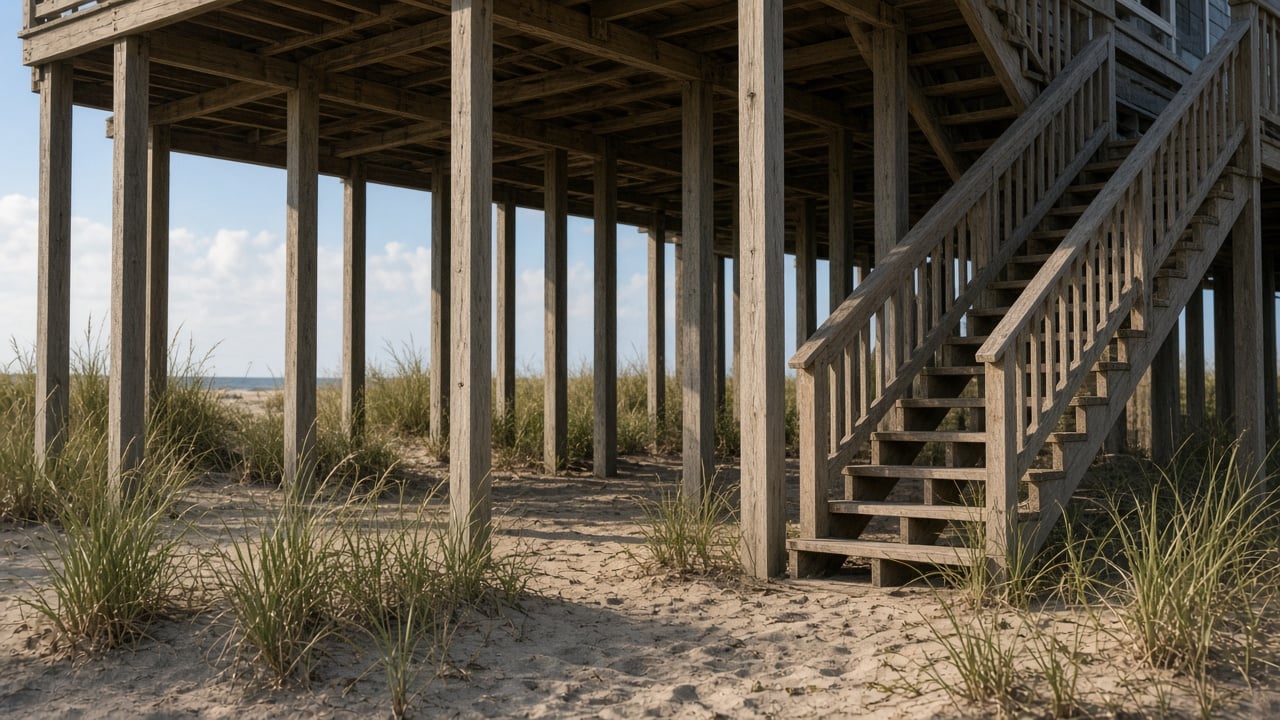
Most homes on Oak Island, Holden Beach, Ocean Isle Beach and Sunset Beach share one feature buyers from inland markets are not used to: they sit up on pilings. Elevation is one of the best defenses a beach house has against storm surge and flooding, but it also means a big part of the structure lives outside, exposed to salt air, wind and water. A standard home inspection is a good start. On an elevated coastal home, though, the most important parts of the house are often underneath it.
This checklist covers what to look at below and around an elevated home in Brunswick County’s beach towns before your due diligence period ends.
Why the Space Under the House Matters
On the oceanfront and in other high-risk flood areas, the space below an elevated home is designed to let water pass through. FEMA’s guidance on breakaway walls below elevated coastal buildings (Technical Bulletin 9) explains that in Coastal High Hazard Areas (V zones), enclosures below the lowest floor must use walls designed to collapse under flood and wave forces without damaging the elevated home or its foundation. FEMA also notes these enclosed areas are meant only for parking, building access and storage.
For buyers, that has two practical effects. First, the condition of the foundation and framing below the living area matters a great deal. Second, what has been built or finished in that space can affect flood insurance and future permits.
The Under-House Inspection Checklist
1. Pilings
- Look for cracks, splits, rot, insect damage and loss of material, especially near the ground line, where wood stays wet longest.
- Note any pilings that look out of plumb or have been patched, sistered or wrapped.
- Ask whether any pilings have been replaced and whether that work was permitted.
2. Beams, girders and connections
- Check where pilings connect to the beams above. Bolts, straps and other metal connectors can corrode in salt air, and rust staining is a clue worth a closer look.
- Look for sagging, soft wood or water staining on beams and floor framing.
- If anything looks questionable, a structural engineer’s evaluation is money well spent before you are past due diligence.
3. Enclosed areas and breakaway walls
- Note whether the ground level is open, partly enclosed or fully enclosed.
- Ask what is there: storage, parking, a laundry area, a bonus room. Finished living space below the base flood elevation can raise flood insurance concerns and may not comply with local floodplain rules.
- Ask the seller for permits for any ground-level enclosure or finish work.
4. Stairs, decks and railings
- Exterior stairs and decks take a beating on the coast. Check treads, stringers, posts, railings and the way decks attach to the house.
- Loose fasteners, corroded hardware and soft spots are common and usually fixable, but they belong in your repair negotiations.
5. Utilities below the house
- Look at where the HVAC condenser, water heater and electrical equipment sit. Equipment that is elevated on a platform is generally better protected from flooding than equipment at ground level.
- Check pipes and ductwork that run under the house for insulation, corrosion and secure supports.
6. Ground, grading and drainage
- Note signs of erosion or scour around pilings, standing water and drainage patterns after rain.
- On the oceanfront, ask about dune condition and any past storm damage.
Paperwork to Request
A good under-house inspection is only half of due diligence. Ask for:
- An elevation certificate. FloodSmart, the National Flood Insurance Program’s site, explains that an elevation certificate documents a building’s elevation and can help determine flood insurance rates. If the seller has one, it is one of the most useful documents you can get.
- Flood insurance history. Ask what the current policy costs and get your own quotes early. Our flood zones guide for buyers covers the basics.
- Permits and repair records for piling work, enclosures, decks and stairs.
- Storm history. Ask about past insurance claims and storm repairs.
It is also worth checking whether a property is near an inlet. Our post on Brunswick County inlet hazard area changes explains why that can matter.
Planning to Rent It Out?
If the home will be a vacation rental, guests will use those stairs, decks and outdoor showers constantly. Budget for ongoing maintenance and ask local property managers what they typically see on homes of the same age. Our investor guides for Oak Island and Holden Beach go deeper on rental numbers.
Elevated Beach Home FAQ
Is a general home inspection enough for a house on pilings?
It is a starting point. Make sure your inspector looks under the house, and consider a structural engineer if there are concerns about pilings, beams or connections. Our Cape Fear home inspection guide has more.
Can I turn the ground level into living space?
In many flood zones, finished living space below the base flood elevation is restricted. Check with the town’s floodplain administrator and your insurance agent before buying with that plan in mind.
Why does the elevation certificate matter so much?
It shows how high the building sits relative to expected flood levels, which helps insurers price flood coverage and helps you compare homes.
Shopping for a Beach Home in Brunswick County?
We help buyers compare homes across Oak Island, Holden Beach, Ocean Isle Beach and Sunset Beach, and we know what to look for under the house as well as inside it. Talk with Aspyre Collective before you schedule inspections, and we will help you build a due diligence plan that fits the property.