



Buying a home in Wilmington, Leland, Hampstead, or anywhere along the Cape Fear coast comes with a few things you won’t find on an inspection checklist written for Ohio or Arizona. Salt air, sandy soil, humid summers, raised foundations, and a long history of tropical storms all leave their mark on houses here. A good inspection during your due diligence period is the best chance you’ll get to see those issues before you’re committed, so it pays to know what to ask for and what to watch closely.
This guide walks through how inspections work in North Carolina, the coastal-specific items we encourage buyers to focus on in Brunswick, New Hanover, and Pender counties, and how to turn an inspection report into a smart next step.
How Home Inspections Work in North Carolina
In North Carolina, anyone who performs a home inspection for pay, or calls themselves a “licensed home inspector,” must be licensed by the North Carolina Home Inspector Licensure Board, which is housed with the Office of State Fire Marshal. The Board’s Standards of Practice set the minimum an inspection has to cover. Under 11 NCAC 08 .1103, the inspector must give you a signed written contract before the inspection, look at the readily visible and accessible systems, and deliver a written report that names what wasn’t inspected and why, explains any defects, and points you toward repair, monitoring, or a specialist. The inspector’s name, license number, and signature belong on the first or second page.
Just as important is what a standard inspection does not do. The rules say inspectors aren’t required to estimate how long a system will last, check code compliance, or move furniture, stored items, or debris to get a better look. That’s why the specialist referrals in your report matter so much here.
The Termite Report Is a Separate Inspection
Wood-destroying insects are a real concern in our warm, damp climate, and in North Carolina the termite report has its own rules. According to the N.C. Department of Agriculture & Consumer Services, the official Wood-Destroying Insect Information Report (form WDIR-100) is the only legal form for this purpose and is required on almost every residential home sold. It must be issued by a licensed structural pest control company, not a home inspector. The report covers termites, powder post beetles, old house borers, carpenter ants, and more, and it must note “conditions conducive” to termites, such as wood touching soil or wood in the crawl space with moisture of 20% or higher. It’s a snapshot of what’s visible on inspection day, not a warranty.
What to Watch Closely on a Cape Fear Coast Home
Crawl Spaces and Moisture
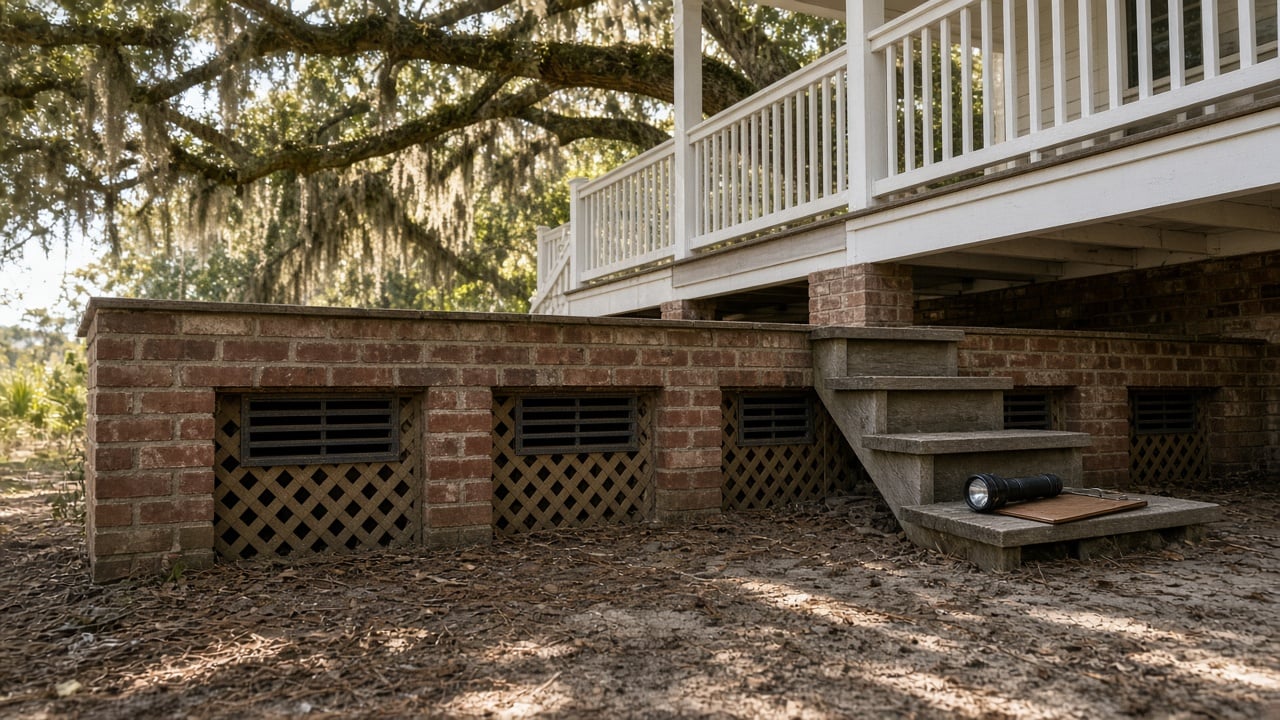
Many homes across New Hanover and Brunswick counties sit on crawl spaces, and our humidity makes them the first place to look. Ask your inspector to note standing water, wet insulation, sagging floor joists, mold-like growth, and how well the vapor barrier covers the ground. If the crawl space is encapsulated or has a dehumidifier, ask whether it’s working. Moisture findings often tie directly to the termite report, so read the two together.
Roof, Flashing, and Storm Wear
Wind-driven rain is a fact of life here. Inspectors will look at the roof covering, flashing, and signs of past leaks in the attic and ceilings. If you see patched areas or water stains, ask the seller about storm history and any insurance claims. Roof age and condition can also affect what homeowners insurance costs you, so it’s worth getting a sense of it early.
Salt Air and Exterior Metals
Closer to the water, places like Wrightsville Beach, Carolina Beach, Oak Island, and Surf City, salt air is tough on HVAC condensers, exterior light fixtures, fasteners, railings, and hurricane straps. Corrosion on an outdoor AC unit is common near the ocean and can shorten its life. If the report flags rust or pitting, a follow-up from an HVAC technician is a smart, inexpensive step.
Raised Homes, Pilings, and Decks
Elevated beach homes and homes in flood zones often sit on pilings, with large decks and exterior stairs. These take a beating from weather. Ask the inspector to look carefully at piling condition, deck connections, and stairs, and consider a structural engineer if anything looks off. Because a standard inspection doesn’t confirm code compliance, a specialist can also be useful for older additions or enclosed areas under elevated homes.
Septic Systems and Wells
Outside city and county sewer, especially in much of Pender County and parts of rural Brunswick, many homes rely on septic systems and private wells. A standard home inspection typically doesn’t evaluate a septic system’s drain field or test well water. Plan for a separate septic inspection and a water test so you know what you’re buying.
Turning the Report Into a Plan
Inspection reports can be long, and almost every home has a list of items. The goal isn’t a perfect report; it’s a clear picture. Sort findings into three groups: safety issues and major systems, items that need a specialist’s opinion, and routine maintenance. Get any specialist evaluations scheduled quickly so the answers come back before your due diligence period ends. From there, you can decide whether to move forward as is, negotiate repairs or a price adjustment, or walk away.
Frequently Asked Questions
Is a home inspection required to buy a home in North Carolina?
A general home inspection is a buyer’s choice, not a legal requirement, but we strongly recommend one. The termite report (WDIR-100) is a separate document from a licensed pest control company and is required on almost every residential sale, according to NCDA&CS.
Does a home inspection cover the septic system?
Usually not in any depth. If the home is on septic, plan for a separate septic inspection, and a water test if it has a private well.
Should I inspect a brand-new home?
Yes. New construction in Leland, Hampstead, and other growing areas can still have installation issues. An independent inspection before closing, and another before your builder warranty runs out, can catch problems while the builder is still responsible.
How do I check that an inspector is licensed?
Ask for their North Carolina license number, which should appear on the report, and confirm it with the Home Inspector Licensure Board through the Office of State Fire Marshal.
Buying on the Cape Fear Coast? Let’s Talk
We help buyers across Brunswick, New Hanover, and Pender counties plan inspections around their due diligence timeline, connect with trusted local specialists, and negotiate smartly once the reports are in. If you’re getting ready to buy, reach out to Aspyre Collective and we’ll help you go in with clear eyes.