


If you own, or are thinking about buying, a home near the end of a barrier island in Brunswick County, there’s a state rule change working its way through Raleigh that deserves a spot on your radar. North Carolina’s Coastal Resources Commission (CRC) is updating its Inlet Hazard Area maps for the first time since the late 1970s, and the new lines would change how many homes fall inside these extra-regulated zones at Ocean Isle Beach, Holden Beach, Oak Island, and Sunset Beach.
According to the Brunswick Beacon (April 23, 2026, updated June 29), the commission voted unanimously at its April meeting in Ocean Isle Beach to move the draft rules forward. That vote started the formal rulemaking process. It did not make the rules final. Here’s what’s proposed, who it could affect, and what we’d suggest homeowners and buyers do now.
What Is an Inlet Hazard Area?
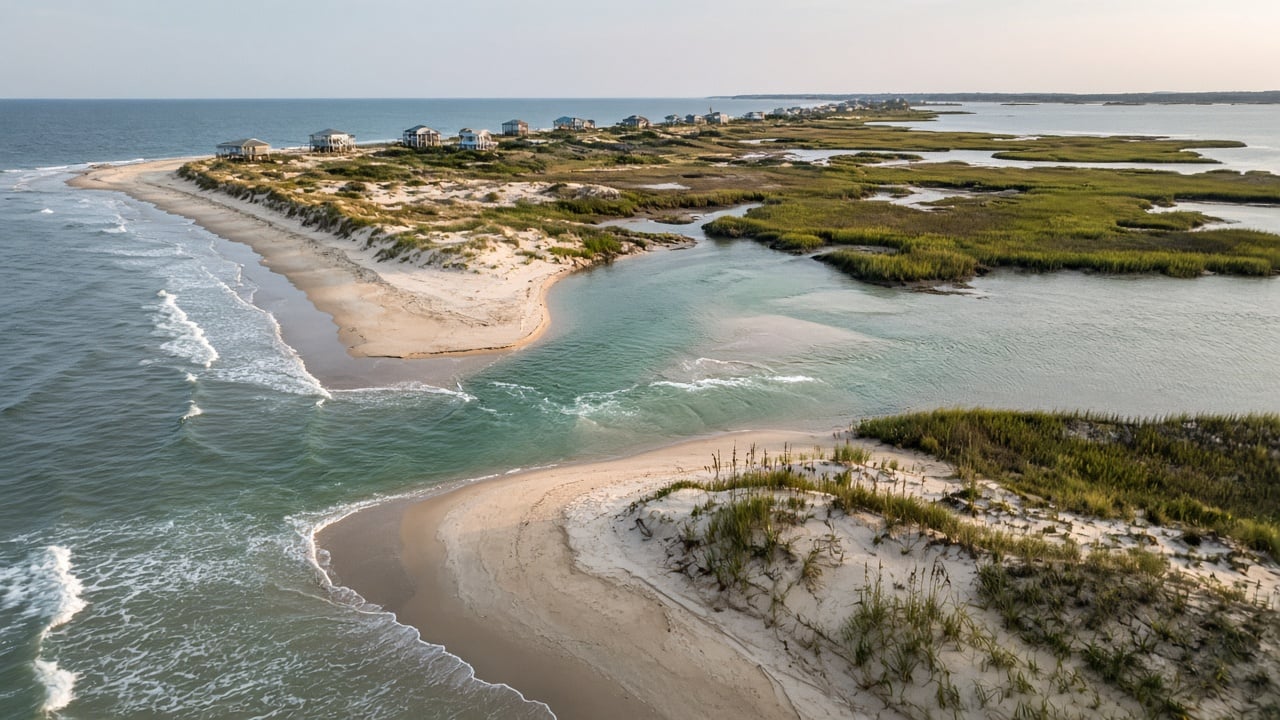
Inlet Hazard Areas (IHAs) are the stretches of beach next to inlets, where sand moves the fastest and the shoreline can shift dramatically from year to year. Because these spots are so dynamic, the state applies stricter building rules inside them, mainly larger setbacks from the vegetation line (the line where dry sand meets dune plants). The bigger the setback factor, the farther back a new or rebuilt structure has to sit.
The current maps date back to a 1978 report. The new boundaries come from the CRC’s Science Panel, which released updated recommendations in 2025, along with a new study of long-term erosion rates at each inlet.
How the Proposed Maps Would Change Brunswick County Beaches
A N.C. Division of Coastal Management presentation compared how many structures sit inside each inlet’s hazard area today versus under the 2025 update. For Brunswick County, the state’s figures show:
- Ocean Isle Beach, Shallotte Inlet (east end): from 0 structures to 200, the biggest jump on the coast.
- Ocean Isle Beach, Tubbs Inlet (west end): from 41 to 30.
- Holden Beach, Shallotte Inlet (west end): from 59 to 144.
- Holden Beach, Lockwood Folly Inlet (east end): from 4 to 42.
- Oak Island, Lockwood Folly Inlet: from 43 to 105.
- Sunset Beach, Tubbs Inlet: from 206 down to 17.
The Beacon summarized it this way: Ocean Isle Beach would go from 41 structures in IHAs to 230, Holden Beach from 63 to 186, and Sunset Beach from 206 to just 17. Some Sunset Beach owners could actually see their homes move out of the hazard area.
Setback factors would vary by section
The draft rules also break some inlet areas into smaller sections with their own setback factors, based on how fast each one has eroded. Per the Beacon’s reporting, Ocean Isle’s Shallotte Inlet area would be split into eight sections with factors ranging from 2 to 17.5, while Holden Beach’s Lockwood Folly Inlet area would see its factors go down. Sunset Beach’s factor at Tubbs Inlet would stay at 2. The east end of Ocean Isle, where erosion hit The Pointe neighborhood during the 2025 hurricane season, is expected to see some of the sharpest increases.
What About Existing Homes?
This is the question we hear most, and the draft includes some reassurance. The Beacon reported that under the proposed “grandfathering” provisions, owners of existing homes that become nonconforming could rebuild after damage, as long as the new structure doesn’t exceed the original footprint or square footage, meets the required setback, and sits as far landward on the lot as feasible.
Undeveloped lots inside an IHA would face tighter limits: new construction couldn’t be placed farther seaward than the most landward neighboring structure. For anyone holding or shopping for a vacant oceanfront lot near an inlet, that detail matters a lot.
What This Means for Homeowners
- Find out where you stand. If your home is near Shallotte Inlet, Lockwood Folly Inlet, or Tubbs Inlet, ask your town’s planning office or the Division of Coastal Management whether the proposed boundary includes your property.
- Think about future plans. If you were planning a rebuild, a major addition, or a new house on a lot you own, the timing of the final rules could matter.
- Watch for the public hearing. The Beacon reported that after a fiscal analysis, the CRC planned to hold a public hearing in Brunswick County before any adoption vote. That’s your chance to weigh in.
What This Means for Buyers
Inlet-end homes are some of the most beautiful properties on our coast, with wide views of the water and the marsh. They also carry more risk and more rules. If you’re shopping near an inlet on Ocean Isle, Holden Beach, or Oak Island, we’d suggest:
- Asking whether the home is in a current or proposed Inlet Hazard Area, and what setback would apply if it ever had to be rebuilt.
- Getting flood and wind insurance quotes early, before you’re under contract.
- Looking at the erosion history and any beach renourishment plans for that stretch of shore.
- Being extra careful with vacant lots, since buildable area could shrink under the new rules.
Frequently Asked Questions
Are the new Inlet Hazard Area rules in effect?
Not as of the latest reporting we checked. The CRC’s April vote started formal rulemaking, which includes a fiscal analysis, public hearings, more review, and a final adoption vote before anything takes effect.
Does being in an IHA change my flood insurance?
IHAs are a state building and setback rule under the Coastal Area Management Act, not a FEMA flood zone. They’re separate from your flood insurance rating, though both reflect coastal risk. Talk to your insurance agent about your specific property.
Could I still rebuild if a storm damaged my home?
Under the draft rules as reported, yes, generally within the original footprint and square footage, meeting the required setback and placed as far landward as feasible. Final rules could change, so check before you plan.
Does this affect beaches outside Brunswick County?
The update covers inlets up and down the coast. The state’s comparison also includes Carolina Beach, Wrightsville Beach, Figure Eight Island, and Topsail Beach, so New Hanover and Pender owners near inlets should keep an eye on it too.
Thinking About Buying or Selling Near an Inlet?
Inlet-front property takes more homework than a typical beach house, and the rules are changing. We help buyers and sellers across Brunswick, New Hanover, and Pender counties sort through setbacks, flood risk, and insurance before they make a move. Reach out to Aspyre Collective and we’ll help you understand exactly what these changes could mean for your property.