


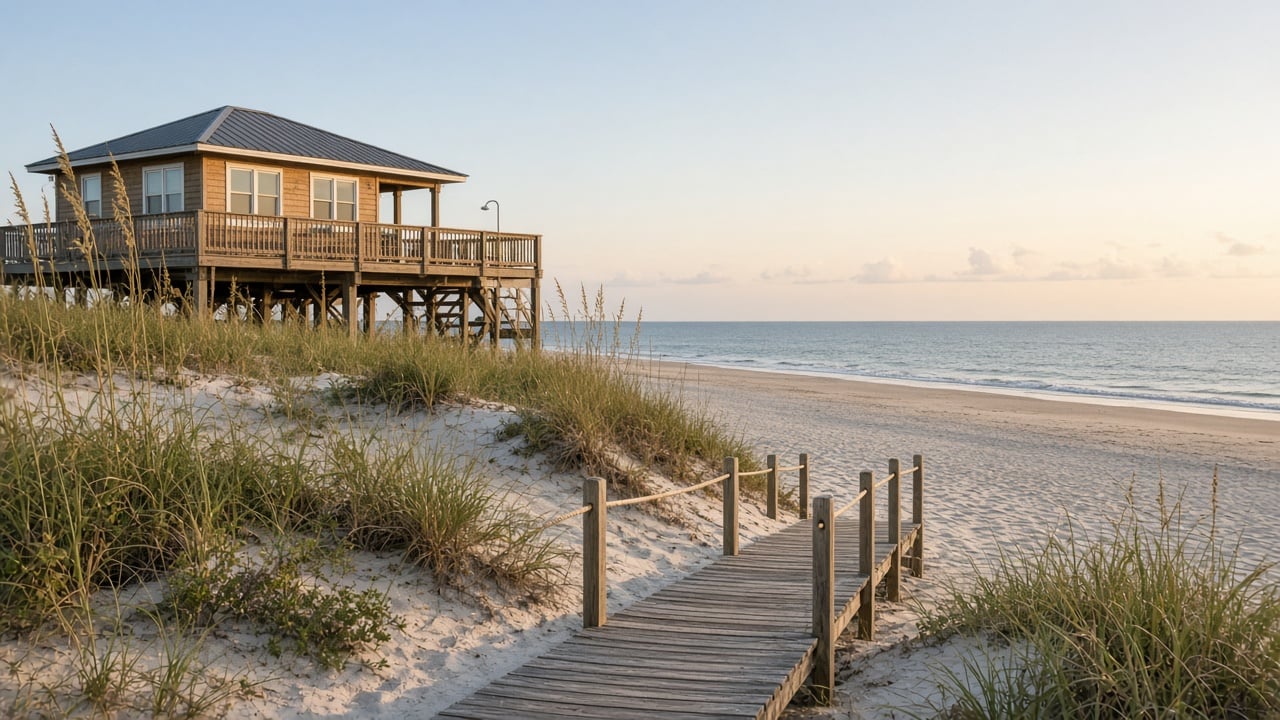
Holden Beach has a reputation as one of the Brunswick County coast’s true family beaches: quiet, low-key, mostly single-family cottages, and no high-rise strip. That same character is what draws a steady stream of buyers who want a second home they can enjoy themselves and rent out the rest of the year. If you’re thinking about buying a vacation rental on Holden Beach, here’s a practical, local look at what to plan for before you make an offer.
Why Holden Beach Appeals to Second-Home and Rental Buyers
Holden Beach sits between Oak Island and Ocean Isle Beach, reached by the high-rise bridge from the mainland near Supply and Shallotte. The island is largely residential, with cottages on the oceanfront, on the canals, and along the sound side. Many renters are families who come back to the same street year after year, which shapes what guests expect: a comfortable house, easy beach access, and a quiet stay rather than nightlife.
For an owner, that usually means demand is strongest in summer and around holidays, with a slower off-season. Plan your numbers around a realistic season, not just peak-week rates.
What’s Happening Right Now: Parking and the Off-Season
One timely issue for owners is beach parking. According to the Brunswick Beacon (October 1, 2026), Holden Beach commissioners voted 3-1 on September 15 to have staff prepare the changes needed to suspend paid parking in November and December, after paid parking was expanded to year-round enforcement in 2025. The paper reported the item was set to come back for discussion and possible action at the board’s October 27 meeting, so check the Town of Holden Beach agendas page for the outcome.
Why does this matter to a rental buyer? On-site parking is part of what guests pay for. A house with enough driveway or under-house parking for a family’s cars is easier to rent, and it saves your guests from paying for public spaces. When you tour a property, count the parking spots and read the listing details closely.
Taxes Every Holden Beach Rental Owner Should Understand
Room occupancy tax
Short-term rentals in North Carolina are subject to sales tax plus local occupancy tax. The North Carolina Restaurant & Lodging Association’s July 2026 occupancy tax profile lists Holden Beach’s rate at 5%, with the first 3% going to tourism-related expenditures and the remaining 2% dedicated to beach nourishment and protection. Brunswick County’s separate 1% room occupancy tax as well, and whether it stacks on top of a town’s rate depends on the location, so confirm the full combined rate with your tax advisor or property manager.
Most full-service rental management companies collect and remit these taxes for you. If you plan to self-manage, you’ll be responsible for registering and filing yourself.
Property taxes
Your annual property tax bill will include Brunswick County and Town of Holden Beach rates. Rates can change with each budget cycle, so pull the current figures from the county tax office when you run your numbers rather than relying on an old listing sheet.
North Carolina’s Vacation Rental Act
Rentals of fewer than 90 days in North Carolina fall under the state’s Vacation Rental Act. As the North Carolina Department of Justice explains, guests must receive a written rental agreement that spells out what they’ll pay, the security deposit, and any extra fees. A few owner-side rules worth knowing, per G.S. 42A-18:
- Security deposits must be held in a trust account, and a bond can’t be used instead.
- Deposits must be applied, accounted for, or refunded within 45 days after the stay ends.
- A rental agreement can’t include automatic forfeiture of the deposit.
The NC Real Estate Commission’s vacation rental owner brochure is a good plain-English read before you buy.
Insurance and Flood Zones on a Barrier Island
Insurance is often the biggest surprise for first-time beach owners. On Holden Beach you’ll typically need to think about three pieces: a standard homeowners or dwelling policy, wind and hail coverage (often written through the North Carolina Insurance Underwriting Association, known locally as the Beach Plan), and flood insurance. Oceanfront, canal, and sound-side lots can carry very different flood zone designations, and an elevation certificate can make a real difference in what flood coverage costs.
Ask for quotes during your due diligence period, before you’re locked in. Your lender will likely require flood coverage if the home sits in a special flood hazard area.
Choosing the Right Property
Location on the island
Oceanfront homes command premium rents but also carry more exposure to erosion and storms. Second-row and canal homes can offer a good balance of rental appeal and cost, and canal lots add boating appeal. Sound-side homes tend to be quieter and catch great sunsets.
Features renters look for
- Enough bedrooms and bathrooms for multi-family groups
- A short walk to a public beach access
- Outdoor showers, decks, and covered space under the house
- Durable, easy-to-clean finishes
- A pool, which can boost bookings but adds upkeep and insurance considerations
Rental history
If a home is already in a rental program, ask for its booking history and gross rental income. Treat projections from anyone with a stake in the sale cautiously, and compare them with what similar homes nearby have earned.
Frequently Asked Questions
Can I rent my Holden Beach home short-term?
Short-term vacation rentals are a long-standing part of Holden Beach, but rules can change and some neighborhoods have their own covenants. Always review the town’s current ordinances and any HOA restrictions before you buy.
Do I need a property manager?
Not legally, but most out-of-town owners use one. Managers handle bookings, cleaning, tax remittance, maintenance calls, and Vacation Rental Act compliance.
Is flood insurance required?
If you finance a home in a special flood hazard area, your lender will generally require it. Even when it’s optional, it’s worth serious consideration on a barrier island.
When is the best time to shop?
Fall and winter are often a good time to tour, since you can see homes without guests in them and sellers may be planning for next season.
Ready to Explore Holden Beach?
Buying a beach rental is part lifestyle decision and part business plan. We’d be glad to walk the island with you, pull recent sales, and help you think through rental potential, insurance, and long-term value. Talk with Aspyre Collective about buying on Holden Beach.