


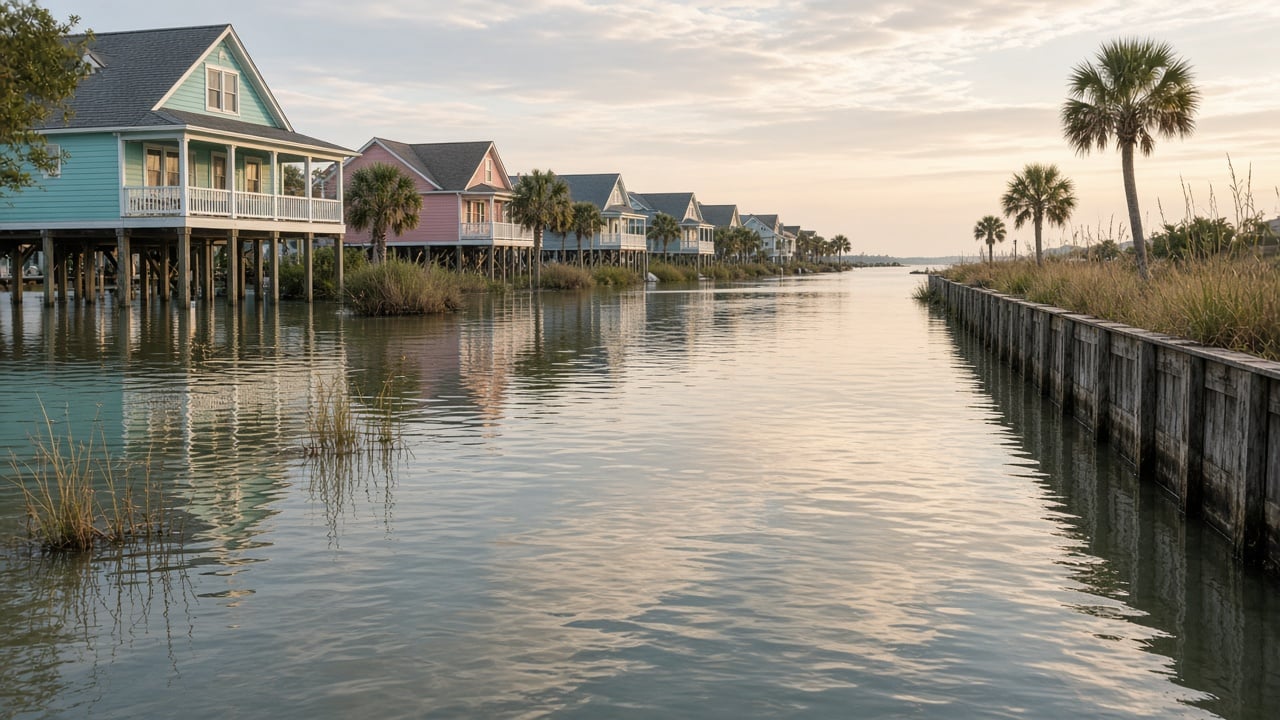
If you’ve driven Canal Drive in Carolina Beach this week, you’ve probably seen standing salt water, lowered barricades, or both. The late-October king tides are back, and once again the north end of Pleasure Island is getting the worst of it. For homeowners, it’s a reminder to check on property and cars. For buyers looking at the north end, it’s one of the most useful real-world previews you’ll ever get of how a street behaves at high water.
Here’s what’s happening, what the town and residents are doing about it, and how to factor tidal flooding into a purchase or sale in Carolina Beach.
What’s Happening This Week
WECT reported on Oct. 26, 2026 that town officials expected elevated flood risk from Oct. 24 through Oct. 31, driven by the full moon and the moon’s close approach to Earth. The town named Canal Drive, Florida Avenue, Carolina Beach Avenue North, and other low-lying areas as the spots that commonly flood, and it warned that roads may be closed and that police will cite anyone who drives around barricades.
A day later, WWAY reported on Oct. 27 that some areas started flooding as early as Saturday, with large puddles still sitting along Canal Drive on Monday. Town Manager Bruce Oakley told the station the town has added bulkheads at some street ends and town-owned properties, but that gaps remain where private properties have no bulkhead or have older, low ones that let water over the top. He also pointed out that wakes from cars driving through floodwater can push water into nearby homes and yards.
What a King Tide Actually Is
The Town of Carolina Beach explains on its 2026 King Tides page that “king tide” is an informal name for the highest predicted high tides of the year. They happen when a full or new moon lines up with the moon’s closest point to Earth. No storm is needed, which is why this kind of flooding is often called “sunny day” or nuisance flooding. Because the tides are predictable, they also tend to come back at similar times each year.
The North End Is Organizing
Residents aren’t just waiting for the water to go down. The Northend Flood Mitigation Alliance, a nonprofit started by north end homeowners and other stakeholders, is working with the town on stormwater drainage, bulkheads and other flood barriers, and a longer-term capital improvement and maintenance plan for that part of the island. In September 2026, the Carolina Beach Town Council adopted a resolution formally recognizing residents and groups like the alliance as partners in flood planning, including grant advocacy and outreach, as summarized by local outlet The Carolina Beach.
That matters for property owners. A coordinated plan with a list of projects, costs, and funding sources is how neighborhoods get infrastructure built. It doesn’t fix things overnight, and private bulkheads remain each owner’s job, but it’s a sign the north end has an organized voice at Town Hall.
What It Means If You Own on the North End
- Move cars to higher ground during the highest tides. Salt water is hard on vehicles, and the town specifically warns about it.
- Check your bulkhead. If your lot is on the water or a canal, the age and height of your bulkhead affect your property and your neighbors’. Get a marine contractor’s opinion before it becomes urgent.
- Keep records. Photos of high water around your home (dated) and records of any repairs or elevation work are helpful for insurance conversations and, later, for buyers.
- Sign up for alerts. The town offers urgent notifications, including king tide notices, through the sign-up link on its King Tides page.
What It Means If You’re Buying in Carolina Beach
None of this means you should cross the north end off your list. It’s a walkable, close-knit part of the island near the boardwalk, the harbor, and the beach. It just means you should shop with clear eyes.
Visit at High Tide
Look up the tide chart and go see the street, the driveway, and the closest intersection at high tide, ideally during a king tide like this week’s. Ten minutes on Canal Drive at the peak will tell you more than any listing photo.
Separate Tidal Flooding From the Flood Zone
A home’s FEMA flood zone, its elevation, and whether the street floods at high tide are three related but different questions. Ask for an elevation certificate if one exists, check the flood zone, and get flood insurance quotes early in your due diligence, not after you’re under contract. Our Wilmington-area flood zones guide walks through the basics.
Ask About Disclosures and Improvements
Ask the seller about past water intrusion, bulkhead age, any elevation or flood-vent work, and insurance claims. A home that has been raised or protected well can be a very different risk than the one next door.
Tips for Sellers
If you’re listing on the north end, be upfront. Buyers will hear about king tides, so it’s better to lead with what you’ve done: a newer bulkhead, elevation, flood vents, raised mechanicals, or a clean claims history. Gather those documents before you list so your agent can share them early and keep a deal on track.
FAQ
How long will this week’s king tide flooding last?
According to town officials as reported by WECT, the elevated flood risk was expected from Oct. 24 through Oct. 31, 2026.
Which Carolina Beach streets flood most often?
The town lists Canal Drive, Florida Avenue, Carolina Beach Avenue North, and other low-lying areas.
Is it illegal to drive through the barricades?
The town says police will issue citations to drivers who go around barricades and through flooded areas.
Does king tide flooding mean a home is in a high-risk flood zone?
Not necessarily. Tidal street flooding and a property’s FEMA flood zone are separate things, so check both, along with the home’s elevation and insurance quotes.
Thinking About the North End?
Carolina Beach is one of our favorite places on the coast, and the right home here is well worth a little extra homework. If you’d like help sizing up a specific street, understanding flood and insurance questions, or preparing a north end home to sell, reach out to Aspyre Collective. We’re happy to walk the neighborhood with you at high tide.