


If you’re shopping for a home anywhere in the Cape Fear region, from Leland and Southport to Ogden, Carolina Beach, Hampstead, or Surf City, flood zones will come up sooner or later. Water is a big part of why people love living here: the ocean, the sounds, the Cape Fear and Northeast Cape Fear rivers, and the creeks and marshes that wind through every neighborhood. That same water is why a flood zone lookup belongs near the top of your to-do list, ideally before you write an offer.
Here’s a plain-English guide to what the zones mean, when flood insurance is required, and the simple checks we walk our buyers through in Brunswick, New Hanover, and Pender counties.
What flood zones actually mean
Every property sits on a FEMA Flood Insurance Rate Map, often called a FIRM. According to FEMA’s Answers to Questions About the NFIP, zones that begin with the letter A or V are Special Flood Hazard Areas. That means land with a 1% chance of flooding in any given year, which FEMA notes works out to at least a 1-in-4 chance of flooding over a 30-year mortgage.
A and AE zones
These are the 1% annual-chance floodplain. AE zones have a published Base Flood Elevation, the height floodwater is expected to reach in that event. Plain A zones don’t have one, because a detailed study hasn’t been done. Around here you’ll often see AE zones following creeks, rivers, and low-lying areas inland, not just along the beach.
V and VE zones
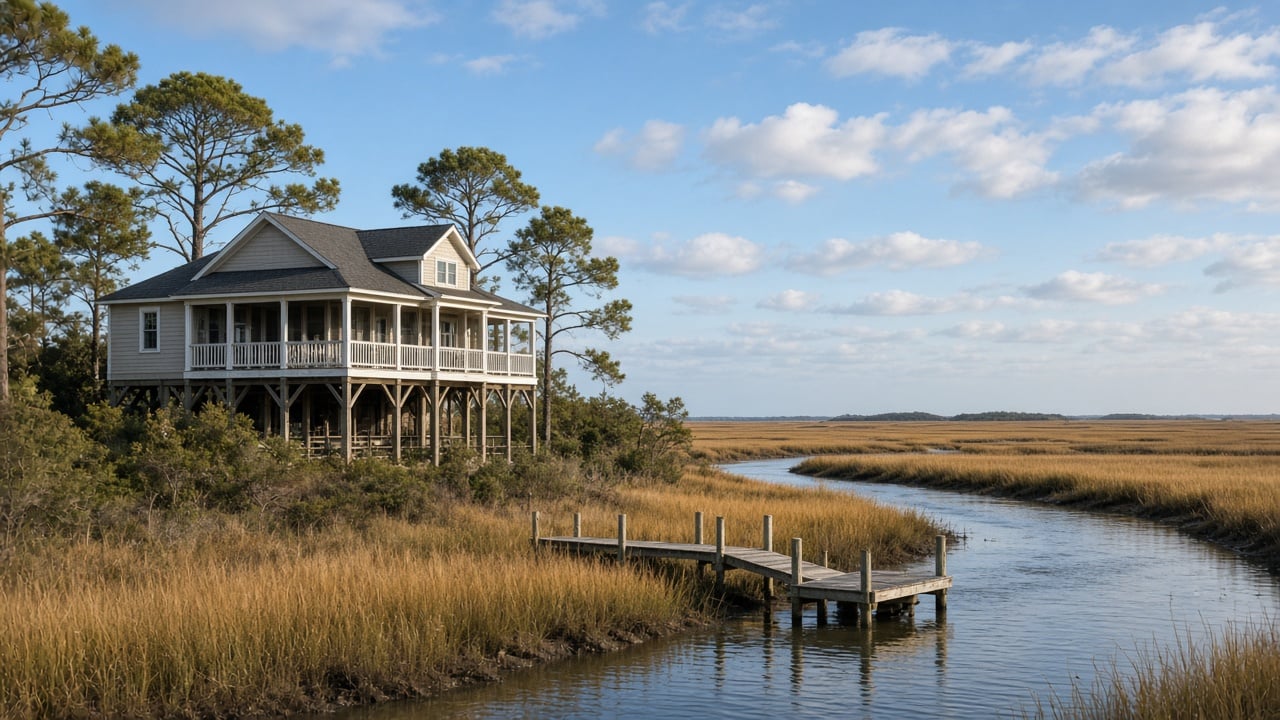
These are coastal high-hazard areas, where the same 1% flood also comes with storm-driven wave action. They usually cover oceanfront and some soundfront land, and they carry the strictest building rules and typically higher insurance costs. Don’t assume every beach-town home is in a V zone, though. Many island properties are mapped as AE instead, so always check the exact parcel.
Shaded and unshaded X zones
Shaded X is moderate risk, between the 1% and 0.2% annual-chance floodplains. Unshaded X is minimal risk. Neither is a Special Flood Hazard Area, so federal rules don’t require flood insurance there. But FEMA is clear that flooding happens outside mapped high-risk zones too, and plenty of Cape Fear homeowners learned that firsthand after recent hurricanes.
When flood insurance is required
If the home is in an A or V zone and you’re using a federally regulated or government-backed mortgage, your lender will require flood insurance. FEMA calls this the mandatory purchase requirement. Lenders can also require it in lower-risk zones if they choose.
Timing matters. FEMA says National Flood Insurance Program policies normally have a 30-day waiting period before coverage starts. There’s an important exception for buyers: when the policy is purchased in connection with making a mortgage loan, coverage can take effect at closing. So line up your quote early in due diligence, not the week of closing.
How to look up a specific address
The best free tool for our area is North Carolina’s own Flood Risk Information System (FRIS). Type in an address and click the property to see its flood zone, Base Flood Elevation where one exists, and map panel details. A few other places to check:
- FEMA’s Flood Map Service Center at msc.fema.gov holds the official maps and lets you print a FIRMette for a single property.
- New Hanover County points residents to its GIS “Where does it Flood” map and FRIS, and its Planning and Land Use staff can help confirm a property’s floodplain status, per the county’s floodplain FAQ.
- Brunswick and Pender counties and the beach towns each have planning or floodplain staff who can answer questions about local rules, which can be stricter than FEMA’s minimums.
One more tip: maps are updated on different schedules in different communities, so two homes a few miles apart can be rated from maps of different vintages. Note the map’s effective date when you look a property up, and don’t rely on a flood zone copied into a listing or tax record. Pull it yourself.
A simple flood checklist for buyers
- Before you offer: Look up the zone and Base Flood Elevation on FRIS for the exact parcel.
- Ask the listing side: Is there an elevation certificate? Is there a current flood policy, and can you see the declarations page? An existing NFIP policy can sometimes be transferred to a buyer.
- Get your own quotes early: Ask an insurance agent for both NFIP and private flood options, and for wind and homeowners quotes at the same time, since coastal homes often need all three.
- Look at the house, not just the map: Note the foundation type, how high the first floor sits, where the HVAC and water heater are, and how the lot drains. Your inspector can flag signs of past water.
- Ask about history: Talk with neighbors and ask the seller about past flooding or claims. North Carolina’s disclosure forms are a starting point, but direct questions in writing help too.
What this means if you’re selling
Sellers can make buyers more comfortable by having an elevation certificate ready, sharing the current flood policy and premium if there is one, and noting any improvements like raised utilities or flood vents. Clear information up front keeps a deal from stalling during due diligence.
FAQ
If a home is in an X zone, do I need flood insurance?
Usually it isn’t required by federal rules, though a lender can still require it. Many local homeowners in X zones carry it anyway because premiums there are often lower and flooding outside high-risk zones does happen.
Can a property’s flood zone change?
Yes. FEMA updates maps over time, and owners can apply for map changes in some cases with an elevation certificate and survey data. Always check the current effective map.
Is a higher Base Flood Elevation bad?
What matters most is how the home’s lowest floor compares to the Base Flood Elevation. A home built well above it will generally be in a better position on insurance and risk than one at or below it.
Talk it through with a local team
Flood zones are one of the most common questions we hear from buyers relocating to the Wilmington area, and the answer is different for every street. If you’d like help weighing a specific home or neighborhood, contact Aspyre Collective and we’ll walk through it with you.