



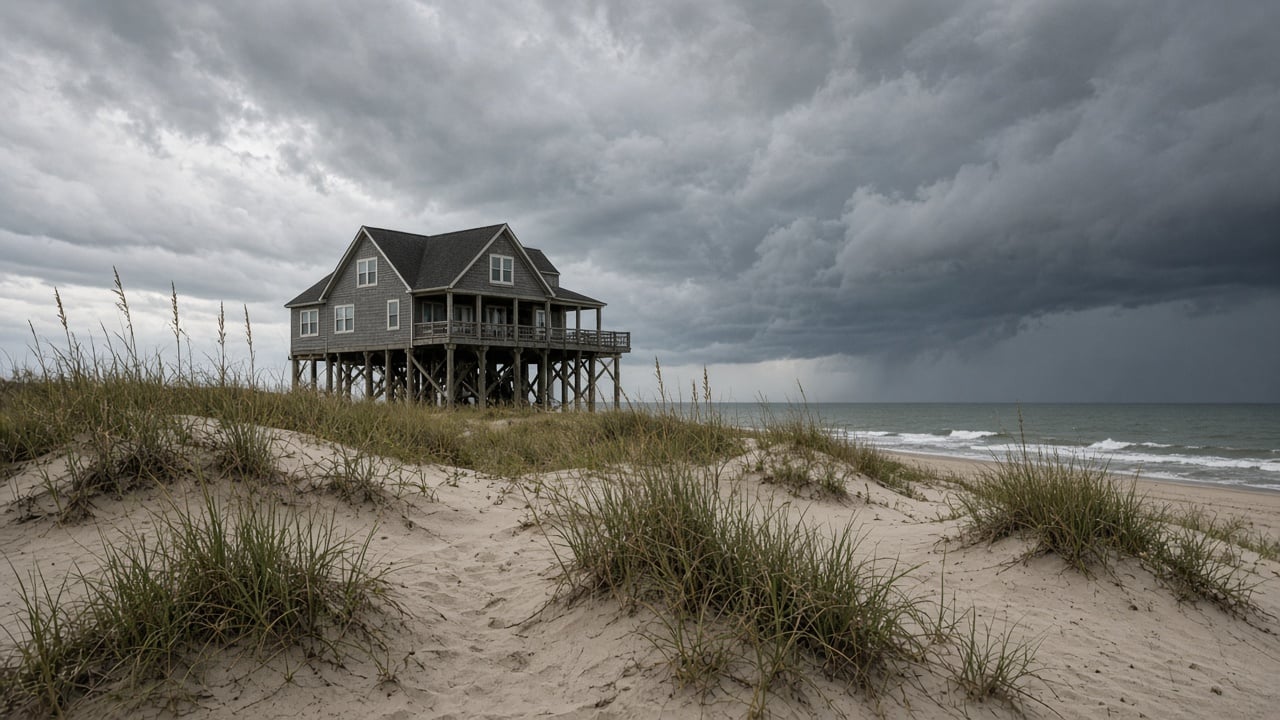
When buyers compare homeowners insurance quotes for a house in Surf City or Topsail Beach, most of the attention goes to the annual premium. The number that can matter more after a storm is the deductible, and on Topsail Island that often means a percentage deductible for named storms or wind. Two quotes with the same premium can leave you with very different out-of-pocket costs after a hurricane. Here is how these deductibles work in North Carolina and how to compare them before your due diligence period ends.
Flat Deductibles vs. Percentage Deductibles
A standard deductible is a flat dollar amount, such as $1,000 or $2,500, that applies to most claims. Many coastal policies add a second, separate deductible for wind-related losses, expressed as a percentage of your dwelling coverage rather than a dollar figure. That is the piece that catches buyers off guard.
The N.C. Department of Insurance explains it this way: a named storm deductible is typically a percentage of your Coverage A (dwelling) or Coverage C (personal property) amount and is shown on your declarations page. NCDOI’s own example: a 2 percent named storm deductible on a home insured for $300,000 would be $6,000.
Named Storm vs. Windstorm or Hail Deductibles
NCDOI describes two related types:
- Named storm deductible: Applies to wind or hail losses during a named storm, which NCDOI says includes hurricanes, tropical storms and tropical depressions that have been formally named. The window typically starts when an advisory, watch or warning for a named storm is issued for any part of North Carolina and ends 24 hours after the last watch, warning or advisory for any part of the state, whichever is later.
- Windstorm or hail percentage deductible: Applies to any wind or hail loss, named storm or not. NCDOI’s example: a 1 percent deductible on $200,000 of coverage means $2,000 out of pocket per wind or hail claim.
Notice the statewide trigger on named storms. A storm making landfall far from Topsail can still put your named storm deductible in play if a watch or warning is active anywhere in North Carolina when your loss happens.
Why This Comes Up So Often on Topsail Island
Barrier island homes face more wind exposure, and some insurers exclude wind from the primary policy in coastal areas. In that case, NCDOI says, owners may buy a separate windstorm and hail policy, often written by the North Carolina Insurance Underwriting Association, also known as the Coastal Property Insurance Pool. That separate policy carries its own deductible. NCDOI notes that eligibility for a pool wind policy requires an active primary policy from an admitted North Carolina carrier that has excluded windstorm.
So a Topsail Beach or Surf City island home may end up with two policies (a primary policy without wind and a wind-only policy), each with its own deductible, plus a separate flood policy with yet another deductible. Mainland homes in Hampstead or on the Surf City mainland may see different options and pricing. Our post on why your Pender County ZIP code matters for homeowners insurance explains how location affects base rates.
Don’t Forget Flood
Wind and flood are separate. Homeowners and wind-only policies generally do not cover flood damage such as storm surge, so flood insurance is its own policy and its own deductible. If you are buying on the island, price flood at the same time. Our flood zones guide is a good primer.
How to Compare Quotes Before You Commit
- Get quotes early. Start during your due diligence period so the numbers can inform your decision. See our due diligence guide for how that window works in North Carolina.
- Translate percentages into dollars. Multiply the percentage by the dwelling coverage on each quote, so you are comparing real out-of-pocket amounts.
- Count every deductible. Add up the primary, wind (if separate) and flood deductibles you could face in a single storm.
- Ask about options. Insurers may offer different deductible levels with different premiums. A lower premium with a higher percentage deductible is a trade-off, not a savings.
- Ask about mitigation. Roof upgrades and wind mitigation features may qualify for credits. Our FORTIFIED roof guide covers grants and insurance credits.
- Build a storm fund. Plan to keep cash on hand equal to at least your largest likely deductible.
FAQ: Hurricane and Wind Deductibles
Is a named storm deductible the same as a hurricane deductible?
People often use the terms interchangeably, but NCDOI’s definition of a named storm also includes tropical storms and tropical depressions, not just hurricanes. Read your policy’s wording.
Where do I find my deductible?
On your policy’s declarations page, according to NCDOI.
If I have a separate wind policy, who handles my claim?
NCDOI says to report the loss to your homeowners agent or company. Even with a separate pool wind policy, your primary insurer investigates and adjusts the claim.
Does a percentage deductible apply to every claim?
Typically only to wind or hail losses (or named storm losses). Other claims, like a kitchen fire, usually fall under your standard deductible.
Buying on Topsail? Let’s Run the Numbers
Island ownership is worth it for many buyers, but it works best when the full cost of ownership is clear from day one. Talk with Aspyre Collective about homes in Surf City, Topsail Beach and the nearby mainland, and we will help you plan for insurance before you commit.