



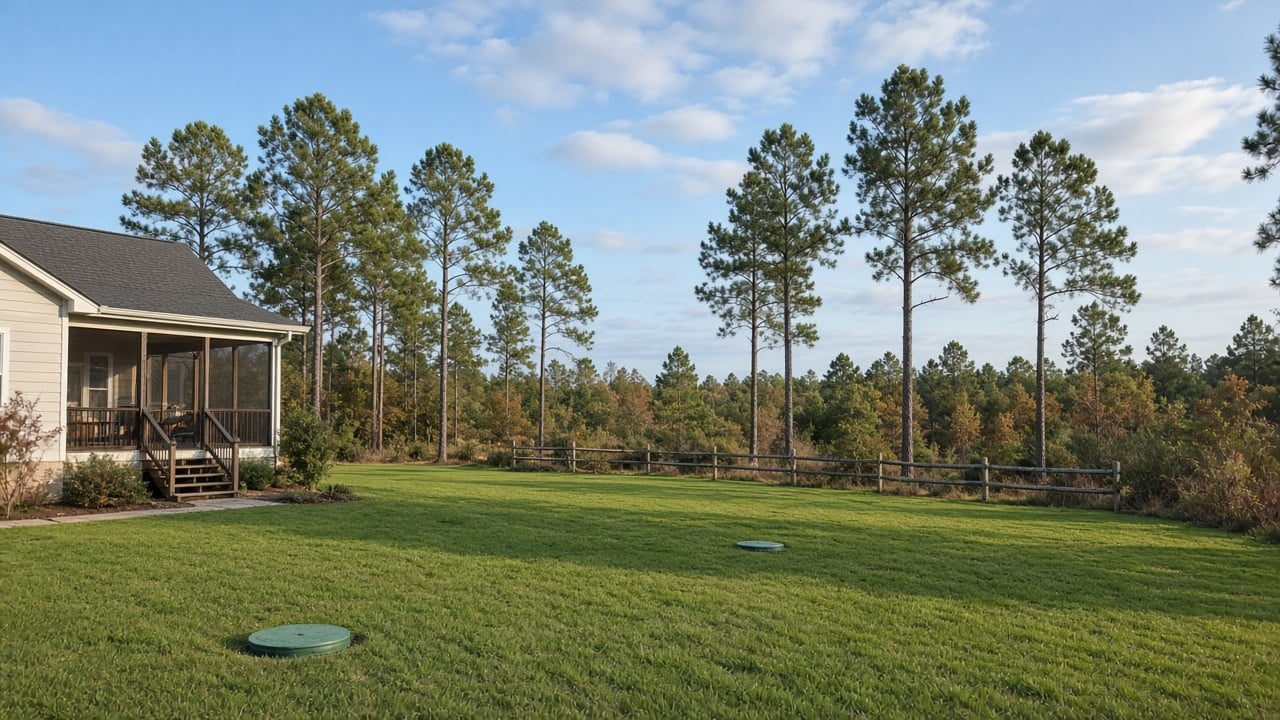
Outside of town limits and the few areas served by county sewer, a lot of Pender County homes rely on a septic system. That’s true in much of the countryside around Burgaw, Rocky Point, Maple Hill, Atkinson, and the rural edges of Hampstead. If you’re getting ready to sell one of those homes, the septic system is one of the first things a well-prepared buyer (and their lender and inspector) will ask about.
A little homework before you list can head off most of the surprises that slow down a sale. Here’s how we walk Pender County sellers through it at Aspyre Collective.
Why the Septic System Matters So Much to Buyers
A septic system is out of sight, so buyers can’t judge it on a showing the way they judge a kitchen or a roof. That uncertainty makes them cautious. Buyers who have never owned a septic system often turn that uncertainty into inspection contingencies and repair requests.
Two details matter most in practice: whether the system is working properly, and how many bedrooms the septic permit allows. That second point surprises some sellers. If a home is marketed as four bedrooms but the permit was issued for three, it can raise questions with buyers, appraisers, and lenders.
What North Carolina’s Disclosure Form Asks
Most residential sellers in North Carolina complete the Residential Property and Owners’ Association Disclosure Statement published by the North Carolina Real Estate Commission. The current version of the form (revised in 2026) asks sellers several septic-specific questions in its plumbing, water supply, sewer, and septic section, including:
- What type of sewage disposal system the home has (for example, a septic tank, a septic tank with a pump, a drip system, a community system, or a city or county connection)
- If the home is on septic, how many bedrooms the septic permit allows, with a “No Records Available” option
- The date the septic system was last pumped
- Whether there’s any problem, malfunction, or defect with the septic system
The form also notes that a straight pipe, meaning wastewater that doesn’t go into a septic or sewer system, violates state law. Brokers can’t fill the form out for you, so it pays to gather the facts before you sit down with it. If you have questions about how to answer, talk with a real estate attorney.
Step 1: Pull Your Septic Permit Records
Pender County Environmental Health, part of the county’s public health department, handles septic permitting. The county offers a Request for Septic Permit Information form that asks for the property address or subdivision and lot, the parcel ID number, the name on the permit or the current owner, and the year the home was built. The county’s residential structures page also notes that you can call Environmental Health to confirm the existence and location of a septic tank, repair area, or lines.
Having the permit in hand lets you answer the bedroom question accurately, shows buyers where the tank and drain field are, and flags any mismatch early, while you still have time to address it. For older homes, records may be thin or missing. That’s not unusual, but it’s better to know before a buyer asks.
If you added on or finished space
If you’ve added a bedroom, an outbuilding, or other living space since the system was permitted, check whether the right approvals were obtained. Pender County’s environmental health fee schedule lists an Existing System Authorization for additions, outbuildings, and similar projects on a site with an existing septic system. Buyers’ attorneys and inspectors sometimes ask about this, so it helps to have the paperwork together.
Step 2: Get the System Pumped and Looked At
North Carolina doesn’t require a septic inspection when you sell, but many buyers will order one, and many lenders and agents encourage it. Getting ahead of it can work in your favor:
- Pump the tank if it’s due. It gives you a fresh date for the disclosure form, and a septic contractor can note the tank’s condition while it’s open.
- Consider a pre-listing septic inspection. A licensed septic inspector can check the tank, baffles, pump (if you have one), and drain field and give you a written report you can share with buyers.
- Fix small issues now. Cracked lids, a failing pump alarm, or a missing riser are usually simpler to repair on your own timeline than in the middle of a negotiation.
If something bigger turns up, you’ll have time to get repair quotes and decide whether to fix it, adjust your price, or offer a credit. Pender County’s environmental health fee schedule lists repair permits for existing systems at no fee, though contractor costs are a separate matter.
Step 3: Prepare the Yard for Showings and Inspections
Rural Pender County lots often have generous yards, and buyers love that. A few simple steps keep the septic area from becoming a talking point:
- Know where the tank lids and drain field are, and mark them for the inspector.
- Keep vehicles, sheds, and heavy equipment off the drain field.
- Make sure gutters and downspouts drain away from the drain field, especially in our wet seasons.
- Keep the area mowed and free of new trees or shrubs whose roots could reach the lines.
Frequently Asked Questions
Do I have to get a septic inspection to sell my home in Pender County?
North Carolina doesn’t require one for a typical sale, but buyers often order their own. A pre-listing inspection gives you time to address issues before they come up in negotiations.
What if I can’t find my septic permit?
Start with Pender County Environmental Health’s septic permit information request. For older homes, records may not exist, and the state disclosure form includes a “No Records Available” option for the bedroom question.
Does the number of bedrooms on my septic permit really matter?
Yes. The disclosure form asks for it, and a mismatch between the permit and how the home is marketed can raise questions with buyers, appraisers, and lenders. It’s best to know the number before you list.
Thinking About Selling in Pender County?
Whether your home sits on a few acres outside Burgaw or along a quiet road near Rocky Point, a little septic prep goes a long way toward a smoother sale. We’re happy to help you gather records, line up local pros, and build a plan for listing day. Talk with Aspyre Collective about selling your Pender County home.