


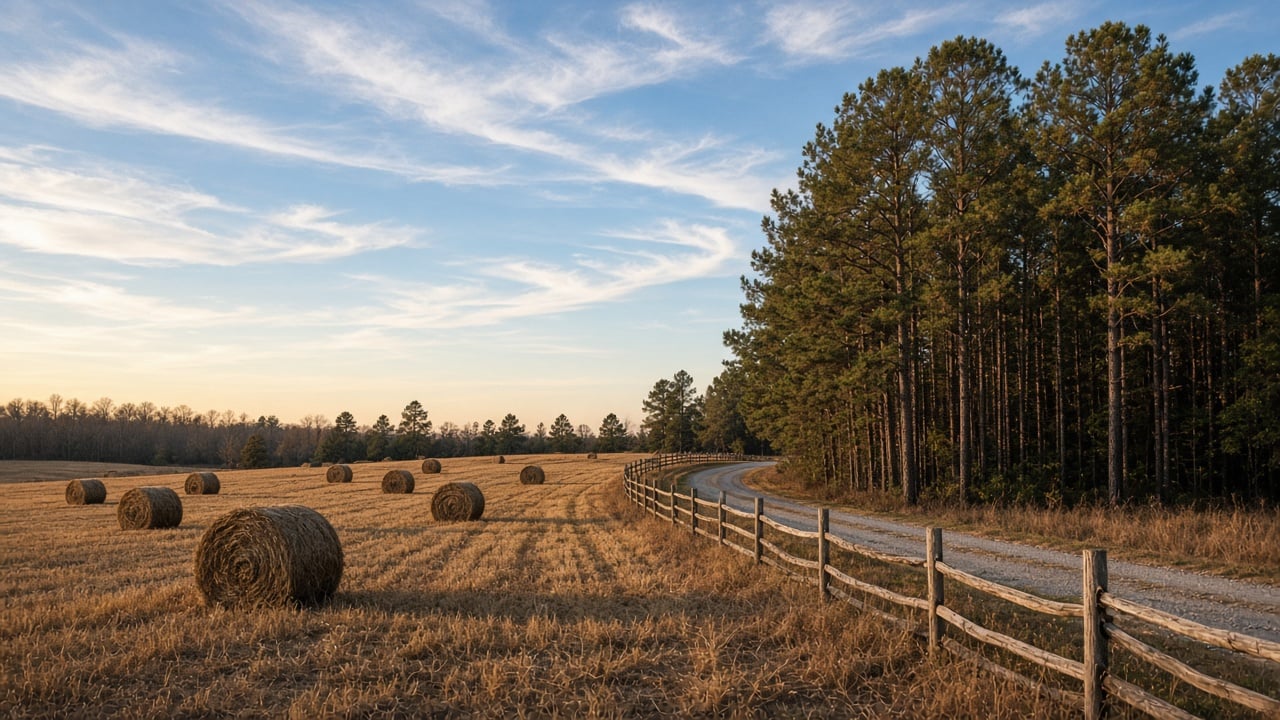
Pender County still has a lot of open land. Drive west of Burgaw toward Atkinson, Currie, or Willard, or north of Rocky Point along N.C. 210 and U.S. 421, and you’ll pass row crops, hay fields, horse pastures, and long stretches of pine timber. But many of those tracts carry a property tax arrangement that most first-time land buyers have never heard of: North Carolina’s Present-Use Value program, often called “land use” or “deferred” taxes.
If you’re shopping for farmland, timberland, or a horse property in Pender County, understanding this program before you make an offer can save you from a surprise tax bill. Here’s how it works, based on the Pender County Tax Assessing office’s Present-Use Value page, the N.C. Department of Revenue’s Present-Use Value guide, and N.C. General Statute 105-277.4, all checked on November 3, 2026.
What Present-Use Value Means
Normally, land in North Carolina is taxed at its market value, meaning what it would likely sell for. Under the Present-Use Value program, qualifying farm, horticulture, and forest land is instead taxed based on what it’s worth in its current use as a working farm or forest.
The key word is “deferred.” The taxes you don’t pay aren’t forgiven right away. The county keeps track of the difference between the present-use tax and the full market-value tax each year. State law treats that difference as a lien on the property, and it can come due if the land stops qualifying.
Who Qualifies in Pender County
The program is voluntary, so an owner has to apply and keep meeting the rules. According to Pender County, the main requirements are:
- Agriculture: at least one parcel of 10 acres actively and commercially producing crops, plants, or animals, with at least $1,000 per year in gross income over the past three years. The county lists row crops, hay, commercial poultry or hog houses, cattle, and active horse breeding as examples. It specifically says goats, donkeys, ducks, yard chickens, and backyard pigs do not qualify, and rent is not counted as income.
- Horticulture: at least one parcel of 5 acres commercially producing fruits, vegetables, nursery, or floral products, with the same $1,000 income test. Sod, nursery plants, blueberries, strawberries, and grapes are the county’s examples.
- Forestry: at least one parcel of 20 acres in commercial timber production under a written forest management plan. There’s no annual income test for forestry, since timber is only sold every so many years.
- Ownership: the owner generally must have owned the land for four full years as of January 1 of the application year, live on the property as of January 1, or take over the program from the previous owner at the time of transfer.
All three categories also require sound management, and Pender County sends audit letters about every eight years.
What Happens When You Buy Land That’s Already Enrolled
This is where buyers need to pay attention. If you buy land that’s in the program and you want to keep it there, you generally must keep using it the same way and file a new application with the county within 60 days of the transfer. Pender County notes that meeting this deadline is the taxpayer’s responsibility, not the county’s. In most cases you’ll also be accepting responsibility for the deferred taxes that are already attached to the land.
If the land leaves the program, whether because you build a subdivision, stop farming, miss the deadline, or simply choose to opt out, the county bills the deferred taxes for the current year and the three previous years, with interest. That’s often called a “rollback.” Deferred amounts older than that are dropped.
Questions to Ask Before You Make an Offer
- Is the property currently in Present-Use Value, and under which category: agriculture, horticulture, or forestry?
- Roughly how much is in deferred taxes? Pender County offers a Request for Estimate of Deferred Taxes form (AV-7) for this.
- Do you plan to keep the land in production, or are you buying it to build a home, split lots, or develop?
- If it’s forestland, is there a current written forest management plan you can take over?
- If it’s agricultural, who is farming it now, and will that arrangement continue after closing?
Who pays rollback taxes can be addressed in the contract, and a local real estate attorney can help with the wording.
Common Pender County Scenarios
Buying acreage to build a home
Many buyers want 10 to 30 acres west of Burgaw or around Rocky Point for a homesite and some privacy. If the land is enrolled and you won’t keep farming or managing timber on it, plan for the rollback in your budget, along with the septic, well, and perc testing steps we covered in our guide to buying land in Pender County.
Buying a horse property
Owning horses for personal riding isn’t the same as running a commercial operation. Pender County lists active horse breeding as an agricultural example, and the state’s rules include boarding and training horses, but the income and management tests still apply. Don’t assume a pasture with a barn automatically qualifies.
Buying timberland as an investment
Pine timber is common across Pender County, and forestry enrollment can keep holding costs lower while the trees grow. Confirm the management plan transfers and check for existing timber or harvest agreements.
Frequently Asked Questions
When can I apply for Present-Use Value in Pender County?
New applications are taken during the listing period, January 1 through 31. If you’re buying land that’s already enrolled, the application is due within 60 days of the transfer. There’s also a 30-day window after a value change notice.
Does Present-Use Value lower taxes on my house?
The program applies to the qualifying land. Homesites and buildings are generally valued separately, so ask the tax office how a specific parcel is split.
Can I lose the program if I sell part of the land?
Yes, it’s possible. If a sale or a change in use leaves a tract below the minimum acreage or stops it from meeting the rules, some or all of the land can be disqualified and the rollback taxes billed for that portion.
Looking for Land in Pender County?
Rural acreage in Pender County can be a great fit for buyers who want space, a small farm, or a long-term land investment, as long as you go in knowing how the taxes work. If you’d like help finding the right tract or asking the right questions before you make an offer, reach out to Aspyre Collective and we’ll walk the land with you.