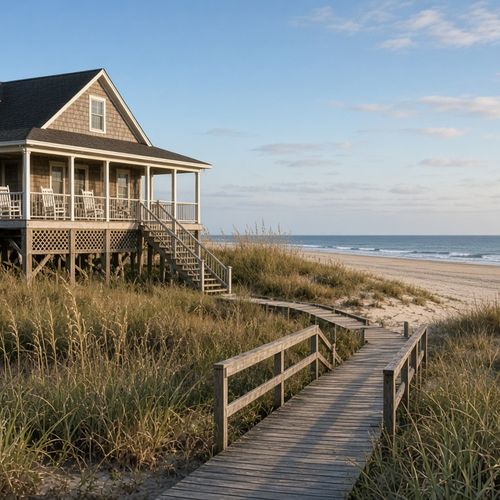




Most buyers we work with have a good handle on the down payment. The number that tends to surprise people is everything else: the lender fees, attorney and title charges, insurance, and prepaid items that show up on the final statement. Whether you’re buying a condo in Wilmington, a new build in Leland, or a home on a few acres outside Hampstead, here is how buyer closing costs work in North Carolina and what is a little different about buying on the Cape Fear coast.
Who Pays What in a North Carolina Purchase
In North Carolina, most buyers and sellers use the NC REALTORS and NC Bar Association Offer to Purchase and Contract (Standard Form 2-T). Its “Responsibility for Certain Costs” section says the buyer is responsible for costs tied to the buyer’s loan, owners’ association or management company charges covered in the contract, the appraisal, the title search, title insurance, the closing attorney’s fees for preparing the settlement statements, recording the deed, and preparing and recording the deed of trust. Recording fees are set by state law in G.S. 161-10. You can read the current version on the NC REALTORS website.
The seller, on the other hand, pays North Carolina’s excise tax on the deed, which state law sets at $1 for every $500 of the price (G.S. 105-228.30). See our seller closing costs guide for that side of the table.
The Main Buyer Costs to Expect
Lender and Loan Costs
If you’re financing, this is usually the biggest group of fees. It can include an origination or underwriting fee, any discount points you choose to buy down your rate, a credit report, the appraisal, and flood certification. FHA, VA, and USDA loans add their own funding fees or mortgage insurance. Your lender’s Loan Estimate spells all of this out, and federal rules say it must be delivered or mailed within three business days of a complete application, according to the Consumer Financial Protection Bureau.
Closing Attorney Fees
North Carolina is an attorney-closing state. The NC State Bar has determined that most of the work involved in a closing counts as practicing law, so a licensed attorney handles it. The attorney’s fee is negotiable and varies by firm and by how complex the deal is, so ask for a quote early.
Title Search and Title Insurance
The attorney searches the public records to confirm the seller can deliver clear title. If you have a loan, your lender will require a lender’s title policy. An owner’s title policy is optional, but it protects your own equity against covered title problems for as long as you own the home, and it’s a one-time premium paid at closing. It’s worth a serious look on older properties in downtown Wilmington, Southport, or rural Pender County.
Prepaids and Escrow
This group catches many buyers off guard because it isn’t a fee for a service. It’s money set aside in advance. It usually includes your first year of homeowners insurance, a few months of property taxes and insurance placed in your escrow account, and interest from your closing day to the end of that month. Property taxes are prorated with the seller, so who owes what depends on the closing date.
What’s Different on the Cape Fear Coast
Insurance is the local wild card. Near the beaches and sounds, a homeowners policy may exclude wind and hail, which then comes from a separate policy, often through the North Carolina Insurance Underwriting Association, sometimes called the Beach Plan. If the home is in a FEMA special flood hazard area and you have a federally backed loan, flood insurance will be required too. All of these premiums are part of your upfront prepaids and your monthly payment, so get quotes during your due diligence period, not the week before closing. Our flood zone guide is a good place to start.
HOA charges are another big one. Many neighborhoods in Leland, Hampstead, Wilmington, and the Brunswick County golf and beach communities charge a transfer fee, a working capital or “capital contribution” fee for new owners, or both. Ask for the association’s fee schedule as soon as you’re under contract.
Finally, think about extras that aren’t technically closing costs but still come out of your pocket during the deal: the home inspection, a wood-destroying insect report, a survey, a septic or well inspection on rural Pender and Brunswick lots, and the due diligence fee and earnest money you agree to in the contract. If the sale closes, the due diligence fee and earnest money are normally credited toward your purchase. Our guide to due diligence fees in North Carolina explains how that works.
Ways to Lower What You Bring to Closing
- Ask for seller concessions. In the right situation, a seller may agree to pay part of your closing costs. Your loan program limits how much they can pay.
- Compare Loan Estimates. Lender fees and rates vary, and comparing two or three estimates side by side is the easiest way to spot the difference.
- Look into down payment help. First-time and moderate-income buyers may qualify for state or local programs. See our first-time buyer assistance guide.
- Shop insurance early. On the coast, the difference between insurance quotes can be bigger than any single fee on the statement.
Read Your Closing Disclosure Carefully
By law, you must receive your Closing Disclosure at least three business days before closing, according to the CFPB. Compare it line by line with your most recent Loan Estimate, and ask your lender or attorney about anything that changed. One more coastal reminder: never wire money based on an email alone. Call your closing attorney’s office at a number you already know to confirm wiring instructions.
Frequently Asked Questions
Can I choose my own closing attorney?
Yes. Buyers in North Carolina generally choose the closing attorney. Your lender will need to approve the firm, and your agent can share names of attorneys who close regularly in our three counties.
Is an owner’s title policy required?
No, only the lender’s policy is required when you have a loan. The owner’s policy is optional, but it protects you rather than the bank.
Plan Your Purchase With a Local Team
Closing costs are much easier to plan for when you know them up front. We help buyers across New Hanover, Brunswick, and Pender counties estimate their costs, line up insurance quotes early, and negotiate concessions when the market allows. Talk with Aspyre Collective about your home purchase and we’ll help you know your numbers before you write an offer.