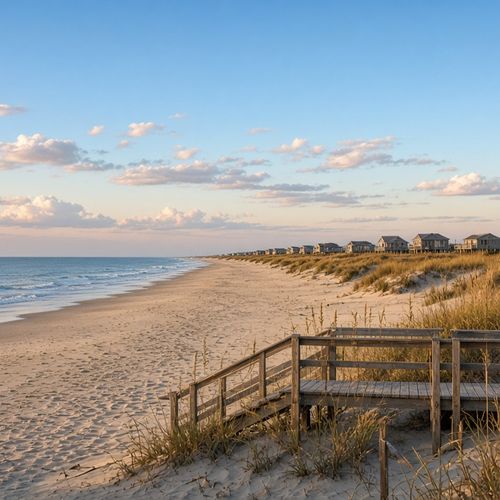



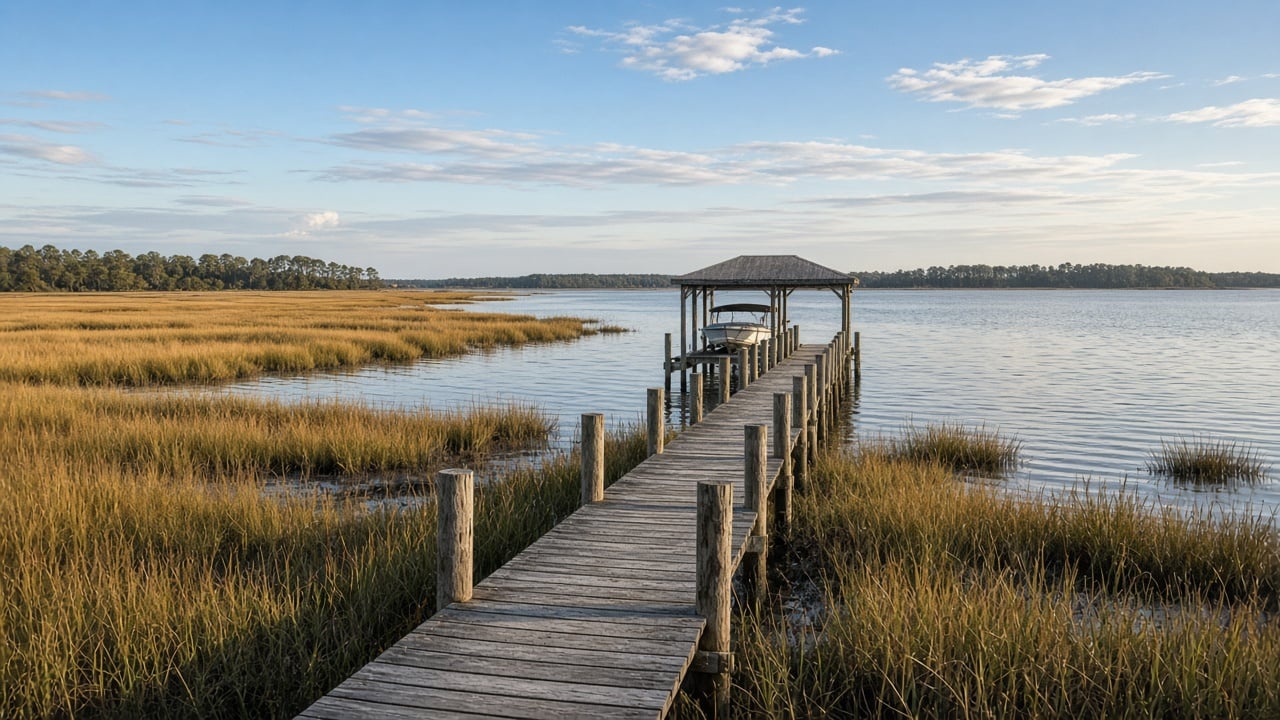
For a lot of buyers, the dream in Pender County is simple: a house in Hampstead or along Topsail Sound with a dock out back and a boat ready to go on a Saturday morning. The Intracoastal Waterway shoreline between Scotts Hill and Surf City has some of the most beautiful sound-front living on the Cape Fear coast. But a “waterfront” listing and a “you can build the dock you want” listing aren’t always the same thing.
Docks and piers in coastal North Carolina are regulated by the state under the Coastal Area Management Act (CAMA), and those rules shape what you can build, how far out it can go, and what your neighbors get a say in. Here’s what we walk our buyers through before they fall in love with a sound-front lot.
Who Regulates Docks on Topsail Sound and the Intracoastal?
Piers and docking facilities in estuarine and public trust waters fall under the N.C. Division of Coastal Management (DCM), part of the N.C. Department of Environmental Quality. Many routine residential docks can be approved under a CAMA general permit, which is set out in the state rules at 15A NCAC 07H Section .1200. Larger or more unusual projects can be pushed into the longer major permit process. Depending on the site, other approvals (for example, from the U.S. Army Corps of Engineers or the county) may also come into play, so it pays to ask early.
The Rules That Matter Most to Buyers
You don’t need to memorize the code, but a few conditions in the state’s general permit rules for piers and docks come up again and again when we look at sound-front property:
The one-fourth width rule
Under the general permit, a pier or dock generally can’t extend more than one-fourth of the width of the natural water body, canal, or basin, measured from the waterward edge of any coastal wetland vegetation. On a narrow creek or a canal in a Hampstead neighborhood, that can mean a much shorter dock than you’d expect. There’s a limited exception when longer piers already exist within 200 feet, but even then the new dock can’t go past the line set by its neighbors or more than one-third of the water body’s width.
Setbacks from your neighbors
Docks must stay at least 15 feet from the adjacent property lines as they extend into the water, unless the neighbor waives that setback in writing or the two owners apply together. DCM also requires notice to adjacent riparian owners, using its adjacent riparian owner notification and waiver form. On a narrow lot, that 15-foot setback on each side can make placement tricky.
Limits on boat slips
The general permit limits a pier to docking space for no more than two boats, with some allowance for boats stored on lifts or platforms already counted in the plan. If you’re picturing room for a center console, a skiff, and a friend’s boat, that’s a conversation to have before you write an offer.
Shellfish leases and marsh
Parts of our local sounds are used for shellfish growing, and the rules require applicants to notify any shellfish lease holder the dock would extend over. Marsh, water depth, and submerged vegetation can also affect how a dock is designed. These are site-by-site details, which is exactly why a lot that looks perfect on a map deserves a closer look in person.
What to Check Before You Buy a Sound-Front Home
- Is there an existing dock, and was it permitted? Ask the seller for any CAMA permit paperwork. An older or modified structure may raise questions when it’s time to repair or expand it.
- What’s the water depth at low tide? A great view at high tide doesn’t guarantee usable water for your boat year-round. Visit at low tide if you can.
- What does the HOA allow? Many Hampstead and Topsail-area communities have their own dock, lift, and boathouse rules on top of the state’s.
- Is there a community dock or slip instead? Some neighborhoods offer shared docks or deeded slips, which can be a smart alternative when a private dock isn’t practical.
- Flood zone and insurance. Sound-front homes often sit in higher-risk flood zones. Get flood and wind insurance quotes during your due diligence period, not after.
- Talk to a marine contractor. Before you’re locked in, a local dock builder can give you a realistic read on what’s buildable and what it may cost.
Why This Matters for Sellers Too
If you own a sound-front home in Pender County, having your dock permit records, any HOA approvals, and repair history organized before you list can make buyers more confident. A permitted, well-maintained dock is a real selling point, and clear paperwork helps that point land.
FAQ: Docks and Waterfront Homes in Pender County
Do I need a permit to build a dock on Topsail Sound?
Generally, yes. Piers and docks in coastal estuarine and public trust waters are regulated by the N.C. Division of Coastal Management, and many residential docks are handled through a CAMA general permit.
How long can my dock be?
It depends on the site. The general permit generally limits a dock to one-fourth of the water body’s width, with a limited exception near longer existing piers, and other conditions can apply.
Can my neighbor stop my dock?
Neighbors must be notified and can submit objections, and a dock must stay 15 feet from adjacent riparian lines unless the neighbor waives that setback. DCM makes the permit decision.
Does an existing dock transfer with the house?
A dock is typically part of the property, but you’ll want to review its permit history and condition, along with any HOA rules, during due diligence.
Thinking About a Sound-Front Home in Hampstead or Topsail?
Waterfront property in Pender County is worth every bit of homework, and we’re happy to help you do it, from pulling permit history to setting up low-tide showings and connecting you with local marine pros. Talk with Aspyre Collective about waterfront homes in Pender County.