



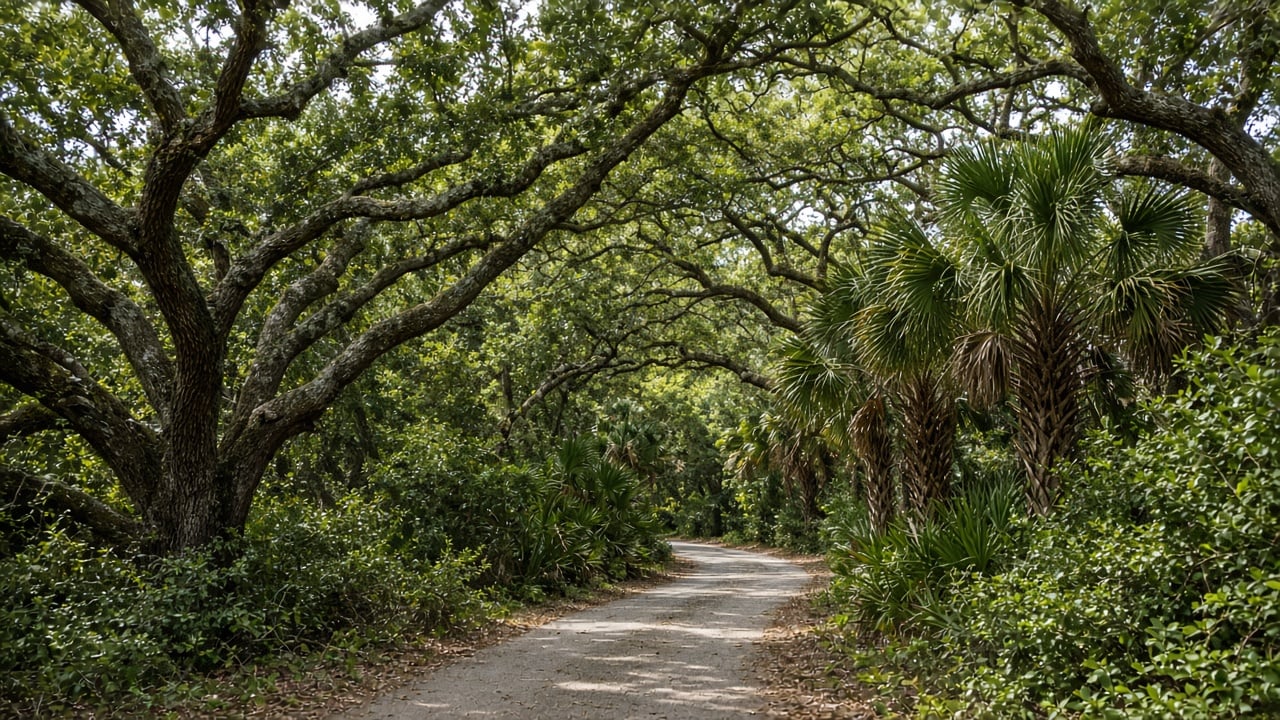
Bald Head Island is unlike anywhere else on the Cape Fear coast. There are no cars, no bridge and no traffic lights. You arrive by ferry, get around by golf cart, bike or on foot, and spend your days between the beach, the marsh and one of the state’s most significant maritime forests. For the right buyer, that slower pace is the whole point. For others, the logistics take some getting used to.
This guide covers what everyday life on Bald Head Island looks like, the practical questions buyers should ask, and how to decide whether island ownership fits the way you want to live.
Getting There: Life on Ferry Time
The island is reached by a passenger-only ferry from Deep Point Marina in Southport. The N.C. Department of Environmental Quality’s Bald Head Woods Reserve page describes it as a 20-minute commercial ferry ride and notes that cars are not allowed on the island; bicycles and golf carts are available to rent. The island’s ferry guide explains that passengers park on the mainland at Deep Point, check bags much like an airline, and can book tram service to their destination on the island.
For owners, ferry service shapes everything from grocery runs to contractor schedules. Governance of the ferry system has also been changing. Our post on the Bald Head Island ferry authority covers the latest, and it is worth reading before you buy.
Questions to ask about access
- How do owners typically handle mainland parking, and what do current passes cost?
- How are large deliveries, furniture and building materials brought over?
- How do service providers, from HVAC techs to cleaners, schedule visits?
Getting Around the Island
Golf carts are the island’s cars. Most homes have at least one, and many rental homes include cart use for guests, according to the island’s ferry guide. Biking and walking are also common, and paths connect much of the island. If you are buying, ask whether carts convey with the home, how old they are, and where they are stored and charged.
Nature Is the Neighborhood
Bald Head Woods
A large part of the island’s character comes from its protected land. The 191-acre Bald Head Woods Reserve is part of the N.C. Coastal Reserve and a Dedicated State Nature Preserve, managed by the N.C. Division of Coastal Management with support from the Bald Head Island Conservancy. DEQ notes that many of the oaks there are hundreds of years old, and the reserve’s trails are open to visitors year-round.
Sea turtles and the Conservancy
The Bald Head Island Conservancy’s Sea Turtle Protection Program monitors nesting turtles, protects nests and tracks hatchling success. Loggerheads are the most common nesters. For homeowners, especially on the oceanfront, that means following lighting and beach-use guidelines during nesting season.
Old Baldy
The island’s landmark is Old Baldy, built in 1817 and recognized by the Old Baldy Foundation as North Carolina’s oldest standing lighthouse.
What Buyers Should Know Before Making an Offer
Ownership costs look different
Island ownership comes with costs mainland buyers may not expect: mainland parking, ferry tickets for you and your guests, golf cart upkeep, and potentially higher costs for contractors who need to travel by ferry. Ask the seller for a year of typical carrying costs, including HOA or club dues if the home is in a neighborhood or club with its own fees.
Flood, wind and insurance
Like any barrier island, Bald Head has flood and wind exposure. Request the elevation certificate and current insurance costs early, and get your own quotes before due diligence ends. Our flood zones guide covers the basics.
Rental potential
Many island homes are rented to vacationers. If rental income is part of your plan, talk with local property managers about seasonality, and factor ferry logistics into how guests will experience the home.
Local government and shipping channel news
The Village of Bald Head Island makes decisions on everything from beach management to building rules. Our recaps of recent council updates and the Wilmington Harbor deepening pause are useful background.
Is Bald Head Island Right for You?
Bald Head tends to suit buyers who want quiet, nature and a true getaway feel, and who are comfortable planning around a ferry. If you want quick access to stores, restaurants and medical care without a boat ride, nearby Southport, Oak Island or Caswell Beach might be a better fit. Many buyers compare all of them. Our Southport relocation guide is a good place to start.
Bald Head Island FAQ
Can I bring a car to Bald Head Island?
No. Cars are not allowed on the island. Residents and visitors use golf carts, bicycles, trams and walking.
How long is the ferry ride?
About 20 minutes from Deep Point Marina in Southport, according to N.C. DEQ and the island’s ferry guide.
Do golf carts usually come with the house?
Sometimes. It is negotiable, so confirm in writing what conveys with the home.
Is Bald Head Island good for year-round living?
Some owners live there full-time, while many use homes seasonally or as rentals. Visit in the off-season to see what daily life feels like.
Explore Bald Head Island With a Local Team
Buying on an island takes a little more planning, from ferry logistics to insurance and inspections. Contact Aspyre Collective and we will help you weigh Bald Head Island against Southport and the nearby beaches, and plan a visit that shows you what island life is really like.