



Key Takeaway / Local Summary:
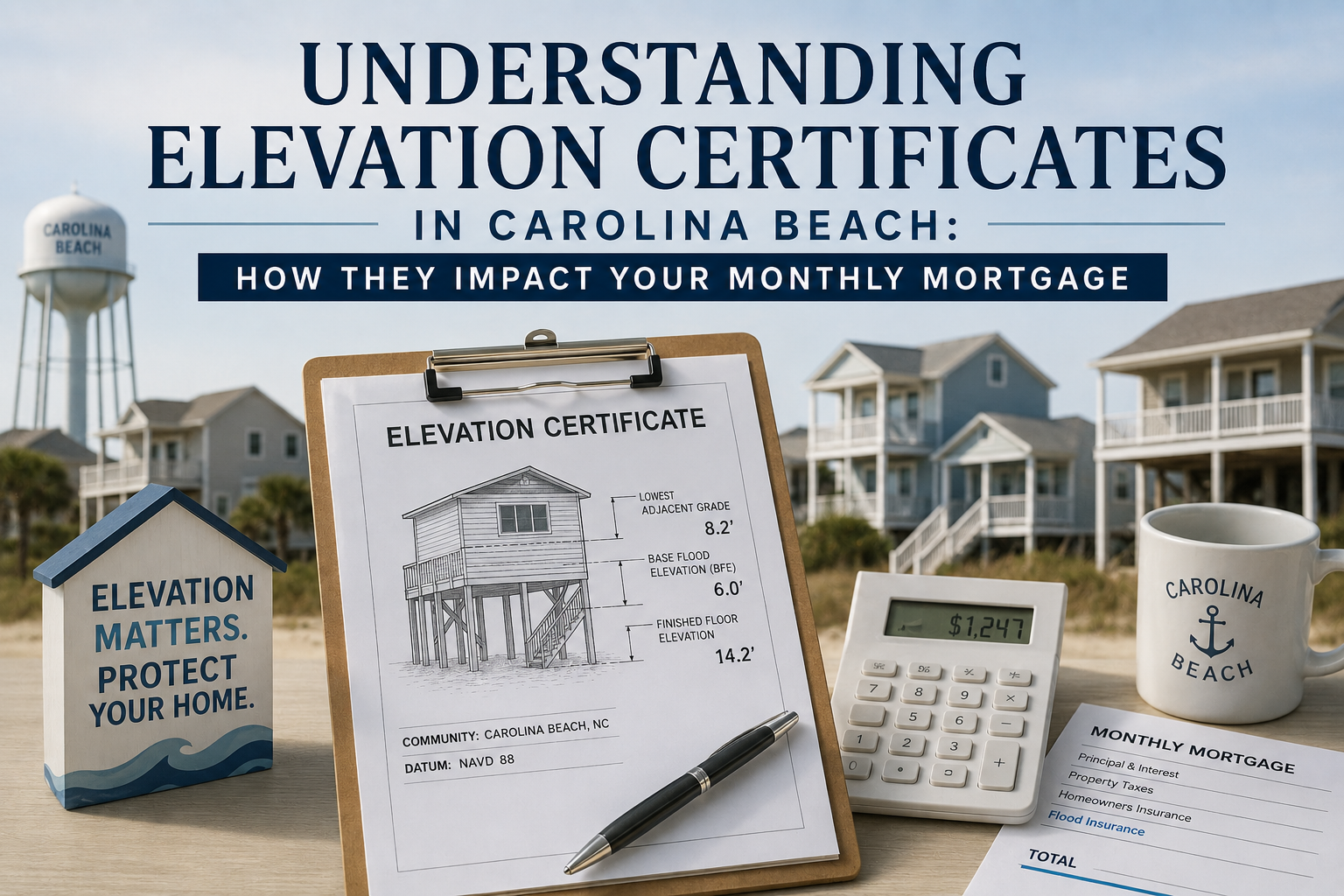
Risk Assessment: An Elevation Certificate (EC) measures your home's finished floor elevation relative to the local Base Flood Elevation (BFE) set by FEMA flood maps.
Insurance Costs: Homes built above the BFE qualify for significantly lower National Flood Insurance Program (NFIP) or private flood insurance premiums, directly lowering your total monthly mortgage payment (PITI).
Coastal Standard: In Carolina Beach, elevated island structures (pilings or elevated stem walls) dramatically reduce flood risk exposure compared to older, ground-level homes.
Buying a beach home in Carolina Beach offers coastal living at its finest, from pleasure pier walks to oceanfront sunrises. However, because Pleasure Island is bounded by the Atlantic Ocean and the Intracoastal Waterway, flood zone classifications play a primary role in home financing and insurance.
If you are securing a mortgage on a Carolina Beach property located within a Special Flood Hazard Area (SFHA), your lender will require flood insurance. The single most powerful document for controlling your monthly premium is the home's Elevation Certificate (EC).
What Is an Elevation Certificate and Base Flood Elevation (BFE)?
An Elevation Certificate is an official document generated by a licensed land surveyor, engineer, or architect. It certifies the precise elevation of a building’s lowest living level, mechanical equipment (HVAC units, water heaters), and attached structures relative to FEMA's established Base Flood Elevation (BFE).
Elevation Comparison:
[Base Flood Elevation (BFE): e.g., 9 Feet]
   ├── Home A (Lowest Floor: 11 Feet) ➔ +2 Ft above BFE ➔ Lowest Insurance Rates
   └── Home B (Lowest Floor: 7 Feet)  ➔ -2 Ft below BFE ➔ High Insurance Premiums
How Flood Zones Impact Carolina Beach Real Estate
FEMA categorizes Carolina Beach into distinct flood zones. Understanding these designations helps you anticipate insurance requirements before placing an offer:
Flood Zone Risk Level Lender Insurance Required? Typical Elevation Style Zone X (Shaded/Unshaded) Moderate to Low Risk No (Highly Recommended) Ground level or low stem wall Zone AE High Risk (1% Annual Chance) Yes (Mandatory for mortgages) Pilings / Elevated Stem Wall Zone VE Coastal High Hazard (Wave Action) Yes (Mandatory for mortgages) High Pilings (Open foundation) How the Elevation Certificate Controls Your Monthly Mortgage
Under FEMA’s Risk Rating 2.0 pricing system, flood insurance rates are customized based on structural characteristics rather than broad zone categories alone. Your Elevation Certificate influences your monthly mortgage payment (Principal, Interest, Taxes, and Insurance - PITI) in three ways:
1. Lowest Finished Floor Elevation
If a home’s primary living space is built 2 feet above the BFE, insurance underwriters reward the lower risk with reduced annual premiums. Conversely, living areas below BFE trigger steep rate surcharges that add hundreds of dollars to your monthly escrow payment.
2. Mechanical Equipment Elevation
Where is the outdoor HVAC compressor located? If the AC unit sits on a ground pad below BFE, FEMA rates the entire home as more vulnerable. Elevating HVAC units onto cantilevered platforms or elevated decks instantly reduces annual premiums.
3. Flood Vents in Enclosed Garages/Storage
For elevated homes with ground-level storage or garages, installing engineered, automatically opening flood vents allows rising water to flow through without destroying structural walls. Proper flood vent installation certified on Section A8 of the EC can drop premiums dramatically.
Due Diligence Checklist for Carolina Beach Buyers
Request the EC Early: Ask the listing agent for an existing Elevation Certificate during your initial walkthrough.
Obtain Quotes During Due Diligence: Send the EC to both NFIP and private flood insurance brokers to secure binding annual premium quotes before your inspection window ends.
Check for Unpermitted Lower Level Additions: Ensure ground-level enclosures under pilings are not finished into illegal living space, as this can void flood policies or cause insurance rates to skyrocket.
Looking to navigate Carolina Beach real estate with confidence? Contact Aspyre Realty Group today at 910-241-0404 or email [email protected] to review waterfront homes and local flood risk strategies.
Check out this article next