


Key Takeaway / Local Summary:
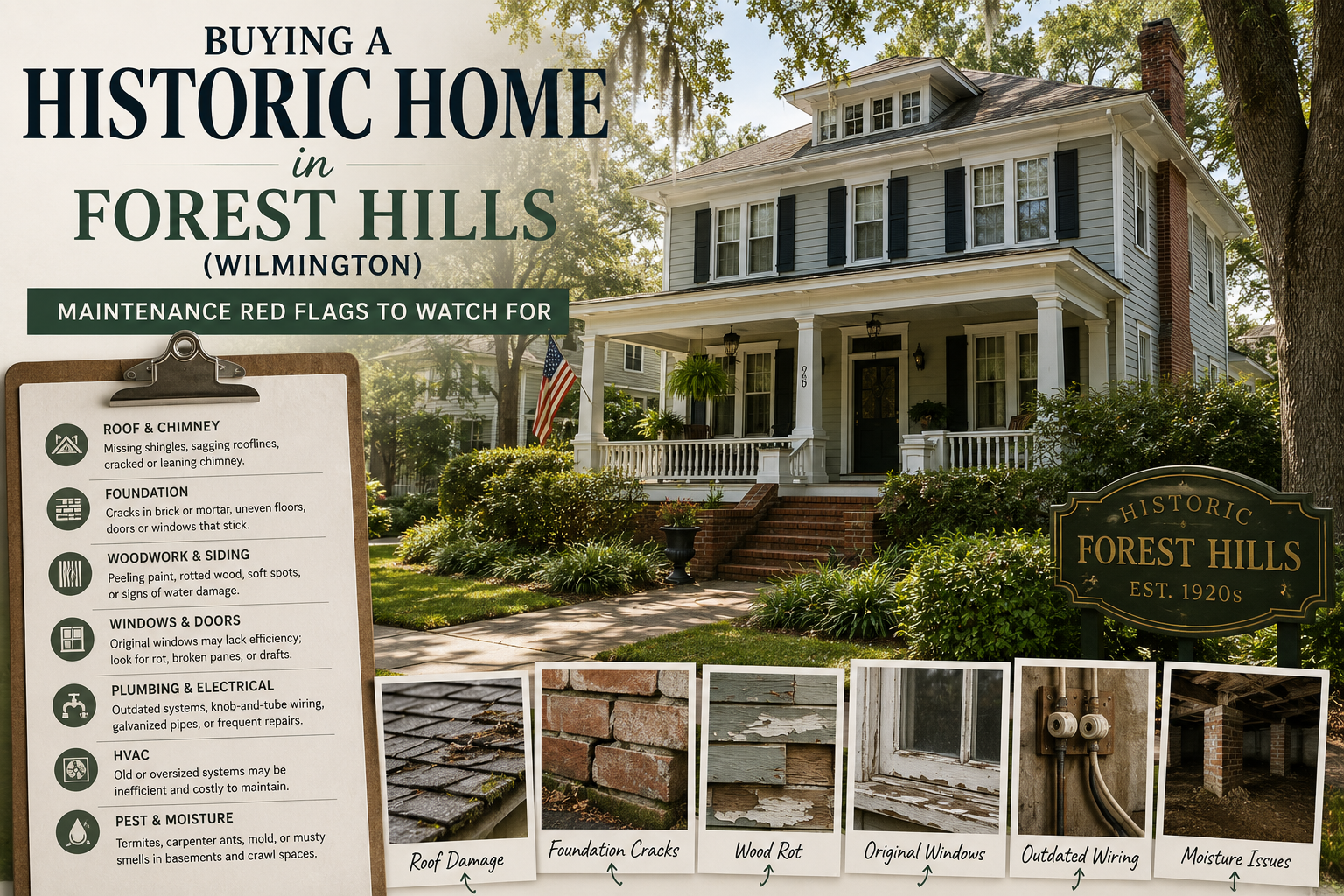
Historic Character: Forest Hills is one of Wilmington’s premier historic suburbs, characterized by 1920s–1950s Colonial Revival, Tudor, and craftsman architecture on large, rolling lots.
Key Inspection Red Flags: Old plaster walls, knob-and-tube wiring, galvanized steel plumbing, aging brick masonry mortar, and subterranean crawlspace moisture.
Historic Overlay Rules: Exterior alterations may require approval under Wilmington Historic Preservation Commission guidelines, making thorough pre-purchase planning essential.
Nestled just east of Historic Downtown Wilmington, Forest Hills is known for its winding, oak-canopied streets, sprawling manicured lawns, and timeless early-20th-century homes. Developed primarily between the 1920s and 1950s, this neighborhood offers architectural character that modern suburban subdivisions simply cannot replicate.
However, owning a classic Forest Hills residence requires an understanding of vintage construction systems. Knowing what maintenance issues to inspect during your North Carolina Due Diligence Period ensures you enjoy the charm of a historic home without encountering unexpected repair costs.
Historic Construction vs. Modern Standards in Forest Hills
| Structural System | Vintage Forest Hills Standard | Modern Construction Standard | Inspection Focus Point |
| Electrical Systems | Knob-and-tube / Cloth wiring / 100-amp panels | Romex copper wiring / 200-amp breakers | Insurance qualification & fire safety |
| Plumbing Lines | Galvanized iron supply / Cast iron waste | PEX supply / PVC drain lines | Water pressure drop & pipe corrosion |
| Interior Walls | Lath and plaster | Gypsum drywall | Settlement cracking vs. active water intrusion |
| Foundations | Brick piers / Continuous brick stem walls | Concrete footings & engineered stem walls | Mortar deterioration & crawlspace dampness |
| Roofing / Trim | Slate, tile, or original architectural wood | Architectural asphalt shingles | Historic preservation guidelines compliance |
Top 5 Maintenance Red Flags for Forest Hills Buyers
Historic Home Inspection Priority Flow:
[1. Foundation & Crawlspace] ➔ [2. Electrical Panel/Wiring] ➔ [3. Plumbing Supply/Waste] ➔ [4. Plaster & Roof]
1. Crawlspace Moisture & Brick Pier Settlement
Forest Hills features high clay content in its soil combined with humid coastal summers. Uninsulated crawlspaces under historic homes often suffer from elevated moisture, leading to cupped hardwood floors, wood-destroying fungi, or settling brick piers. Look for encapsulation upgrades or heavy-duty commercial dehumidifiers already in place.
2. Outdated Electrical Panels & Wiring
Homes built prior to 1950 often retain elements of knob-and-tube or ungrounded cloth-sheathed wiring. Many home insurance carriers operating in coastal North Carolina will not issue a policy on homes with active knob-and-tube or 60-to-100-amp fuse panels. Budgeting for a panel upgrade and partial rewire is common during historic acquisitions.
3. Galvanized & Cast Iron Plumbing Corrosion
Galvanized steel water lines rust from the inside out, restricting water pressure over time. Additionally, original cast iron sewer mains running under mature Forest Hills oak trees are susceptible to root intrusion and pipe collapse. Always order a specialized camera sewer scope inspection.
4. Masonry Mortar Deterioration
The brickwork in Forest Hills is iconic, but historic lime-based mortar breaks down after decades of coastal rain exposure. Repointing brick chimneys and stem walls using period-appropriate soft mortar compounds is essential to preserve structural integrity without cracking vintage bricks.
5. Historic Preservation Guidelines
Portions of Forest Hills and surrounding historic enclaves fall under local historic overlay guidelines. Before replacing original multi-lite wood windows, changing exterior paint colors, or adding garages, verify whether your plans require a Certificate of Appropriateness (COA) from Wilmington's Historic Preservation Commission.
Love historic Wilmington real estate? Our specialists at Aspyre Realty Group can guide you through the process of evaluating and buying vintage properties across Forest Hills. Call us at 910-241-0404 or email [email protected]!
Check out this article next