


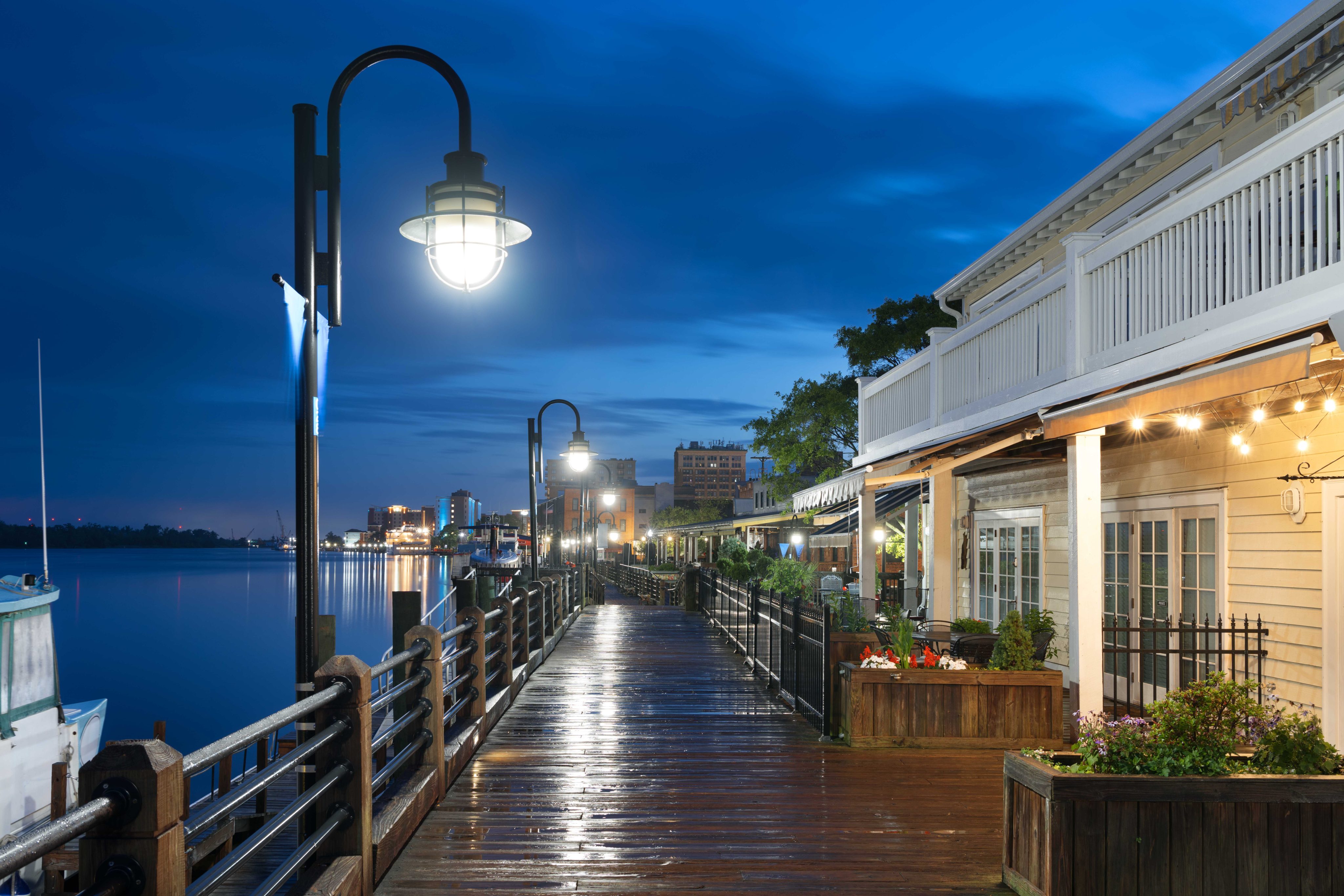
If you own property in Wilmington, Wrightsville Beach, or Forest Hills, you likely know the drill: occasionally, a street closes down, white trucks appear, and you spot a celebrity grabbing coffee on Front Street.
We are known as "Hollywood East," but many new residents and investors don't know that this multi-million dollar industry started with a Stephen King novel and a field of cucumbers.
Understanding the history of film in New Hanover County isn't just trivia; it is key to understanding a lucrative, hidden rental market that savvy investors leverage every year.
The Cucumber Field and the Italian Producer
In 1983, legendary Italian producer Dino De Laurentiis (known for King Kong and Serpico) was looking for a location to film his new sci-fi thriller, Firestarter, starring a young Drew Barrymore.
He needed a specific "southern plantation" look, which he found at Orton Plantation in Brunswick County. But he also needed a sound stage.
Local lore holds that while flying over Wilmington, Dino looked down at a large, flat expanse of land off 23rd Street. It was, at the time, a cucumber field. Where others saw agriculture, Dino saw the perfect footprint for a studio lot. He bought the land, built the stages, and DEG (De Laurentiis Entertainment Group) was born.
The Evolution: From DEG to Cinespace
The studio has changed hands over the decades, mirroring the resilience of the Cape Fear real estate market.
The 90s Boom: After DEG, it became Carolco (Terminator 2 era) and then EUE/Screen Gems. This was the golden era of Dawson’s Creek and One Tree Hill, which put Wilmington on the map globally.
The Modern Era (2023 - Present): In a massive recent shift, the studio was acquired by Cinespace Studios, a global giant with facilities in Chicago and Toronto (home to hits like The Bear and The Handmaid’s Tale).
Why this matters to you: The transition to Cinespace signals a new era of stability and global reach. This isn't just a "local" operation anymore; it is part of an international infrastructure, ensuring that productions (and the renters they bring) will keep coming.
The "Film Rental" Market: An Investor's Secret Weapon
For real estate investors, the film industry creates a unique "third category" of tenant.
The Tenant: These are "Above-the-Line" (directors, actors) and "Below-the-Line" (crew, set designers) professionals.
The Needs: They need housing for 3 to 9 months—too short for a standard lease, too long for an Airbnb.
The Payout: Because they are on a per-diem or production budget, they often pay a premium for furnished, flexible housing in Historic Downtown, Wrightsville Beach, or the Grays Creek area near the studio.
Your Next Step
Owning a property in "Wilmywood" gives you options that other markets simply don't have. But capturing that film revenue requires a specific strategy—from how you furnish the home to the lease terms you offer.
At Aspyre Realty Group, we understand the unique rhythm of production schedules. We are experts in listening to your investment goals and communicating them into properties that work for all types of tenants—whether they are moving here for retirement or here to film the next summer blockbuster. If you want to know which neighborhoods are popular with production crews right now, let’s talk.
Check out this article next