



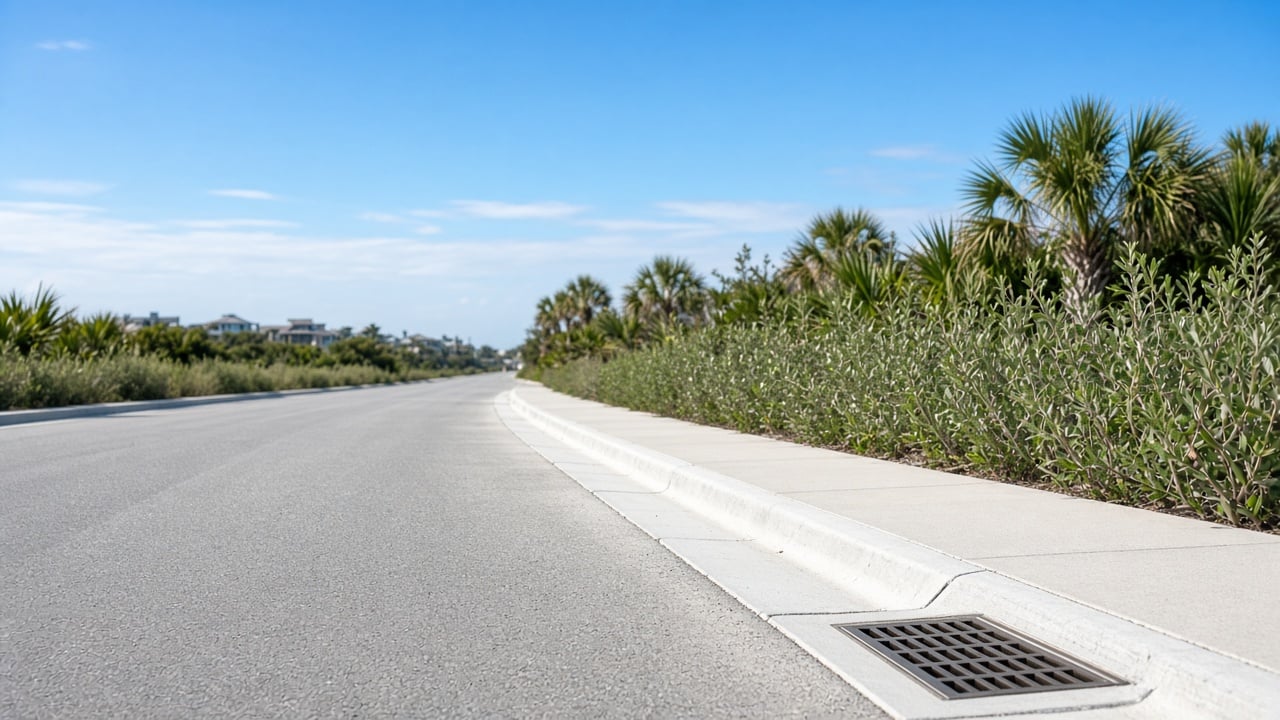
Most buyers know to ask about property taxes and HOA dues. Fewer ask whether the town has billed, or is about to bill, the property for a street, water, sewer or stormwater project. In North Carolina, those charges are called special assessments. Once confirmed, they attach to the land itself. Here is how they work, a real 2026 example from Carolina Beach, and the questions to ask before you close.
What Is a Special Assessment?
A special assessment is a charge a city or town places on specific properties that benefit from a public improvement. Under G.S. 160A-216, North Carolina cities may assess benefited property for building or improving streets, sidewalks, water systems, sewer systems (including septic and other on-site systems), and storm sewer and drainage systems. Some towns also have their own local acts, and the process follows the same general path.
How the Process Works
- The project is ordered and built. The governing board authorizes the improvement, and the town determines the final cost.
- A preliminary assessment roll is prepared. Under G.S. 160A-227, the roll lists each parcel, the basis for the assessment, the amount, and the payment terms.
- A public hearing is held. Under G.S. 160A-228, the council hears objections and then confirms, changes or cancels the assessments.
- Confirmation creates a lien. From the moment of confirmation, the statute says, the assessment is a lien on the property of the same nature and extent as the lien for property taxes.
- Payment options follow. State law lets owners pay in cash or, if the council allows it, in up to 10 annual installments (G.S. 160A-232). Unpaid amounts can carry interest set by the council, capped at 8% a year (G.S. 160A-233).
A Real Example: Carolina Beach’s S. Second Street Roll
The Oct. 13, 2026 Carolina Beach Town Council agenda packet (Item 8, Resolution No. 26-2360) shows exactly how this plays out on Pleasure Island. The improvements covered street, stormwater, water and sewer work in the 1000 block of S. Second Street. The resolution says the project was ordered in September 2022 and has been completed, under the town’s local act authority.
- Cost declared: $490,103.46, not counting costs at street intersections.
- Share assessed: two-thirds of that cost, spread across four benefited parcels.
- Basis: road frontage. A 50-foot lot was assessed $52,869.50, which works out to roughly $1,057 per front foot. The largest parcel, with 173 feet of frontage, was assessed $182,929.66.
- Payment terms: cash, or payment one year after the town adopts the resolution confirming the roll.
- Discount: a $500 reduction if paid in full within 60 days of confirmation.
- Hearing: scheduled under G.S. 160A-228 for the council’s Oct. 13, 2026 meeting at the Carolina Beach Municipal Building.
When we checked on Nov. 8, the town had not yet posted minutes showing the final action on the roll. The takeaway for buyers is the scale: an assessment can run into five or six figures for a single lot. If you were buying one of these parcels, it would be one of the biggest numbers in the deal.
Where Assessments Show Up in a Purchase
North Carolina’s Residential Property and Owners’ Association Disclosure Statement (REC 4.22, rev. 7/26) touches assessments in two places:
- Question G1 asks whether the property is subject to lawsuits, liens or “proposed assessments,” among other items that could affect title.
- Question H1(c) asks whether there are duly approved changes to owners’ association dues, fees or special assessments, and their nature and amount.
Keep in mind that an owner can answer “No Representation” on many questions. A “No” means only that the owner has no actual knowledge. The disclosure statement is a starting point, not a guarantee.
Due-Diligence Questions to Ask
- Is anything confirmed or pending? Ask the town or county tax office whether the parcel has a confirmed assessment, an unpaid balance, or appears on a preliminary roll.
- Who pays at closing? Your purchase contract and closing attorney will address how confirmed and pending assessments are handled. Read that section carefully and ask questions before your due diligence period ends.
- Has the closing attorney’s title and lien search covered municipal assessments? Confirmed assessments are liens, so they should surface, but ask specifically.
- Are there recent council agendas for the street? Search the town’s agenda portal for the street name. A project discussed this year may become an assessment later.
- Is it an HOA special assessment instead? Those come from the association, not the town. Review the association’s budget, minutes and reserve information.
Our guide to the North Carolina due diligence period explains where these checks fit in your timeline.
FAQ
Does a special assessment stay with the property when it sells?
Once confirmed, a North Carolina municipal assessment is a lien on the property, similar to a property tax lien. How it is handled at closing depends on your contract and your closing attorney.
Can owners pay an assessment over time?
State law allows up to 10 annual installments if the council approves that option. Terms vary. Carolina Beach’s S. Second St. roll offered cash or payment one year after confirmation.
Is a special assessment the same as an HOA assessment?
No. Municipal assessments come from the town for public improvements. HOA special assessments come from the owners’ association under its governing documents.
Where can I check for assessments on a property?
Start with the town or county tax collector and recent council agendas, then confirm with your closing attorney’s title search.
Buying on Pleasure Island or Anywhere in the Cape Fear?
Assessments are one of many local details that don’t show up on a listing sheet. Contact Aspyre Collective to talk through due diligence on a Carolina Beach home, or any property across New Hanover, Brunswick and Pender counties. Our Carolina Beach town guide is a good place to start.