



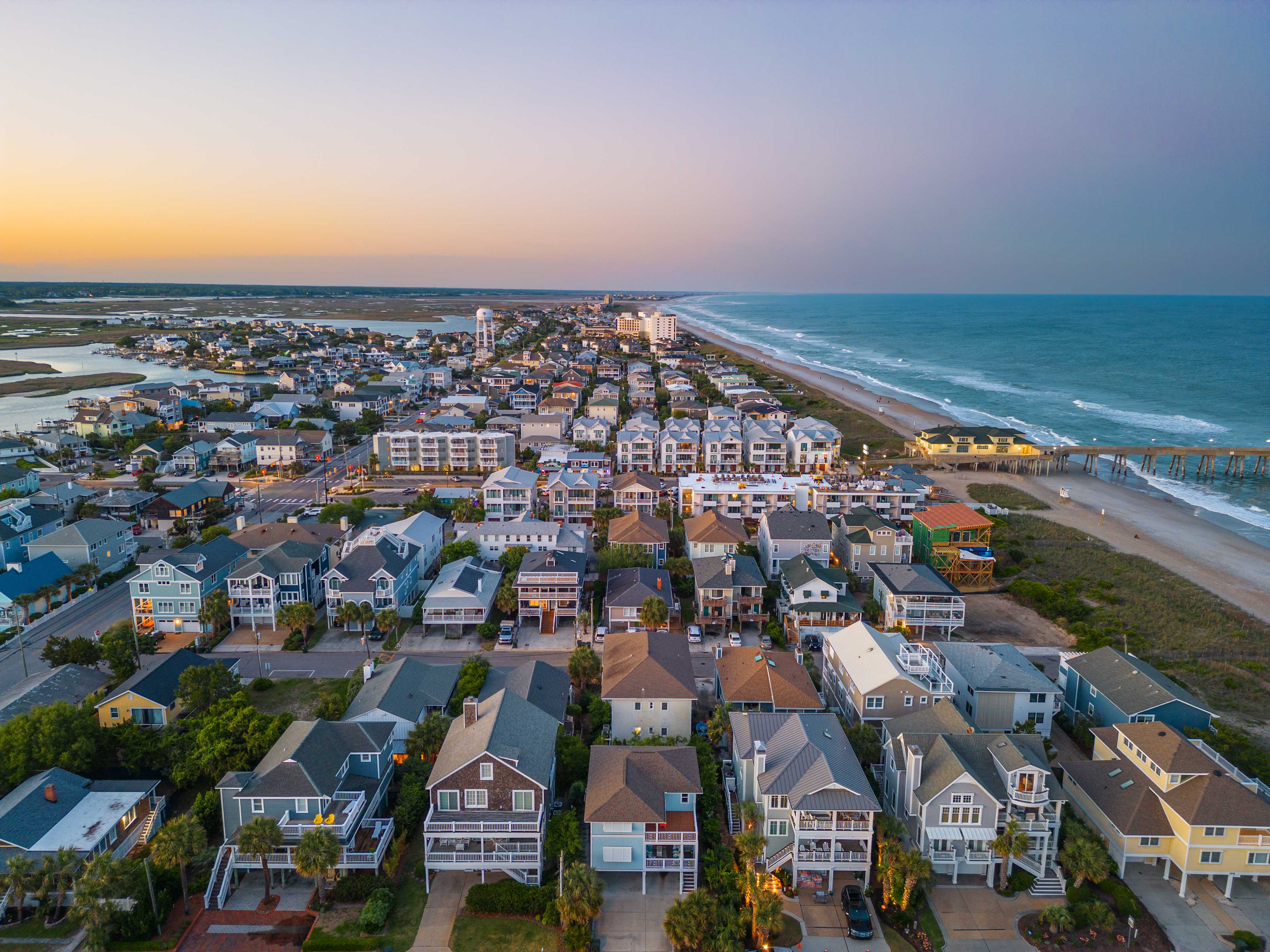
When buying or building a home in Southeastern North Carolina—especially in high-growth areas like New Hanover, Pender, and Brunswick counties—you’ll encounter more than just the traditional stick-built approach. Understanding how site-built, modular, and manufactured homes differ is essential for buyers comparing cost and construction timelines, sellers marketing their property accurately, and investors evaluating long-term appreciation potential.
1. Stick-Built Homes (Site-Built)
Stick-built construction is the classic model: the entire home is built piece-by-piece on the permanent foundation of the lot. Nearly all new construction in master-planned communities like Brunswick Forest, Compass Pointe, and RiverLights falls into this category.
- Pros
- Ultimate Customization: Unlimited architectural flexibility and on-site changes.
- Highest Resale Value: Historically the strongest appreciating home type in coastal markets.
- Standard Financing: Easily financed through traditional mortgages with conventional appraisals.
- Cons
- Longer Build Time: Commonly 9–12 months, with weather delays more likely along the coast.
- Higher Cost Per Square Foot: On-site labor and materials increase overall expense.
- Material Exposure: Lumber and framing sit outdoors throughout construction.
2. Modular Homes (Prefabricated)
Modular homes—also called systems-built homes—are constructed in factory-built modules, trucked to the site, and craned onto a permanent foundation. They must meet the same NC building codes as stick-built homes, which is why they are often appraised and financed similarly.
- Pros
- Faster Construction: Often completed in 4–6 months due to parallel site prep and factory building.
- Increased Durability: Built to withstand transport, often resulting in stronger framing.
- Cost Savings: Typically 10–20% lower cost per square foot than comparable stick-built homes.
- Cons
- Limited Customization: Designs must conform to modular dimensions and pre-approved plans.
- Upfront Costs: Modules must be paid for before delivery; crane and setup fees add cost.
- Zoning Restrictions: Some communities or HOAs maintain outdated restrictions on modular construction.
3. Manufactured Homes (HUD Homes)
Manufactured homes—previously known as mobile homes—are built under the federal HUD Code rather than state or local building codes. They arrive on a permanent steel chassis and may be placed on piers, a slab, or a permanent foundation.
Key Distinction: When permanently affixed to land and retitled as real property, they can be taxed and sold like traditional homes.
- Pros
- Most Affordable: Lowest entry price for new construction in coastal NC.
- Fastest Delivery: Highly efficient assembly-line production.
- Cons
- Appreciation Challenge: Historically appreciate slower than modular or stick-built homes.
- Financing Hurdles: May require specialized loans unless converted to real property.
4. Tiny Homes
Tiny homes—typically under 400 sq. ft.—have surged in popularity among buyers seeking affordability and minimalism.
The Zoning Challenge: Most local municipalities enforce minimum square footage requirements for primary residences. Unless a tiny home is permitted as an ADU or classified as an RV on wheels, placement is often restricted throughout coastal NC.
Aspyre Realty Group: Your Guide to the Evolving Market
The ideal home type depends on budget, customization needs, and long-term value goals. Are you willing to invest more for full design control and higher appreciation, or do you prioritize speed and affordability?
At Aspyre Realty Group, we monitor rezoning activity, track new construction from local and national builders, and stay ahead of evolving regulations. We help buyers, sellers, and investors understand how each home type performs in today’s market—and how to choose the option that best fits their needs in New Hanover, Pender, and Brunswick counties.
Check out this article next