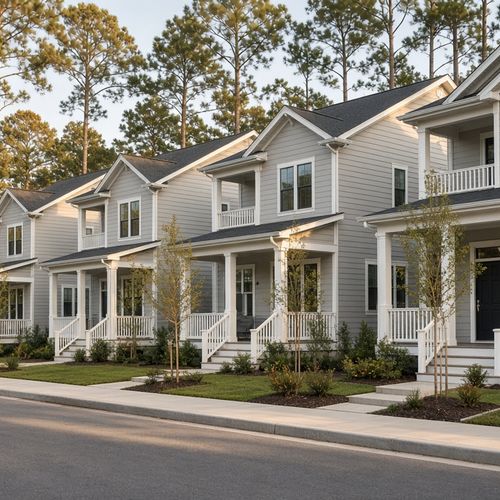




One of Wilmington’s biggest housing projects is running behind schedule. The planned redevelopment of Hillcrest, a Wilmington Housing Authority community that dates back to the 1940s, was supposed to break ground in the summer of 2026. According to WHQR’s October 2, 2026 report, construction is now expected to start sometime in 2027, and the city is pushing the developers to save more of the site’s mature live oaks. Here is what’s happening and why it matters if you own, buy, or sell a home in New Hanover County.
What the Hillcrest Redevelopment Is
Hillcrest is one of the region’s oldest public housing communities. WHQR reports it was built as temporary housing for shipbuilders in the 1940s, and while the homes have been renovated many times, they have struggled with mold and outdated design.
The redevelopment plan is large by Wilmington standards:
- About 550 homes on roughly 26 acres, more than double the current number of units.
- Five phases, building a mixed-use, mixed-income community.
- Phase I, Hillcrest Village, is planned as 84 units for residents 55 and older. The Endowment provided $5.7 million in gap financing for this phase.
- Phase II is slated to replace some of the 13 existing public housing buildings.
- Phases III through V are planned to include workforce housing and some market-rate homes.
The developers named in the WHQR report are the Wilmington Housing Authority, Urban Trends Real Estate Incorporated, and TedC.
Why the Start Date Slipped to 2027
The delay comes down to paperwork that has to be finished before anything else can move. The housing authority is converting the property under HUD’s Rental Assistance Demonstration program, known as a RAD conversion, which requires an environmental review. That review has to be completed before a Memorandum of Agreement can be issued, and the agreement includes historic preservation steps. In a September 14 letter, the state said the agreement should include a historical display about public housing in Wilmington and an online story map with archival photos.
A housing authority spokesperson told WHQR that the RAD commitment and related steps “cannot proceed as originally anticipated” until that process is done. Further HUD approvals, financing, and closing still have to follow, so there is no firm construction date. As of February, Phase I wasn’t expected to be finished until January 2028, with residents moving in around April of that year. Those dates could shift too.
The Live Oak Question
The other storyline is about trees. In February, the city’s Board of Adjustment granted the developers a variance to remove six live oaks that qualified as specimen trees, a category with special protection under Wilmington’s land development code. Council member JC Lyle and local tree advocates have objected.
On September 16, City Manager Becky Hawke wrote to the housing authority that the city believes the planned tree removal is “unnecessary” and that site designs could be adjusted to save more trees. Her letter said that if mitigation can’t be done through new plantings or credits, the payment in lieu of replacing 13 trees would exceed $122,000, and that the city won’t waive mitigation fees for the first phase. A local arborist also flagged errors in the project’s tree survey, and city staff said those must be corrected before site plan approval.
What This Means for Homeowners, Buyers, and Sellers
For the broader housing market
New Hanover County has very little open land left, and much of its new housing is coming as denser, multi-unit projects. A 550-home redevelopment with senior, workforce, and market-rate pieces is a meaningful addition to the supply pipeline. A one-year slip doesn’t change the long-term picture, but it means those homes won’t help with affordability as soon as many people hoped.
For nearby homeowners
Big redevelopment projects tend to bring years of construction activity, and over the long run they can change how a part of town looks and feels. If you live near the site, it’s worth following the project’s site plan, which still needs approval, and the city meetings where it comes up. We’d steer clear of predicting what it will do to any one home’s value; that depends on the final design, the timeline, and the street you’re on.
For anyone planning to build or renovate
The Hillcrest debate is a useful reminder that Wilmington takes trees seriously. If you’re buying a lot or a home with plans for an addition, a pool, or a teardown, large protected trees can affect what you can build and what mitigation you might owe. Ask about trees early, review any survey carefully, and check with the city’s planning staff before you count on removing a big oak. The city has also said it may add a definition for multi-stem trees in an upcoming code update, so the rules could shift.
For sellers
If your property has mature live oaks, they’re often a selling point for buyers who love shade and character. Knowing which trees may count as protected, and sharing any survey you have, can head off questions during a buyer’s due diligence.
FAQ
When will Hillcrest construction start?
According to WHQR’s October 2, 2026 report, sometime in 2027. There is no firm date because the environmental review, the Memorandum of Agreement, HUD approvals, and financing still have to be completed.
How many homes are planned?
About 550 homes on roughly 26 acres, built in five phases. The first phase is 84 units for residents 55 and older.
Will any of the homes be market rate?
The plan calls for later phases to include workforce housing and some market-rate homes, according to WHQR.
Do Wilmington’s tree rules affect regular homeowners?
They can, especially when you’re building, subdividing, or doing major site work. Specimen trees have special protection, and removal can require mitigation. Check with the City of Wilmington’s planning staff for your specific property.
Thinking About a Move in New Hanover County?
Whether you’re watching a project near your neighborhood, planning a renovation, or deciding whether now is the time to buy or sell, local context makes a big difference. Talk with Aspyre Collective and we’ll help you sort out what the latest Wilmington news means for your plans.