



For years, real estate investing was binary: you either bought a house (Residential) or you bought a strip mall (Commercial). But in 2026, the smartest capital in Southeastern North Carolina is chasing the blurry line in between. We call it "Commercial Lite."
As remote work cements itself as a permanent fixture and the "shop local" movement grows in New Hanover and Brunswick counties, mixed-use properties—specifically "Live-Work" units—are becoming the high-yield unicorn of the market.
Whether it is a historic building in downtown Southport with a retail shop downstairs and an apartment upstairs, or a modern townhome in the Soda Pop District of Wilmington zoned for a ground-floor office, these assets offer unique advantages for investors willing to navigate the complexity.
The "Sticky" Tenant Advantage
The single biggest reason to invest in mixed-use is tenant stability.
Residential Reality: A standard residential tenant might stay for 12 months. If they find a cheaper apartment down the road, they move.
Commercial Reality: A small business owner (an accountant, a boutique owner, or a therapist) who rents the ground floor of your "Commercial Lite" property puts down roots. They print the address on their business cards; they pay to install signage; they build a local clientele.
The Result: These tenants are "sticky." They often sign 3–5 year leases and are far less sensitive to rent increases because the space is directly tied to their revenue.
Where to Find "Commercial Lite" in Our Region
You don't need to buy a high-rise to play this game. In our market, opportunities look like:
The Cargo & Soda Pop Districts (Wilmington): These adaptive-reuse neighborhoods are the epicenter of Commercial Lite. We are seeing renovated bungalows zoned UMX (Urban Mixed Use) where an investor can rent the main house to a graphic design firm and the ADU to a residential tenant.
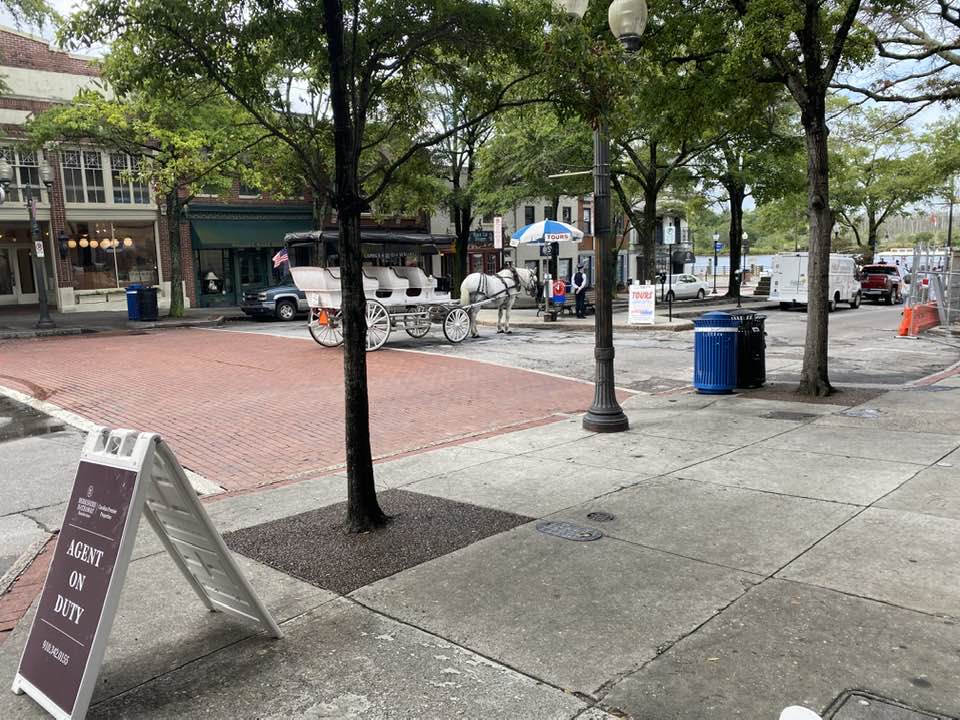
Historic Main Streets (Burgaw & Southport): In Pender and Brunswick counties, the classic "shopkeeper" model is alive and well. Buying a historic building on Howe Street or Wright Street allows you to capture commercial rent from the storefront and high-end residential rent (or Airbnb income) from the second-floor flat.
New Construction "Live-Work": Master-planned communities like Riverlights and parts of Brunswick Forest are increasingly integrating "Live-Work" townhomes. These are built specifically with a client-facing entrance on the ground floor and living quarters above, perfect for the modern entrepreneur.
The Financing & Zoning Hurdle
This is where the amateur investors get filtered out. "Commercial Lite" is not as simple as getting a 30-year fixed mortgage.
The 51% Rule: Generally, if more than 50% of the square footage is used for business, you cannot use a standard residential mortgage; you are pushed into commercial lending (which often requires larger down payments and shorter terms).
The "Usage" Trap: Just because a property looks like an office doesn't mean you can run a business there. You must verify the Municipal Zoning and HOA Covenants. Running a hair salon in a residential condo in Leland might get you sued by the HOA, whereas doing it in a designated mixed-use zone is perfectly legal.
Navigating the Gray Area
Investing in mixed-use properties is one of the best ways to hedge your portfolio—diversifying your income stream between the housing market and the small business economy. But you need a guide who can read a zoning map as well as a floor plan.
At Aspyre Realty Group, we thrive in the gray areas. We help investors identify properties with the right zoning for their business goals and connect them with local lenders who understand the "Commercial Lite" product. If you are looking for an asset that works as hard as you do, let’s explore the mixed-use opportunities hiding in plain sight.
Check out this article next