


Owning a beach house in Wrightsville Beach, Surf City, or Oak Island is the ultimate reward, but furnishing it requires a completely different mindset than a primary residence in Raleigh or Charlotte. The coastal elements of South Eastern North Carolina—specifically the salt-sand-sun triad—are aggressive.
Many new owners make the mistake of filling their second home with standard big box furniture, only to find the patio chairs rusted and the hardwood floors scratched within two seasons. To protect your investment and keep your sanctuary looking pristine, you must choose materials that fight back.
The Outdoor Battle: Wind vs. Rust
In New Hanover and Pender counties, your outdoor furniture faces two enemies: salt spray and hurricane-force gusts.
The Gold Standard: High-Density Polyethylene (HDPE): Often called poly-lumber, this recycled plastic material is the heavyweight champion of the coast. It is impervious to salt air, will not rot, and is heavy enough to stay put on your deck during a typical summer squall. It requires zero staining—just a pressure wash once a year.
The Aluminum Trap: While aluminum doesn't rust, it is often too lightweight for our breezy barrier islands. If you choose metal, ensure it is marine-grade stainless steel or heavy cast aluminum with a powder-coated finish to prevent pitting.
The Teak Trade-off: Teak is durable but high-maintenance if you want to keep that golden hue. In our intense sun, teak will turn silvery-gray within six months unless you commit to regular oiling.
Indoor Fabrics: The "White Sofa" Myth
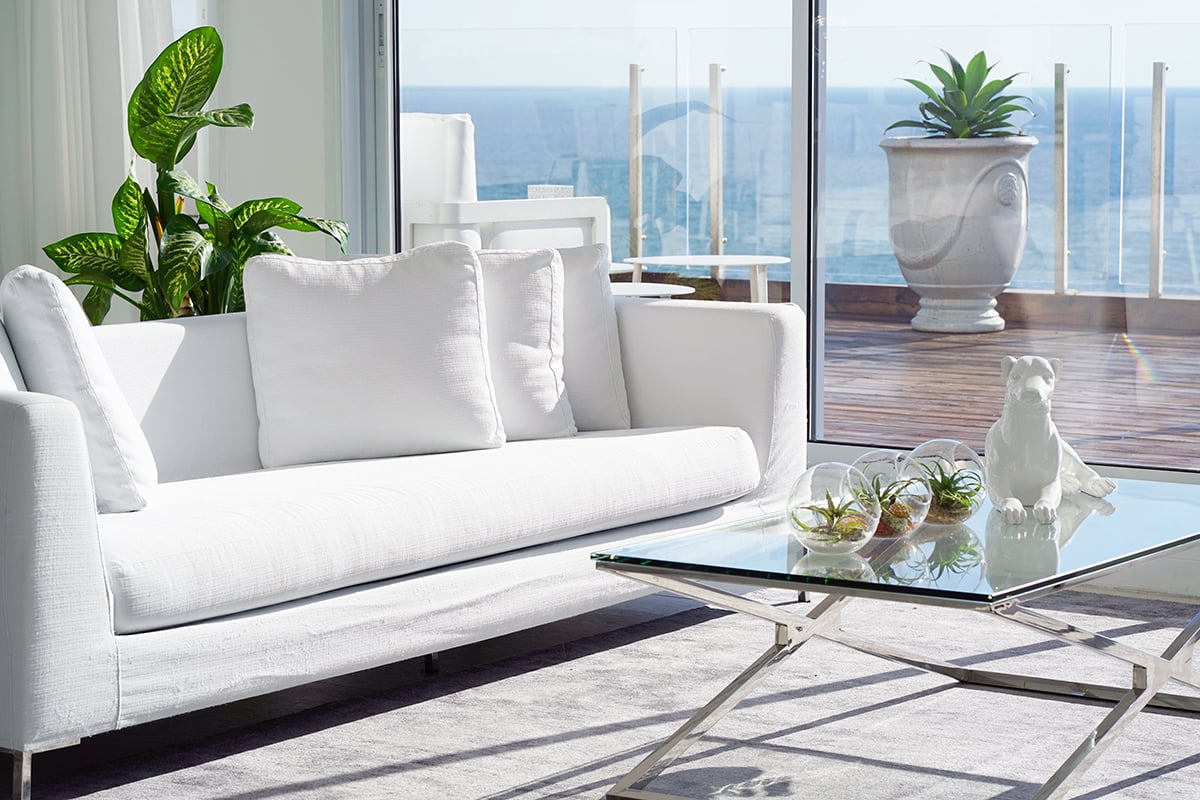
You want that crisp, clean coastal white living room, but you are terrified of renters, guests, or sandy kids ruining it. The secret isn't darker colors; it's performance fabrics.
Look for Solution-Dyed Acrylics: Brands like Sunbrella or Crypton are no longer just for outdoor patios. They now produce soft, linen-like indoor fabrics that are bleach-cleanable and fade-resistant. You can literally pour bleach on a navy blue Sunbrella sofa, and the color won't lift.
Fighting the Fade: In south-facing homes in Brunswick County, the UV index will bleach standard cotton or polyester upholstery in a single summer. Performance fabrics have the color dyed all the way through the fiber (like a carrot) rather than just on the surface (like a radish), making them virtually fade-proof.
Flooring: The War on Sand
Sand is essentially sandpaper. When tracked in from the beach, it grinds away the finish on traditional hardwood floors.
The Winner: Luxury Vinyl Plank (LVP): This is the reigning champion of coastal flooring. LVP is 100% waterproof (perfect for wet bathing suits), highly scratch-resistant, and mimics the look of white oak or driftwood perfectly.
The Runner Up: Wood-Look Tile: While durable and cool to the touch, tile has no give. If you drop a glass, it shatters. LVP offers a softer feel while maintaining that critical waterproof durability.
Your Next Step
Furnishing a coastal home is about balancing aesthetic with armor. You shouldn't have to police your guests or worry about a wet towel ruining a chair.
At Aspyre Realty Group, we are experts in listening to your vision and communicating those needs into a home that works for you—down to the finest details. We can connect you with local interior designers and vendors who specialize in salt-proof durability, ensuring your second home remains a retreat, not a repair project. Let’s discuss your goals and find a property worth furnishing.
Check out this article next