



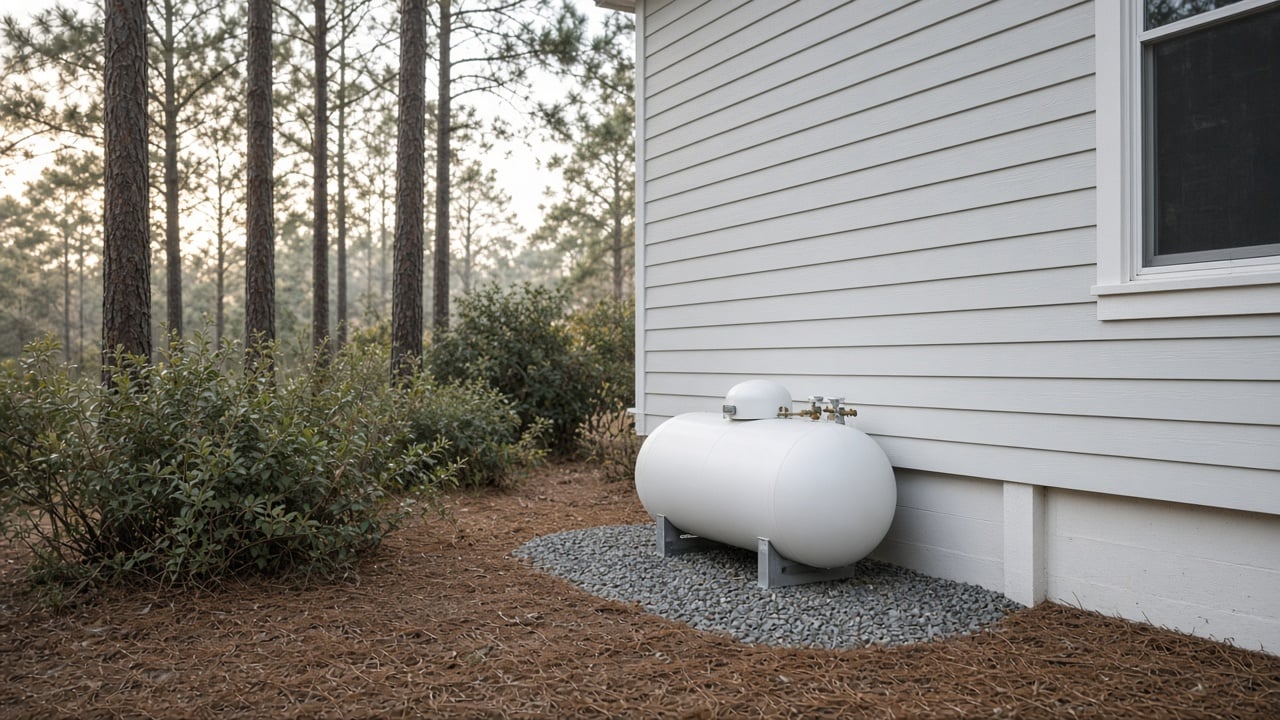
On October 7, 2026, a propane leak from an underground storage tank in Scotts Hill cut U.S. Highway 17 down to one lane while hazardous materials crews worked the scene. According to WECT’s October 7 report and Pender County Emergency Services’ October 8 update, the Wilmington Fire Department’s regional hazmat team connected equipment to the tank and burned off the remaining propane in a controlled operation before the area was declared safe.
That incident wasn’t at a home, and it was handled the way it should be. But it’s a good reminder of something we talk about with buyers all the time in Pender County. Plenty of homes in Hampstead, Rocky Point, Burgaw, and the rural parts of the county run gas appliances, fireplaces, or generators on propane, and some of those tanks are buried in the yard. If you’re buying one of those homes, a few questions are worth asking before closing, not after.
Why Propane Comes Up So Often in Pender County
Where natural gas lines don’t reach, propane is a common way to run a gas range, tankless water heater, gas logs, or a standby generator. You’ll see two setups:
- Above-ground tanks, usually beside or behind the house, easy to spot and easy to inspect.
- Below-ground tanks, buried with only a small dome lid showing. They look cleaner, but they’re easier to overlook during a showing.
Neither one is a red flag. What matters is who owns the tank, what condition it’s in, and what paperwork comes with it.
Who Owns the Tank? It’s Often Not the Seller
This is the question that surprises buyers most. The N.C. Department of Agriculture’s LP-Gas consumer FAQ says that most of the time in North Carolina, the propane company keeps ownership of the tank it sets, especially above-ground tanks. Buried tanks become the homeowner’s property more often, but not always. A propane company that wants to keep its tank can file a UCC-1 form with the county to document that, even if the house sells.
Why ownership matters to you
North Carolina law, G.S. 119-58(b), makes it unlawful for anyone other than the supplier or the system’s owner to fill a tank without the supplier’s consent. In plain terms, if the tank is leased, you’ll buy propane from the company that owns it unless you switch suppliers. You can switch, but the new supplier has to notify the old one before swapping equipment, and the state warns that breaking an existing contract can come with fees.
So before you fall in love with the gas range, find out who the supplier is, whether the tank is leased or owned, and what that company charges for delivery, leasing, or a tank swap.
What the NC Disclosure Statement Tells You
North Carolina sellers fill out the Residential Property and Owners’ Association Disclosure Statement from the N.C. Real Estate Commission. Two parts are worth reading closely on a propane home:
- Fuel source questions ask whether the home uses propane, who the provider is, whether the tank is leased or owned, and whether it’s above or below ground.
- Environmental questions ask whether there’s an underground storage tank on the property, along with other conditions like buried debris or contamination.
Keep in mind that sellers disclose what they actually know, and they can choose “No Representation” on many items, so treat a blank or “NR” answer as a cue to ask more during due diligence.
Who Gets the Propane Left in the Tank?
NC REALTORS addresses this in its legal Q&A on fuel in leased tanks. Under the standard Offer to Purchase and Contract (Form 2-T), any fuel left in the tank at settlement belongs to the buyer as part of the purchase price, unless buyer and seller agree otherwise in writing. The seller can keep using fuel normally before closing but can’t sell it off or have a leased tank pulled before closing is complete. If you don’t want to keep the current supplier’s tank, raise it early so any credit or removal can be worked out in writing.
A Buyer’s Propane Checklist for Due Diligence
- Locate the tank. Ask the seller to point it out, especially if it’s buried, and look for the supplier’s label.
- Get the supplier’s name and account terms. Ask whether the tank is leased or owned, and request a recent delivery record.
- Ask the supplier for a leak or system check. When service transfers to a new customer, propane companies commonly test the lines. Ask what they require before setting up your account.
- Tell your home inspector it’s a propane home. A general inspection looks at visible gas appliances and connections, but a buried tank’s condition usually needs the supplier or a licensed LP-gas professional.
- Mark the tank before any digging. If you’re planning a fence, pool, or septic repair, call NC811 before you dig so buried lines and tanks can be located.
- Talk to your insurance agent. Mention the propane setup and any standby generator when you shop for a homeowners policy.
Safety Basics for New Propane Owners
Propane has an added odor that many people describe as rotten eggs. If you smell it, leave the house, don’t flip switches or use anything that could spark, and call your propane supplier or 911 from a safe distance. After a big storm, have the system checked before relighting appliances.
Frequently Asked Questions
Does a buried propane tank come with the house?
Not always. According to the N.C. Department of Agriculture, buried tanks belong to the homeowner more often than above-ground tanks do, but the propane company may still own it. Ask the seller and the supplier, and check the disclosure statement.
Can I use a different propane company after I buy?
Yes, but a different company can’t legally fill a tank leased from a competitor. The new supplier would typically replace the tank after notifying the old one, and your old contract may have fees.
Is a home with an underground propane tank harder to sell?
Usually not when the paperwork is clear. Buyers mostly want to know who owns the tank, who supplies it, and that the system has been checked.
Buying in Hampstead, Rocky Point, or Burgaw?
A propane tank is one of those small details that’s simple to handle when you catch it early. We help buyers across Pender County sort out tanks, septic systems, wells, and the rest of the questions that come with homes outside the city. If you’re shopping for a home here, we’d love to help you ask the right questions. Contact Aspyre Collective to get started.