


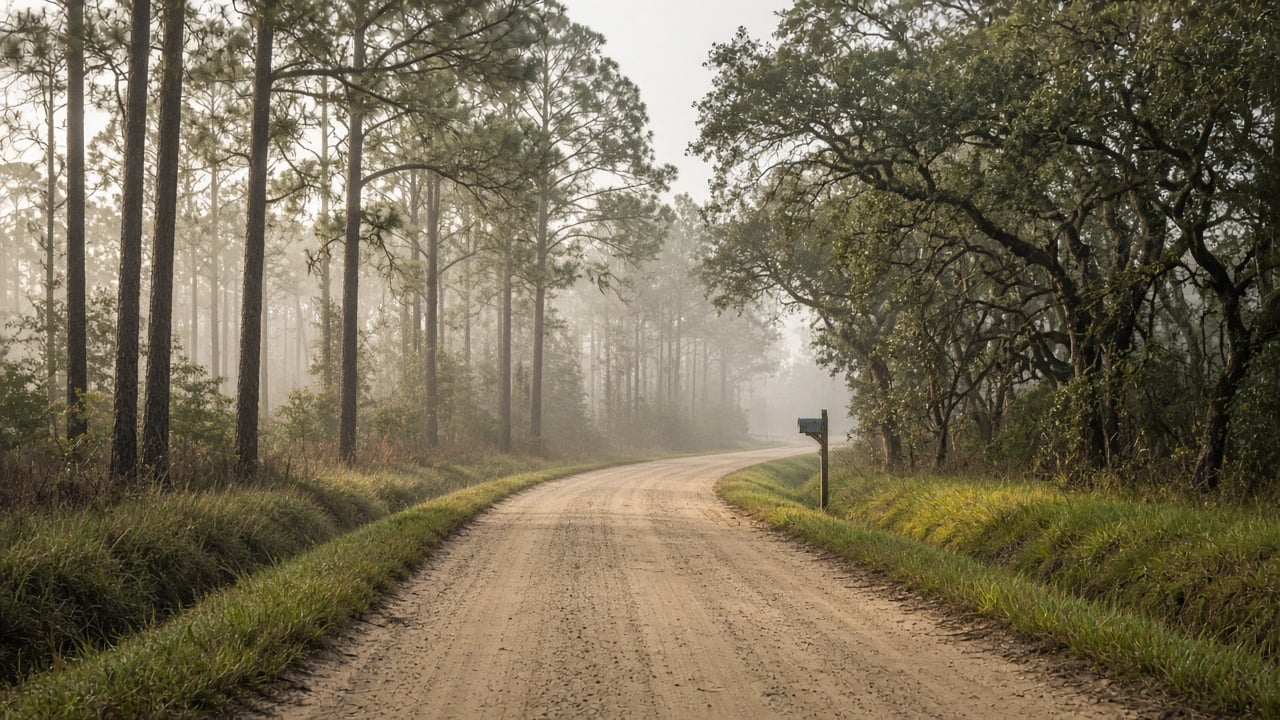
Drive out N.C. 210 toward Rocky Point, up U.S. 421 past Currie, or down a sandy lane off U.S. 17 near Hampstead, and you’ll notice something about Pender County homes: a lot of them sit on roads that the state doesn’t take care of. That’s part of the appeal for many buyers. Private roads often mean quieter streets, bigger lots, and a more rural feel. But a private road also comes with responsibilities that don’t show up in the listing photos. Here’s what the Aspyre Collective team wants every Pender County buyer to understand before making an offer.
Who Maintains Roads in Pender County?
This is the first surprise for many people moving here from other states. On its Transportation page, Pender County explains that streets outside city, town, or village limits are maintained either by the N.C. Department of Transportation or by a private homeowners’ or property owners’ association, and that the county itself does not administer or maintain roadways or the ditches along them.
The county is just as direct about private roads: they are not maintained by NCDOT or the county, and in most cases the responsibility falls on the HOA or the property owners themselves. That includes keeping ditches and storm drains working. Inside Burgaw and Surf City, the towns have their own street programs, but across most of unincorporated Pender, it’s either the state or the neighbors.
Why this matters more here than in some places
Much of Pender is low, flat, and laced with creeks and swamps. When a ditch along a private road fills in or a culvert collapses, standing water and washouts can follow quickly after a heavy rain or a tropical system. On a state road, that’s NCDOT’s job. On a private road, it’s yours and your neighbors’.
North Carolina Requires a Street Disclosure
State law gives buyers some protection. Under N.C. General Statute 136-102.6, a developer selling lots in a covered subdivision must give the buyer a Subdivision Street Disclosure Statement, and the buyer signs to acknowledge receiving it. The statement has to say whether the street is public or private. If it’s private, the disclosure must explain who is responsible for building and maintaining it and note that the street isn’t built to the standards NCDOT requires to take it over.
The N.C. Real Estate Commission has also cautioned that a street labeled “public” on a plat may still be maintained by the developer or owners until NCDOT formally accepts it. In other words, “public” on paper doesn’t always mean the state is plowing, patching, or mowing it today.
Keep in mind that the street disclosure is tied to developer lot sales. If you’re buying a resale home on an older private road, you may not receive one, so you’ll need to ask the questions yourself.
How to Check a Road’s Status Before You Buy
- Look it up with NCDOT. NCDOT’s Public Street Information map shows state-maintained roads. A road that isn’t highlighted may be private or town-maintained.
- Read the recorded plat and deed. Your closing attorney can confirm whether the property has a recorded right-of-way or easement to a public road. Legal access is a must, not a nice-to-have.
- Ask for the road maintenance agreement. Some private roads have a recorded agreement that spells out how owners share costs. Others have only a handshake tradition, or nothing at all.
- Check the HOA documents. If an association maintains the road, review its budget, reserves, and any history of special assessments for paving or drainage.
- Drive it after a rain. Potholes, rutting, and ponding tell you a lot about how well the road and its ditches are being kept up.
Financing and Insurance Questions to Raise Early
Lenders care about access because it affects the value of the home securing the loan. Many loan programs, including government-backed ones, look for recorded legal access and a clear plan for road maintenance on a private road. Requirements vary by program and lender, so bring up the private road with your loan officer at the start, not a week before closing. The same goes for your homeowners insurance agent, since emergency access can come up when they evaluate a rural property.
Can a Private Road Become a State Road?
Sometimes, but it’s not quick or guaranteed. Under NCDOT’s rules for adding subdivision roads to the state system, residents petition the district engineer, and the road generally needs a dedicated, unencumbered right-of-way, construction that meets state standards, compliant drainage, and a minimum number of occupied homes along it. Older private roads that were never built to those standards often need costly upgrades, paid by the owners, before the state will consider them. If a seller tells you the road “is about to be taken over,” ask for documentation.
Is a Private Road a Deal Breaker?
Not at all. Plenty of happy Pender County homeowners live on private roads, and some of the area’s most private, wooded, and waterfront settings are found on them. The key is going in with eyes open: knowing who pays for repairs, how decisions get made, and what it costs. A well-run road with a recorded maintenance agreement and a healthy fund can be a real plus. A road with no agreement and a history of neighbor disputes is something to price in, or walk away from.
Frequently Asked Questions
Does Pender County maintain any roads?
According to the county’s own Transportation page, no. Roads outside town limits are maintained either by NCDOT or by private HOAs and owners.
Will I get a disclosure if a road is private?
If you’re buying a lot from a developer in a covered subdivision, North Carolina law requires a Subdivision Street Disclosure Statement. On many resale purchases, you’ll need to verify the road’s status yourself.
How do I find out if NCDOT maintains a road?
Check NCDOT’s Public Street Information map, and confirm with the NCDOT maintenance office for Pender County if you’re unsure.
Who fixes a private road after a storm?
The responsible HOA or the property owners, based on any recorded maintenance agreement. That’s why it’s important to read that agreement before you buy.
Thinking About a Home in Pender County?
From Hampstead and Scotts Hill to Rocky Point, Burgaw, and the rural stretches in between, our team knows which questions to ask about roads, access, drainage, and septic before you’re under contract. Talk with Aspyre Collective about buying in Pender County and we’ll help you find the right home on the right road.