



The Ancient Coast: How the Ice Age Shaped Our Barrier Islands
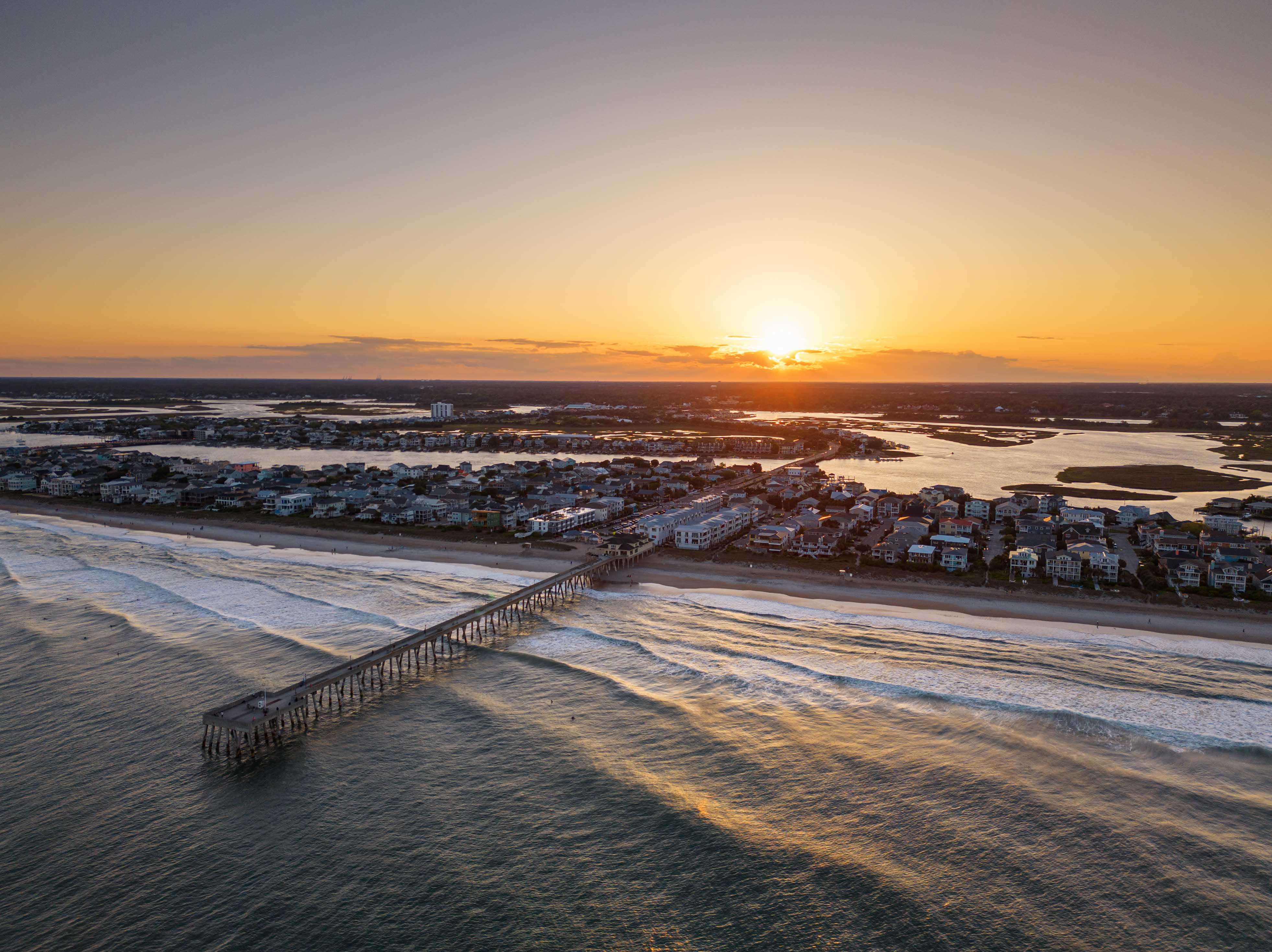
When buyers stand on the sands of Wrightsville Beach or Topsail Island, they fall in love with what they see today—rolling dunes, soft white sand, and blue water that feels eternal. But the true value, stability, and behavior of land in New Hanover and Pender counties can only be understood by going backward—way backward—about 18,000 years.
Our coastline isn’t just a strip of sand; it’s the product of Ice Age forces, tectonic uplift, and ancient rivers. And while the Outer Banks draw the headlines for dramatic movement and overwash events, the barrier islands of South Eastern North Carolina tell a quieter but more stable story.
The Cape Fear Uplift: Why We Aren’t the Outer Banks
Relocators often ask: “Why are the islands here so close to the mainland, when the Outer Banks sit 20 miles out?”
The answer is a deep geological feature called the Cape Fear Arch (or Uplift).
- The Geology: During the last Ice Age, tectonic forces pushed the crust in our region slightly upward.
- The Result: When glaciers melted and seas rose, the ocean didn’t flood our river valleys nearly as deeply as it did in the northern part of the state.
- The Benefit: This uplift created a steeper, more stable coastal profile—meaning Wrightsville Beach, Carolina Beach, and Topsail developed close to the mainland instead of far offshore.
This is why a bridge to Wrightsville Beach takes two minutes, not two hours. Our “ancient ground” sits closer to the Atlantic than almost anywhere else on the East Coast.
The Sand Secret: Why Our Beaches Are Whiter and Finer
If you’ve walked the Outer Banks, you’ve felt the difference: darker, coarser, sometimes gravel-filled sand. Our region—Surf City, Topsail, Carolina Beach—has something else entirely: sugar-white quartz sand.
The reason is surprising.
- The Sediment-Starved Coast: Onslow Bay receives very little new river sediment compared to the Outer Banks.
- The Source: Most of our sand is pure quartz that originated as ancient Appalachian granite. Over millions of years, water ground it down and funneled it toward the Cape Fear River.
- The Trade-Off: Because new sediment doesn’t arrive naturally in large amounts, our beaches depend on renourishment projects. Those dredges pumping sand onto Oak Island or Wrightsville aren’t cosmetic—they’re mimicking an Ice Age process that slowed down long ago.
The Ancient Rocks: Coquina at Fort Fisher
The most visible piece of geologic history sits at Fort Fisher and Kure Beach, exposed at low tide: the Coquina Rocks.
- The Feature: These brown, mossy ridges are the only natural rock formations on the entire North Carolina coastline.
- The Origin: They’re fossilized beaches, formed 40,000–80,000 years ago from compressed shells, coral fragments, and sand.
- The Impact: They act as a natural seawall, helping protect this section of shoreline from the aggressive erosion seen elsewhere on the coast.
Standing on these rocks is like standing on time itself—evidence of a coastline far older and more complex than it appears.
Your Next Step
The geology beneath a property matters just as much as the view above it. Understanding where ancient bedrock sits, how sand moves, and which areas were shaped by stable Ice Age processes versus shifting inlet dynamics can influence everything from insurance rates to long-term structural stability.
At Aspyre Realty Group, we look deeper than the MLS sheet. We are experts in listening to your long-term goals and communicating them into smart, geology-informed real estate choices. Whether you’re drawn to the fossil-bearing shores of Kure Beach or the stable bluffs along the Intracoastal, let’s explore the ancient coast together.
Check out this article next