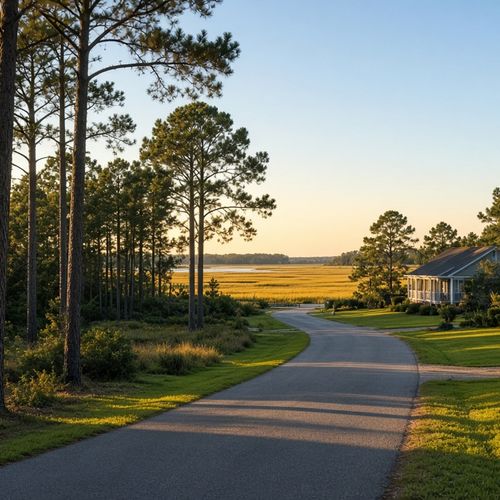




Mortgage rates have eased for three weeks in a row, but they’re still well above where they sat a year ago, and that gap is pushing more buyers to take a second look at adjustable-rate mortgages (ARMs). If you’re shopping for a home in Wilmington, Leland, Hampstead, or anywhere along the Cape Fear coast this fall, you’ve probably heard a lender mention one. Here’s a plain-English look at what’s happening, how ARMs actually work, and when one might (or might not) make sense for a purchase in our area.
What the Latest Numbers Show
According to the Mortgage Bankers Association’s weekly survey, as reported by Realtor.com (Nov. 4, 2026), the average contract rate on a conforming 30-year fixed mortgage dipped to 7.3% for the week ending Oct. 30, down from 7.37% the week before. A year ago, the same rate averaged about 6.17%. Freddie Mac’s separate weekly survey, published Oct. 29, put the 30-year fixed at 7.24%, down from 7.32%.
The same report noted two things worth paying attention to:
- ARM rates are running nearly a full percentage point below the 30-year fixed.
- The ARM share of applications rose to 11.4%, which MBA’s chief economist said is the highest level since September 2025. Buyers are using ARMs to lower their starting payment.
Purchase applications were still down 19% from a year ago, so activity is slow nationally. Locally, that can mean a little more room to negotiate on price, repairs, or seller-paid concessions, depending on the neighborhood and price point.
How an ARM Works, in Plain English
An adjustable-rate mortgage starts with a fixed rate for a set number of years, then adjusts on a regular schedule. You’ll see them described with two numbers, like a 5/1, 7/6, or 10/6 ARM:
- The first number is how many years the starting rate is locked.
- The second number is how often the rate can change after that (the “1” means once a year; the “6” usually means every six months).
When the fixed period ends, your new rate is set by adding a fixed margin to a market index. Most ARMs also have caps that limit how much the rate can rise at the first adjustment, at each adjustment after that, and over the life of the loan. The Consumer Financial Protection Bureau has a good overview of these terms if you want to dig deeper.
The trade-off
You get a lower payment up front in exchange for uncertainty later. If rates fall, you may be able to refinance before the adjustment. If rates rise or stay high, your payment could go up once the fixed period ends. Nobody can promise which way rates will move, including us.
When an ARM Can Make Sense on the Cape Fear Coast
Our market has a lot of buyers whose plans line up naturally with a shorter fixed period. An ARM may be worth a conversation with your lender if you:
- Expect to move within the fixed period. Relocating professionals, people taking a job in Wilmington for a few years, or anyone planning a “starter” home in Leland or Castle Hayne before moving up.
- Are buying a second home you may sell later. Some second-home buyers at Oak Island, Holden Beach, or Topsail Island plan to sell or trade up within several years.
- Expect income to rise or plan to pay the loan down quickly, such as from the sale of another home.
- Want to keep monthly payments manageable now and are comfortable with a plan to refinance if rates improve, while understanding refinancing isn’t guaranteed.
When a Fixed Rate Is Usually the Safer Bet
- You plan to stay put for the long haul, say, a forever home in Porters Neck, Hampstead, or Southport.
- Your budget is already tight. Coastal homeowners also carry insurance and, in many areas, flood insurance costs that can change over time. Stacking a possible rate increase on top of that adds risk.
- You’d lose sleep over a payment change. Peace of mind has real value.
Questions to Ask Your Lender
- What’s the fixed period, and how often does the rate adjust after it?
- Which index is the loan tied to, and what’s the margin?
- What are the caps at the first adjustment, later adjustments, and over the life of the loan?
- What would my worst-case payment be if the rate hit the lifetime cap?
- How does this compare to a fixed rate with a seller-paid or builder-paid rate buydown?
That last question matters here. Many new-construction communities around Leland, Hampstead, and northern New Hanover County offer builder incentives, and resale sellers can sometimes help with closing costs or a buydown. Compare every option side by side using official Loan Estimates from more than one lender.
Frequently Asked Questions
Are ARMs riskier than they were before 2008?
Today’s ARMs generally come with rate caps and stricter qualification rules than many loans from that era, but they still carry the risk that your payment rises after the fixed period. Read the caps closely.
Can I use an ARM on a beach or second home?
Often, yes, though terms and down payment requirements can differ for second homes and investment properties. Ask your lender about the specific property type.
Will rates keep falling?
No one knows. The Federal Reserve meets again in December, and markets will be watching. Choose a loan you can afford even if rates don’t cooperate.
Talk It Through With a Local Team
The right loan depends on how long you plan to stay, where you’re buying, and what your full monthly costs look like on the coast. We’re happy to connect you with trusted local lenders and help you weigh fixed, adjustable, and buydown options against the homes you’re considering. Contact Aspyre Collective to get started.