


If you own a home in Wilmington or the unincorporated parts of New Hanover County, your water and sewer bill probably comes from the Cape Fear Public Utility Authority, better known as CFPUA. Over the past few months, CFPUA has made several decisions that change how that bill is calculated, and on October 5, 2026, it announced one more: a new formula for the fixed meter charges on every account, phasing in starting July 1, 2027.
None of this is a crisis, and for most single-family homeowners the newest change is small. But water and sewer costs are part of the true monthly cost of owning a home here, and they matter even more if you own a rental, a condo in a larger building, or a small commercial property. Here’s what changed, what it means, and what to ask about when you buy or sell.
The Newest Change: How Fixed Meter Charges Are Calculated
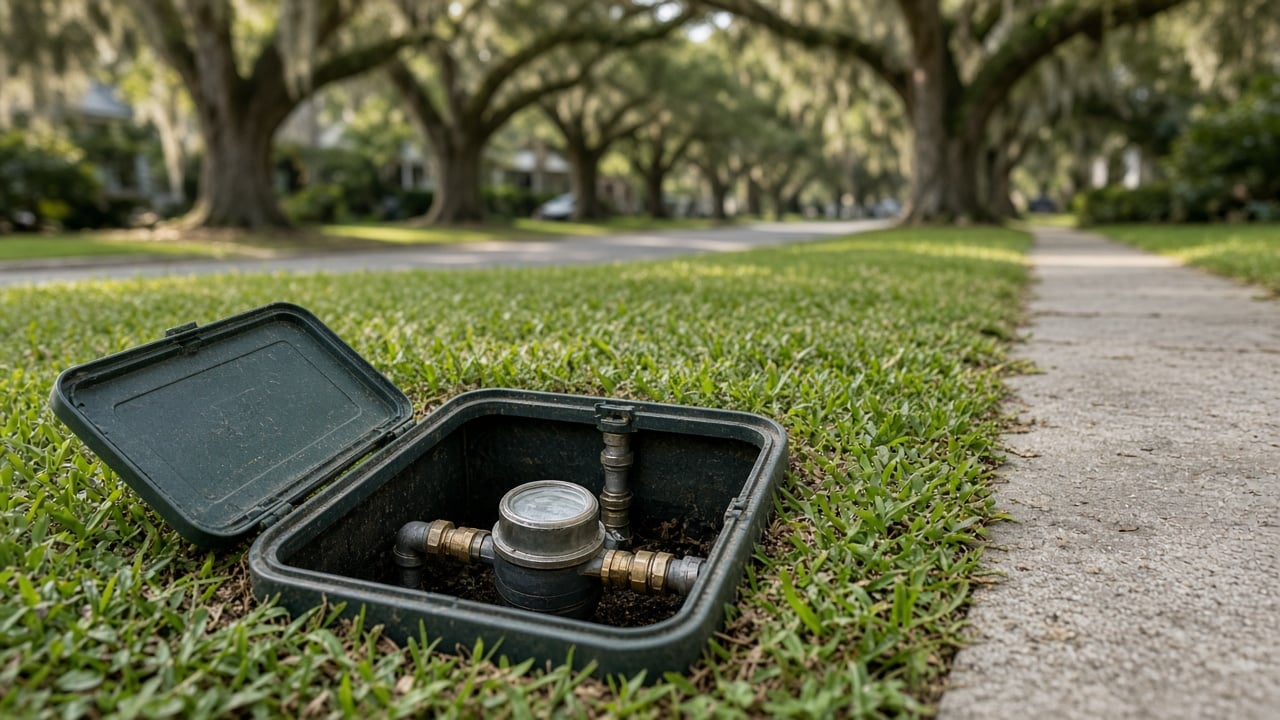
Every CFPUA bill has two parts. The volumetric charge goes up and down with how much water you use. The fixed meter charge is the same every month no matter how much you use, and it’s based on the size of the water meter serving your property.
For years, CFPUA set those fixed charges using industry standard “scaling factors” that compare each meter size to a standard 5/8-inch home meter based on how much water a meter could possibly move. In its October 5, 2026 announcement, CFPUA said it analyzed three years of actual water use, found the median daily use for each meter size, and built new factors around typical use instead of maximum use.
According to CFPUA, here’s how some of the factors change:
- The 1-inch meter factor drops from 2.5 to 1.5.
- The 1½-inch meter factor stays at 5.
- The 2-inch meter factor rises from 8 to 10.
- The 6-inch meter factor rises from 50 to 130.
CFPUA says the change does not increase the total revenue it collects from fixed meter charges. It shifts who pays which share. The first part of the change takes effect July 1, 2027, and the full factors apply July 1, 2028. WECT reported on October 6 that customers who could be affected are getting letters from CFPUA.
Who feels it most
CFPUA has said that about 74,000 of its customers use the standard 5/8-inch meter, and more than 6,000 meters are larger, serving multifamily housing and commercial, industrial, and institutional customers. That means the biggest swings are likely for properties on larger meters: apartment communities, some condo and townhome buildings on a shared master meter, and commercial spaces. Homes on a 1-inch meter could see that fixed portion go down.
If you own a unit in a building with a shared meter, the effect may show up in your HOA or condo association budget rather than on a bill with your name on it. That’s worth keeping an eye on as associations plan their 2027 and 2028 budgets.
The Bigger Picture: The Southside Plant and Rising Rates
The meter formula is only one piece. The bigger driver of CFPUA bills is the replacement of the Southside Water Reclamation Facility on River Road, the wastewater plant that serves much of Wilmington and southern New Hanover County. CFPUA calls it the largest capital project in its history, with an estimated cost of about $390 million. Site work began in fall 2025, and CFPUA expects completion in early 2031.
CFPUA says the project will expand Southside’s capacity from 12 to 20 million gallons per day. That extra capacity matters for growth: CFPUA has been diverting some Southside flow to its Northside plant, and returning that flow should free Northside to handle growth in northern New Hanover County.
To pay for it, the CFPUA board has approved yearly rate increases. For service starting July 1, 2026, the average residential customer’s combined water and sewer bill went up 6.65%, or about $5.31 a month, according to CFPUA’s fiscal year 2027 budget announcement. CFPUA’s project page says additional increases tied to Southside are expected.
Port City Daily reported in May 2026 that CFPUA also ended the 15,000-gallon monthly cap on residential sewer billing starting July 1. Before, a household that used more than 15,000 gallons in a billing period was only billed sewer on the first 15,000. Now sewer is billed on all of it, which mostly affects large households and homes that water heavily through the same meter.
What This Means for Homeowners
- Plan for gradual increases. Utility costs are rising steadily, not suddenly. Build that into your household budget the same way you would insurance and taxes.
- Look at irrigation. With the sewer cap gone, heavy lawn watering through your main meter costs more than it used to. Ask CFPUA whether a separate irrigation meter makes sense for your property.
- Read any letter from CFPUA. If you got one about meter charges, it includes a table of current and projected fixed charges for your meter size.
What This Means for Buyers
When you compare homes, ask the seller for recent CFPUA bills, or ask your agent to request them. A home on public sewer avoids septic maintenance, but it’s still worth knowing the real monthly cost. Also check who actually provides water and sewer. Some neighborhoods in New Hanover County are on private utilities or on wells and septic, and the costs and rules are different.
If you’re buying a condo or townhome, ask whether the building is on one shared meter and how the association budgets for water. The 2027 and 2028 meter changes could affect future dues.
What This Means for Investors and Sellers
If you own or are buying a small multifamily or mixed-use property, find out the meter size and run the projected fixed charges from CFPUA into your numbers for 2027 and 2028. For sellers, having a year of utility bills ready is a simple way to answer buyer questions before they come up.
FAQ
Will my CFPUA bill go up because of the meter change?
It depends on your meter size. CFPUA says the change shifts fixed charges among customers without raising the total collected. Larger meters will generally pay more, and 1-inch meters will pay less on the fixed portion. Most single-family homes use the standard 5/8-inch meter.
When do the new meter charges start?
The phase-in begins July 1, 2027, and the full new factors take effect July 1, 2028.
Why are CFPUA rates rising?
The main driver is the roughly $390 million replacement and expansion of the Southside Water Reclamation Facility, which CFPUA expects to finish in early 2031.
Does this affect Brunswick or Pender County homeowners?
CFPUA serves Wilmington and much of New Hanover County. Brunswick and Pender homeowners are generally served by their county utilities, towns, or private providers, which set their own rates.
Talk With a Local Team
Utility costs, insurance, and taxes all shape what a home really costs to own here. If you’re buying, selling, or investing in New Hanover County and want help sorting out the full monthly picture, reach out to Aspyre Collective. We’re glad to help you compare homes and plan ahead.