


When you tour a home in Wilmington, you probably check the kitchen, the roof, and the flood zone. Fewer buyers think hard about the street out front: how fast cars move past the driveway, whether kids can safely walk to the bus stop, or how many busy intersections stand between the house and the grocery store. The City of Wilmington is betting that those questions matter more than most people realize, and a one-year progress report on its Vision Zero program offers a useful lens for anyone buying or selling in New Hanover County.
What Vision Zero Is and Where Things Stand
According to the City of Wilmington’s Vision Zero page, the city adopted Vision Zero in September 2025. It’s an international “safe systems” strategy built on a simple idea: traffic deaths and severe injuries are preventable, so roads should be designed so ordinary human mistakes don’t turn fatal. The city’s stated goal is to eliminate traffic deaths and severe injuries on city streets by 2036.
The numbers behind that goal are sobering. The city reports that 121 people died in traffic crashes in Wilmington between 2015 and 2024. Pedestrians and bicyclists were involved in just 2% of collisions but accounted for 37% of traffic deaths over the same period. The city also notes that a pedestrian struck at 20 mph or slower has a 95% chance of surviving, which is why so much of the program is about slowing cars down on neighborhood streets.
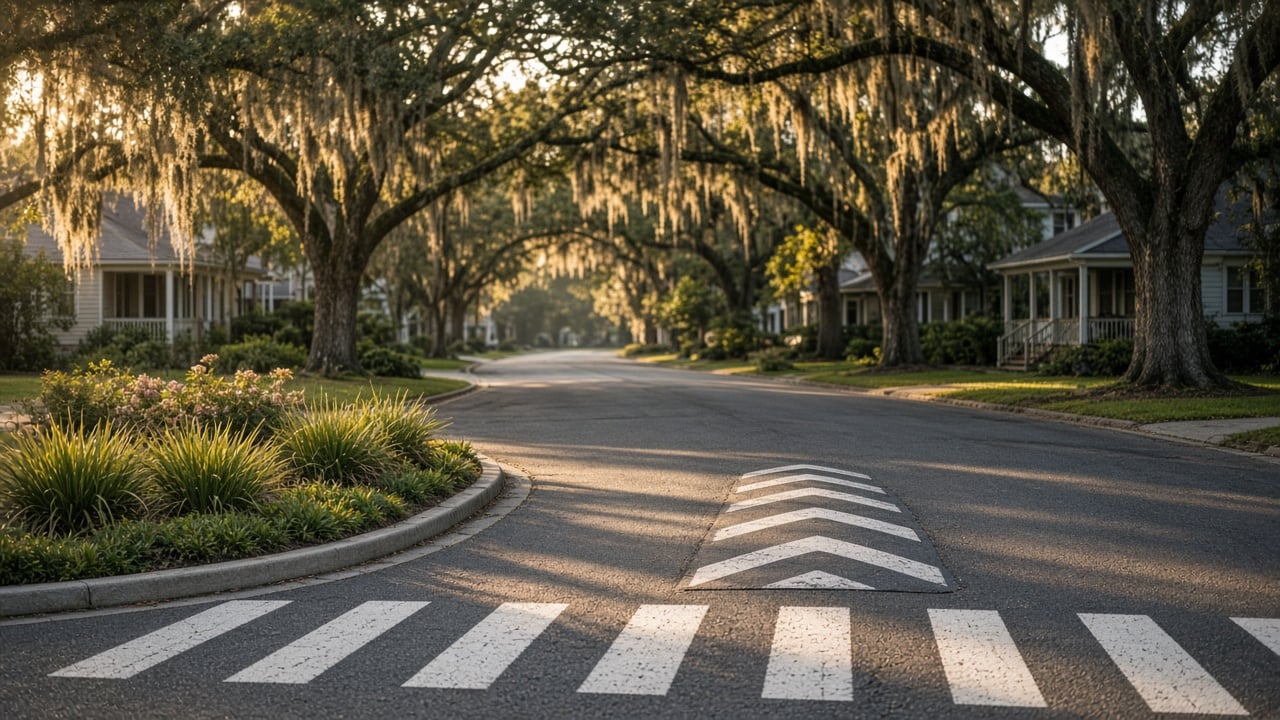
On October 27, 2026, WECT checked in on the program’s first year. Program manager Andy Thompson said the city has collected data at 85 locations and 14 intersections and has added speed bumps, curb extensions, and leading pedestrian intervals. Those intervals give people in crosswalks a walk signal three to seven seconds before cars get a green light. Thompson pointed to Market and College, Oleander, and Carolina Beach Road as the corridors where incidents tend to happen most. He was also clear that the safety action plan is still being developed and that it’s too early to measure results.
Which Neighborhoods Are Seeing Changes
While the full plan is being written, the city has moved ahead with priority traffic-calming projects. The city’s project page lists Rogersville Road, Tanbridge Road (between Eastwood and Wells), Charter Drive, Carl Street, Jeb Stuart Drive, Wallington and Lancaster roads, and Burnett Boulevard. Construction was scheduled from March through October 2026, and data collection begins this fall to see how well the changes work.
The city also groups several pedestrian and trail projects under the Vision Zero umbrella, including:
- Masonboro Loop Trail: a planned 1.4-mile multi-use path along Masonboro Loop Road from Navaho Trail to Pine Grove. It would connect neighborhoods such as Andrews Reach and Dawning Creek Way to Parsley Elementary and nearby shopping.
- Kerr Avenue path: a 0.7-mile multi-use path tied to the NCDOT Kerr Avenue project, linking the UNCW and College Road area to commercial areas north of Market Street.
- Wrightsville Avenue corridor: a new roundabout at Wallace Avenue and a continuous sidewalk of about 2.6 miles on the north side of Wrightsville Avenue, from Independence Boulevard to Hawthorne Drive.
- Greenville Loop Trail and the Downtown Trail: trail links the city is designing and building in phases.
A task force with representatives from NCDOT, UNCW, the New Hanover Community Endowment, and the Wilmington Urban Area MPO is expected to report recommended next steps to City Council by winter 2027. According to the city, funding comes from NCDMV license fee revenue through its Neighborhood Traffic Management capital program, plus grants.
What It Means for Buyers
Street safety rarely appears on a listing sheet, but buyers feel it every day once they move in. A few practical takeaways:
Visit at the hours you’ll actually live there
A quiet cul-de-sac at 2 p.m. on a Sunday can feel very different at 7:45 a.m. on a school day. Drive the commute and walk the block during rush hour, especially if the home sits near Market, College, Oleander, or Carolina Beach Road.
Know who owns the road
Many of Wilmington’s busiest roads are state-maintained, so changes there run through NCDOT rather than the city. The city lists NCDOT’s local office (910-341-2250) for state roads and [email protected] for city streets. Before you buy, it’s worth knowing which agency to call about a speeding problem or a missing crosswalk.
Look for planned improvements nearby
A planned sidewalk, trail, or roundabout can change how a neighborhood works. Families near Masonboro Loop Road, for example, may eventually gain a safer walking or biking route to school and shopping. Planned isn’t the same as built, though, and we never promise a buyer that a project will raise a home’s value.
What It Means for Sellers
If your street got speed humps or curb extensions this year, that’s a fair, factual point to mention when buyers ask about traffic. The same goes for walkability near a trail or a newly connected sidewalk. Stick to what the city has actually built or formally planned, and let buyers draw their own conclusions about lifestyle.
Frequently Asked Questions
Does Vision Zero cover all of New Hanover County?
No. It’s a City of Wilmington program for city streets. Unincorporated areas such as Ogden, Porters Neck, and Myrtle Grove rely mostly on NCDOT for road changes, though partner agencies sit on the task force.
Can I request traffic calming on my street?
For city streets, the city directs residents to its Traffic Engineering team (910-341-7888) and [email protected]. Speed humps are added based on traffic data and resident feedback.
When will the full plan be finished?
The city expects its task force to report recommended next steps to City Council by winter 2027.
Thinking About a Move in Wilmington?
The right home is about more than square footage. It’s also about the streets you walk, drive, and bike every day. Our team knows how Wilmington’s neighborhoods feel at rush hour, on school mornings, and on summer weekends, and we’re happy to help you weigh those details before you make an offer or list your home. Contact Aspyre Collective to start the conversation.